Split Opening Hours Without Booking Chaos: Buffers, Last Seating, and the Break as Its Own Operational Block
A practical look at how restaurants with a break between lunch and dinner can set last seating based on actual dining time, use a buffer before the break begins, assign defined internal tasks during the break, and configure the booking system so guests can't select times that fall within it.
Why Split Opening Hours Increase the Risk of Chaos
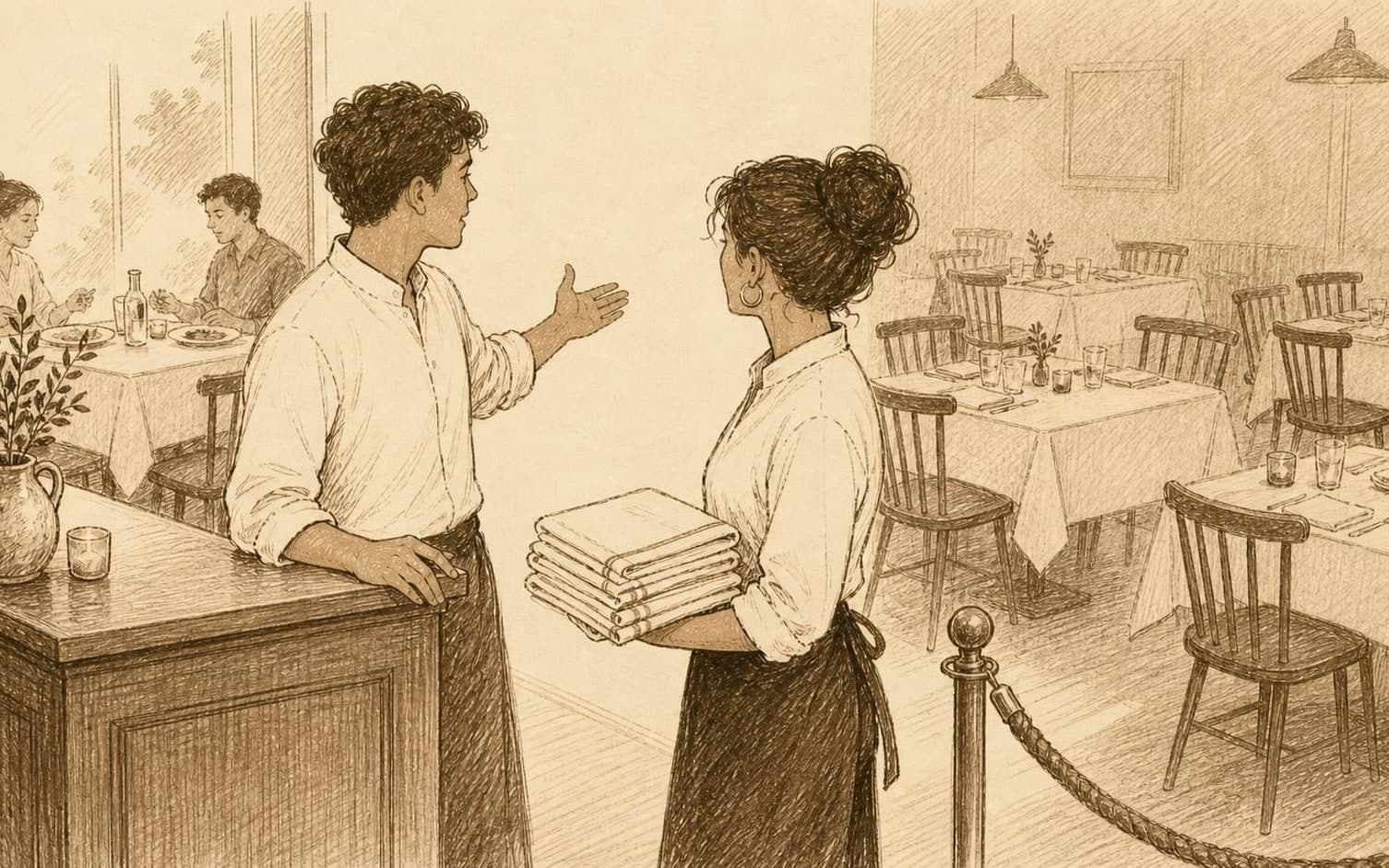
Many restaurants with a break between lunch and dinner find that booking chaos doesn't stem from the volume of traffic itself, but from the transition between the two periods. When lunch guests stay longer than planned, or dinner bookings are scheduled too close to the start of the break, it becomes unclear who is actually responsible for the table during those critical minutes before closing.
Without a clear structure for what happens during the break, staff often end up improvising: some clear tables while others are still seating late lunch guests, and no one has full visibility over which tables are actually ready for the evening. This creates unnecessary stress right before dinner service is due to start.
Set Last Seating Based on Actual Dining Time, Not the Clock
Last seating shouldn't be set based on when the restaurant closes its doors for the break, but on how long a meal actually takes during that particular period. How much shorter do lunch guests sit compared to dinner guests at this restaurant, and how much closer to the start of the break can last seating for lunch therefore be scheduled? This is something each restaurant should assess based on its own experience, not a general rule of thumb.
To avoid a situation where the last lunch guest is still seated when staff need to begin preparing for dinner, the restaurant can build in a fixed buffer between the last permitted seating and the start of the break itself. How long this buffer should be depends on how much time is needed to clear and reset the table. This is something each restaurant should determine for itself, rather than applying a fixed standard.
The Break as Its Own Operational Block with Defined Tasks
The break between lunch and dinner works best when treated as its own operational block with defined tasks, rather than simply a period without guests. Staff can use the time to clear tables, prepare for the evening, and review upcoming bookings all at once, instead of handling these tasks piecemeal while guests are still present.
In TableBooking, the restaurant can use the break to review the dashboard before the evening opens, see which bookings have come in for dinner, and check the floor plan against the actual status of the room. The reference photo for each table makes it easier for new staff to locate the correct table when the evening begins.
Preventing Guests from Booking Tables Into the Break
The opening hours configured in the booking system should reflect the actual operational blocks, not just the total time the restaurant is open throughout the day. By configuring lunch and dinner as separate periods with their own capacity and their own tables, the restaurant avoids a situation where the booking link offers times that fall in the middle of the break.
Guests should also receive clear information that the restaurant is closed between the two periods, rather than simply seeing that a time slot isn't selectable in the booking solution. A brief note on the booking page stating that the kitchen is closed between lunch and dinner can make it clearer to guests why they can't find an available time during that period.
Want to see how it works in practice?
Start with a free restaurant account and build your tables, opening hours and booking link at your own pace.
Start free