Split opening hours without booking chaos: lunch, break and dinner as separate blocks
A practical look at how restaurants with a break between lunch and dinner can set a last seating for both services, use the break as a genuine checkpoint, and structure opening hours so guests can't book into the gap between the two seatings.
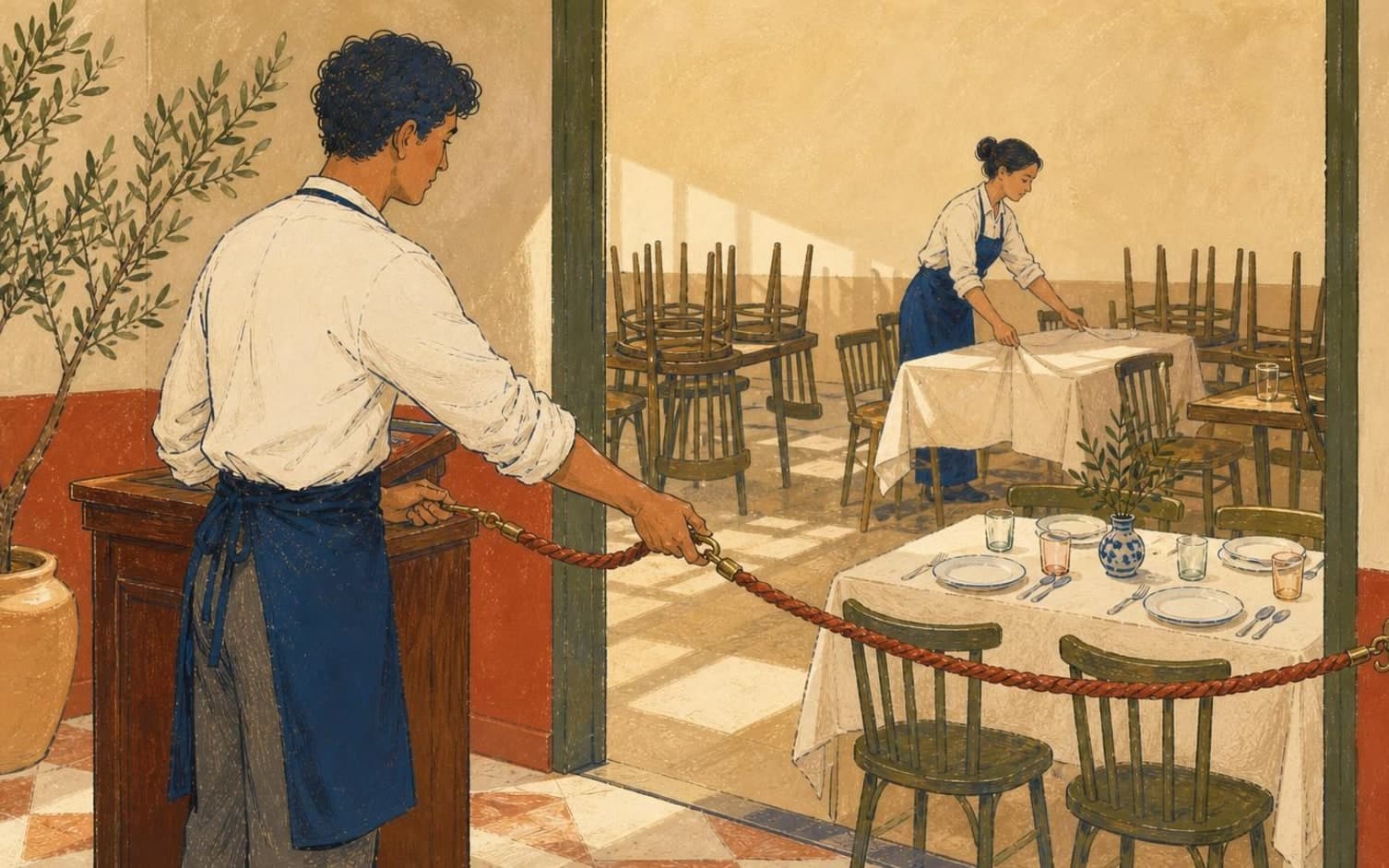
Two services, not one continuous window
Restaurants with a break between lunch and dinner effectively run two services with different rhythms. Lunch guests often want a shorter visit and expect the table to turn over quickly, while dinner guests plan for a longer evening. When opening hours are treated as one continuous window, this difference becomes invisible to both guests and staff.
When the booking link displays opening hours as an unbroken period, guests may occasionally try to reserve a table during the gap between seatings. This creates unnecessary clarifications at the front desk, extra phone calls, and situations where staff must verbally explain why the time isn't available. This is easy to avoid by treating lunch and dinner as two separate blocks in planning, rather than extensions of the same service.
Last seating: two different cut-offs for lunch and dinner
The last seating for lunch should be set based on when the kitchen actually stops taking orders, not simply when the doors close. How long does a typical lunch dish take from order to being served, and how long before the kitchen closes should the last order be taken? The answer varies from restaurant to restaurant, but it should be clearly defined, so the table is cleared and ready before the break begins.
Dinner follows different logic, since guests tend to stay longer and the kitchen must keep delivering right up to closing time without rushing the last table. How much time does a table typically need in the evening, and how large a margin should be built in before closing so the last order doesn't have to be hurried through main course and dessert? This is something each restaurant should assess based on its own experience and menu.
The break as an operational checkpoint, not just downtime
The time between lunch and dinner is rarely free time for staff, even though guests aren't present. Tables need to be cleared and reset, the dining room prepared, and the kitchen must get ready for the evening menu and expected orders. Without a clear structure here, the break easily turns into a period where no one has concrete responsibility, and the evening starts unprepared.
A simple routine is to designate one person to review the evening's booking list midway through the break, checking guest numbers, groups and any notes, and confirming whether the lunch table setup needs to change before dinner. How long should such a review take, and who is responsible for making sure it happens? This gives staff a shared starting point before the doors reopen, instead of improvising once guests are already in the room.
Build the structure into opening hours from the start
When opening hours are set up in the booking system, lunch and dinner should be entered as two separate blocks with their own capacity and tables, not as one long period with a gap in the middle. In TableBooking, opening hours, capacity and tables are configured separately, so the break is not included in the available booking time.
This makes the booking link self-explanatory for the guest, who sees two distinct time windows instead of having to guess when the restaurant actually accepts orders. At the same time, staff no longer need to answer questions about availability in the middle of the break, because the system has already set clear boundaries for both services.
Want to see how it works in practice?
Start with a free restaurant account and build your tables, opening hours and booking link at your own pace.
Start free