A calmer process for last-minute changes
A practical look at how the restaurant can handle a changed party size, a new time, a pram, a highchair and table preferences that come in close to the visit - with a quick check before the answer is given, and an answer specific enough that the floor can act on it without further messages.
Why a small change can create stress on the floor
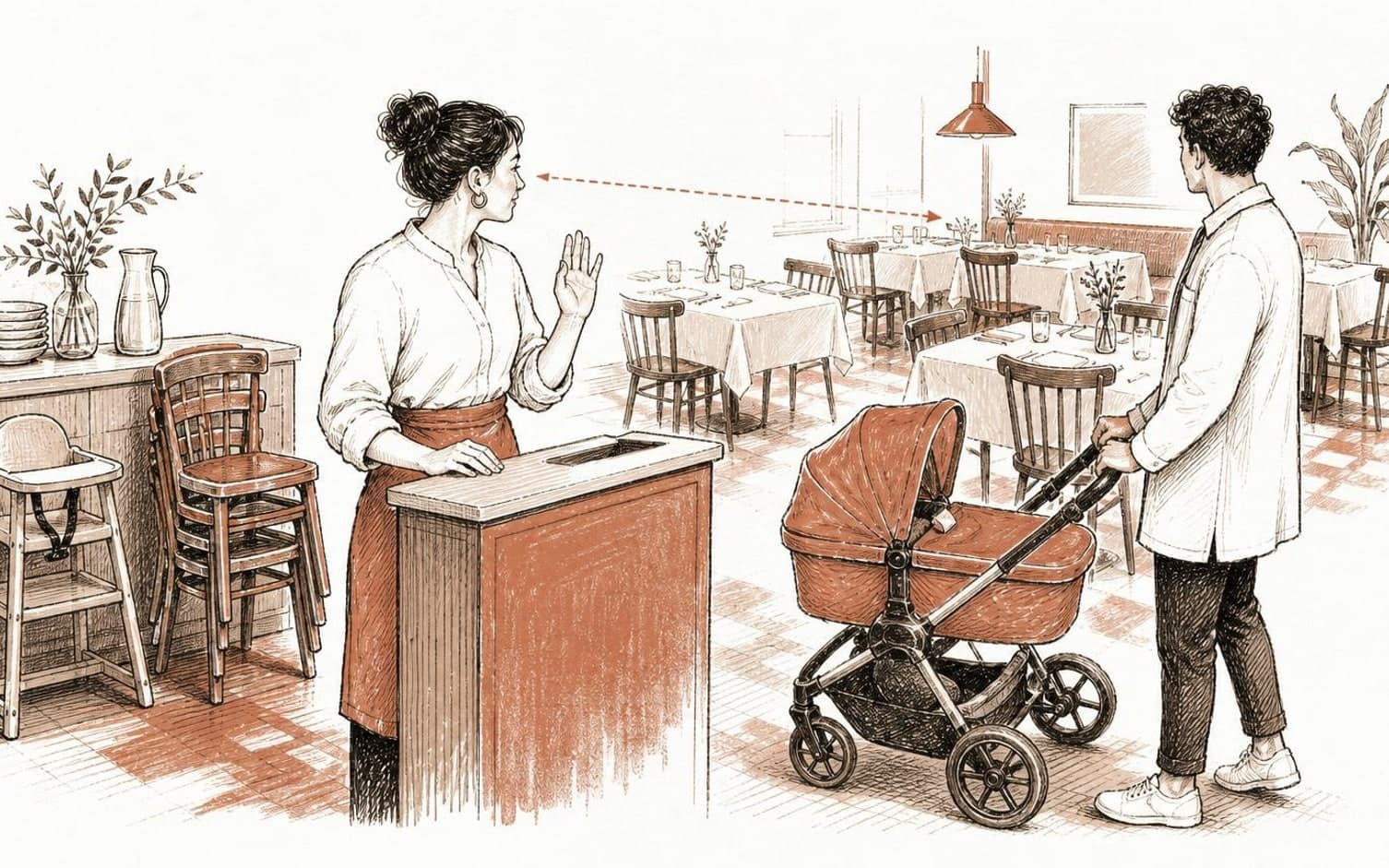
The guest calls or sends a message shortly before arrival and asks for a small change: one extra seat, half an hour later, or room for a pram. Whoever answers rarely has time to think it through, and often ends up replying on gut feeling instead of checking what is actually possible right at that moment.
The problem is rarely the change itself, but that the answer is given without knowing what the rest of the floor knows. A quick "yes" can create a promise that the kitchen, the server or the next booking isn't prepared for, and the stress simply moves from the phone to the table where the guest sits down.
A quick check before the answer is given
When the party size changes, whoever answers should look at the floor plan for that specific time before confirming anything - not just counting heads, but assessing whether a nearby table is free or can be pushed together. The same principle applies to a new time: check the next genuinely available slot instead of promising the guest a spot in a period that's already full.
This check takes seconds when the overview is gathered in one place. In TableBooking, the dashboard shows bookings, guests and the floor plan in the same view, so whoever answers the phone sees the same thing as whoever is setting the table. How often this check should be done during a hectic period is something each restaurant needs to judge for itself.
Prams, highchairs and table preferences: concrete checks, not just notes
A pram needs space right at the table itself, not just in the entrance area, so the question should be whether that particular table has enough clearance around it. If not, a nearby table with more room may be a better answer than a general "that should be fine" - especially when the request comes in just minutes before arrival.
How many highchairs a restaurant has on hand varies, so a request close to the visit should be checked against the actual number instead of assumed to be solved. Table preferences such as a window seat or a quiet corner should be checked against what's actually available right then - and how quickly staff can find the right table when the guest is standing at the door is something every restaurant should have a routine for.
An answer that's easy to follow through on
The reply to the guest should be specific enough that it can be honoured without further clarification - "we have room for a pram at table twelve" is easier to act on than a vague "that should be fine." The same goes for a changed party size or time: state exactly what has been confirmed, not just that the change has been noted.
When the answer is specific, it can be passed on to the floor as a single update instead of several scattered messages. One person updates the floor plan or the note, and the rest of the staff work from that same picture. It's this simple handover - not the change itself - that determines whether the last-minute request feels calm or chaotic.
Want to see how it works in practice?
Start with a free restaurant account and build your tables, opening hours and booking link at your own pace.
Start free