A calm routine for last-minute table changes
A look at how a restaurant can handle a changed party size, a new time, a pram, a high chair and table requests that come in close to the visit - using a fixed way of gathering the information into a single message to the floor, instead of several scattered messages just as the guest is standing in the doorway.
Why last-minute requests often create extra stress
When a guest gets in touch shortly before the table is due to be used, the message often comes in through a channel staff don't check continuously - a text message, a comment in the booking system, or a quick call to reception. The information does get through, but it can sit between other tasks, and that creates an unease that lasts right up until the guest is standing at the door.
The result can be improvisation: a server has to find an extra seat, move a table, or search for a high chair during a period that would otherwise go toward preparation. The guest notices the hesitation, even when the change itself is minor. The question the restaurant should ask itself is not whether changes will happen, but how they are absorbed into the day-to-day operation.
Changed party size and new time: a quick check before answering
When the number of guests changes right before the visit, the first question is whether the table already set is large enough to fit more or fewer guests. A quick check of the table plan and capacity gives the answer without having to renegotiate the entire booking. Exactly how fast this check should happen, and who is responsible for it, is something each restaurant should decide for itself.
A new time requires the same kind of assessment: is there free capacity in the time slot the guest now wants, or is there another open window nearby? Once the answer is settled, the booking should be updated with the new time, so that kitchen and floor staff see the same time without having to recall a verbal message from earlier in the day.
Prams, high chairs and table requests just before arrival
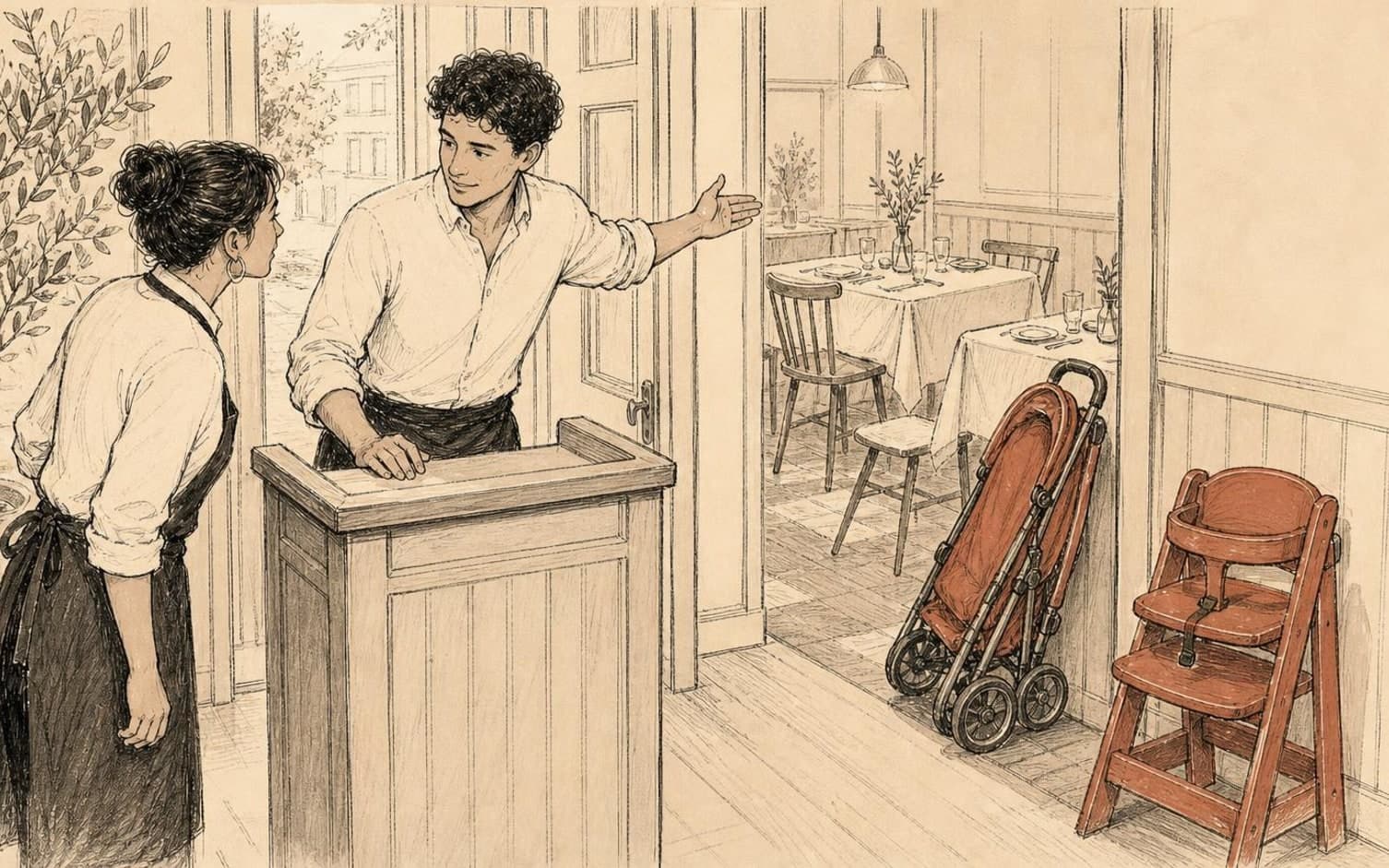
A pram doesn't need much space, but it does need the right space - not in a walkway where other guests or servers have to move around it for the rest of the evening. How far in advance the floor should be notified about this, and who decides on the placement, is something each restaurant must determine based on its own flow.
High chairs and table requests are solved more easily when the information is gathered in one place rather than spread across several staff members. A reference photo of the table, saved in TableBooking, helps staff find the right table even when the request came in shortly before the guest stood at the door and several people were involved in the preparations.
From clarification to message: a unified handover to the floor
Once the change has been clarified with the guest, it should be passed on to the floor as a single, unified message, not as several scattered messages throughout the evening. How this message is best delivered - verbally, through a shared channel, or as an updated line in the booking system - is something each restaurant should judge based on its own routines and staffing.
The guest receives a brief confirmation back - a new party size, a new time, or a simple yes to the high chair and table request - without unnecessary back and forth. Once this message has been sent and the booking updated, the matter is closed for both parties, and staff can spend the time before arrival on preparation rather than clarification.
Want to see how it works in practice?
Start with a free restaurant account and build your tables, opening hours and booking link at your own pace.
Start free