The Checklist for the Final 20 Minutes Before Service: Five Points and Four Roles
A concrete checklist for the final 20 minutes before the doors open - with five fixed points covering groups, allergies, table preferences and delays, and a clear division of who on the team checks what, and when.
Why the Final 20 Minutes Need a Fixed Routine
The final minutes before opening are often the most unpredictable part of the entire shift. Information about groups, allergies and table preferences is scattered across several people's heads, on sticky notes, or in the head chef's phone. Without a shared routine, it becomes a matter of chance who remembers what, and discrepancies are only discovered once the guest is standing at the door.
A written checklist doesn't solve everything, but it removes the uncertainty about what has actually been checked. When the same five points are reviewed in the same order every day, it becomes clear what has been verified and what remains open. This gives the team a common starting point before guests arrive, regardless of who is working that evening.
Five Points That Should Be on the List
Start with the groups: which bookings count as groups at your venue today, and has the table or table combination already been arranged for the correct number of guests? Next come table preferences - has anything been noted about a window seat, a quiet corner, or proximity to the exit, and is this actually reflected in the floor plan, or merely written down without being followed up?
Allergies are the next point: check that the information in the booking matches what the kitchen has been told, not just that a note exists somewhere. The final point is delays - review the day's bookings to see if any guests have already reported that they'll be arriving later, so the table can be used for something else in the meantime without causing a problem when they show up.
Who Does What - One Role Per Checkpoint
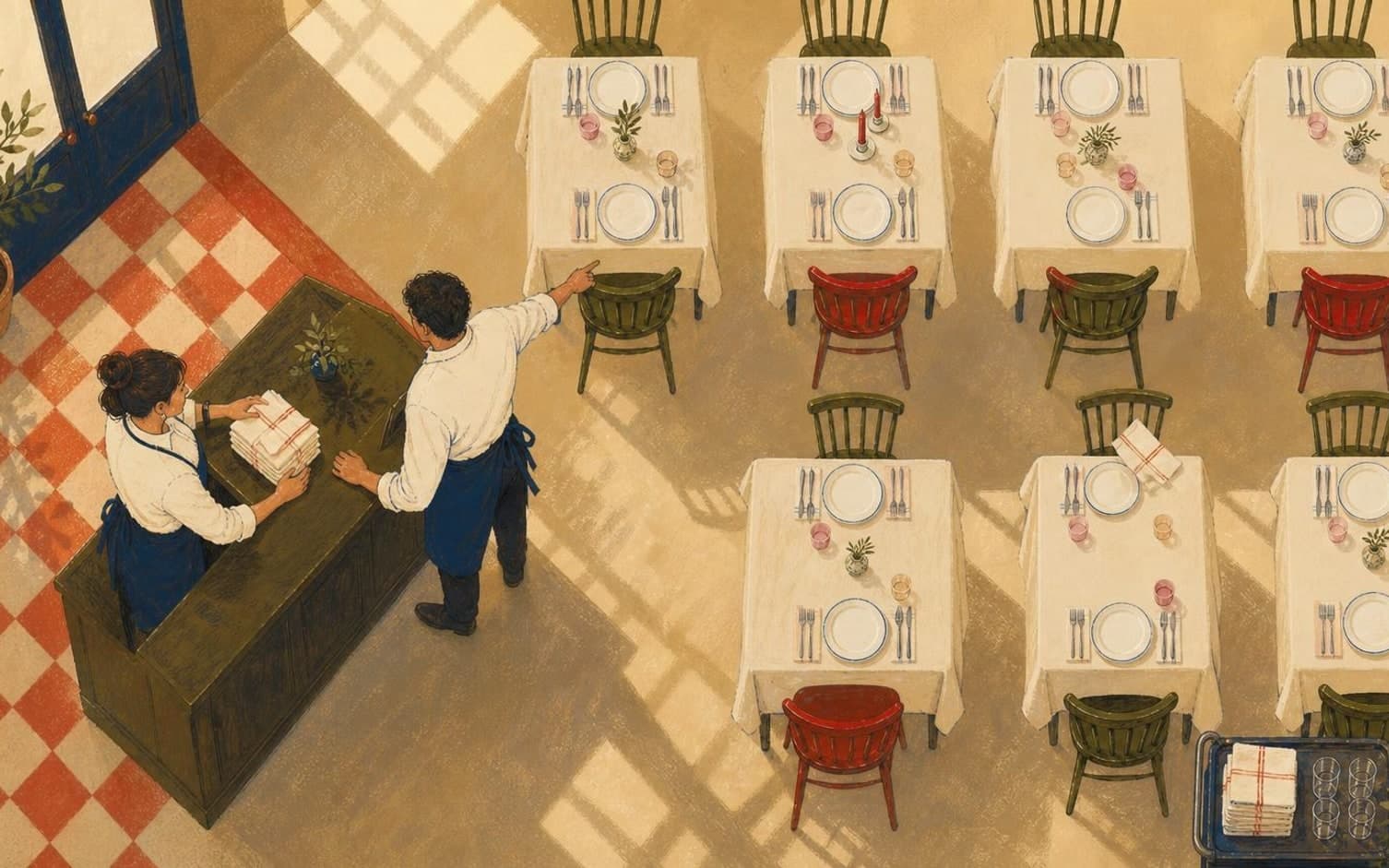
The checklist works best when each point has a named owner, rather than just a general reminder to 'everyone'. One reliable approach is for someone in management or on the floor to review the day's bookings and groups, while another person physically walks the tables and compares them against the reference layout to confirm the setup actually matches what was planned.
The kitchen should receive the allergy list directly, not through a verbal mention in passing, and should confirm back that it has been read. The person greeting guests at the door should be the final checkpoint, with a brief summary of known delays and special table requests, so that the guest's first encounter doesn't depend on what was said earlier in the day.
Make the Checklist a Habit
A list that only exists in someone's head easily gets lost in the stress before opening. Write it down in the same place every day - a whiteboard, a fixed form, or TableBookings' dashboard, where the day's bookings, guests and floor plan are all displayed together - so the whole team can see the status without having to ask each other verbally at the last minute.
After service, it's worth looking back at whether anything on the list was missing or unnecessary, and adjusting before the next shift. The goal isn't a long list with many requirements, but five points that are actually reviewed every time - because a short routine used consistently is worth more than a detailed routine that's only followed when there's time.
Want to see how it works in practice?
Start with a free restaurant account and build your tables, opening hours and booking link at your own pace.
Start free