Keeping the system calm when a guest changes plans close to the visit
Five types of changes that often pop up right before a visit - a different headcount, a new time, a pram, a highchair and table preferences - and how a quick check before answering lets the floor act without further messages.
Five types of changes, five different consequences
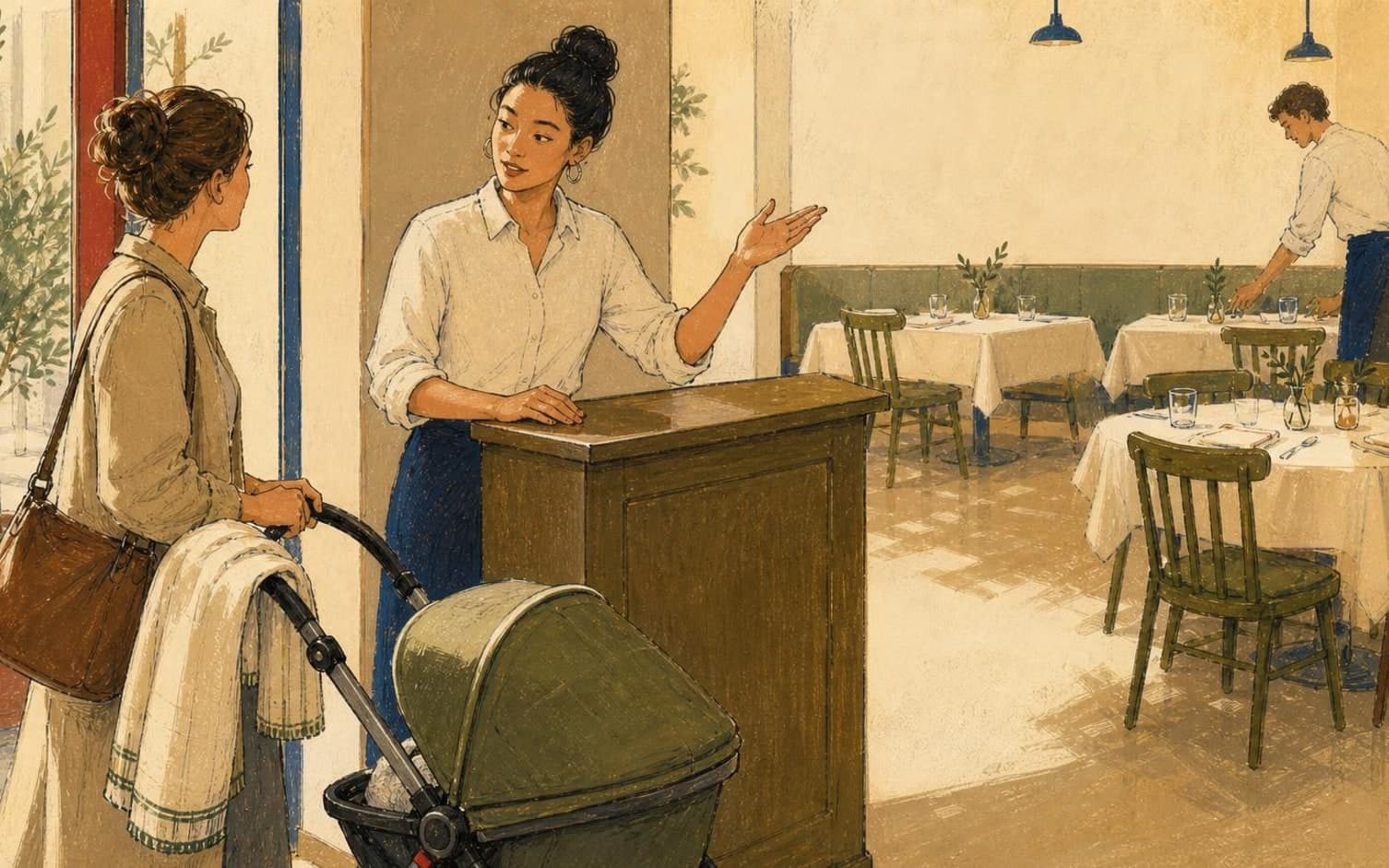
Changes that arrive close to a visit look the same in a message thread, but they have different consequences for operations. A different headcount affects which table is suitable. A new time affects the seating plan for the whole evening. A pram needs space in the aisle, a highchair requires equipment that has to be fetched, and table preferences are about placement rather than logistics.
When all five are treated as a single kind of change without further assessment, delays or impractical solutions can result. A table for four suddenly needing to seat six is a different task from finding room for a pram next to an already confirmed table. Distinguishing them clearly makes the response faster and more precise.
A quick check before the answer is given
Before anyone replies to the guest, a quick check against the table plan and capacity should be done. Is there a free table that can take the new headcount without having to move other guests? Is the time the guest is asking for actually available, or does it clash with a booking already in the system?
For changes involving timing, the check should also cover what happens in between. If the guest moves the booking an hour later, is there still enough staff and capacity to seat them without affecting other tables at the same time? How long such an assessment should take is for each restaurant to decide.
Answers that can be relied on
For a changed headcount, it helps to confirm exactly what is possible: "We can seat you as six, but it will be a different table than the original one." For a new time, the answer should state whether the time is available, and each restaurant should decide for itself how long a table can be held before it is released to other guests.
For a pram, it's fine to say plainly whether there is room by the table or whether it needs to stand elsewhere in the room. For a highchair, the answer should confirm that the equipment is actually available, not just that the request has been noted. For table preferences, it's better to say the table can't be guaranteed, but that the wish has been noted.
From answer to floor, without further messages
The answer given to the guest should be specific enough that floor staff can act on it without asking again. In TableBooking, the restaurant can set up table plans and capacity, and the dashboard shows bookings, guests and table plans together, so a change in headcount or time is visible to everyone who needs it that same evening.
If the change relates to a specific table, a reference photo of the table can make it easier for staff to find the right spot quickly, especially when several changes arrive close together before service. The goal isn't to avoid changes, but to ensure every answer holds - without the guest or staff having to follow up again.
Want to see how it works in practice?
Start with a free restaurant account and build your tables, opening hours and booking link at your own pace.
Start free