Four fixed steps in the final 20 minutes before service
A concrete checklist for the final 20 minutes before the doors open: an overview of groups, confirmed allergy information, a check of table preferences and delays, and a clear division of responsibility within the team.
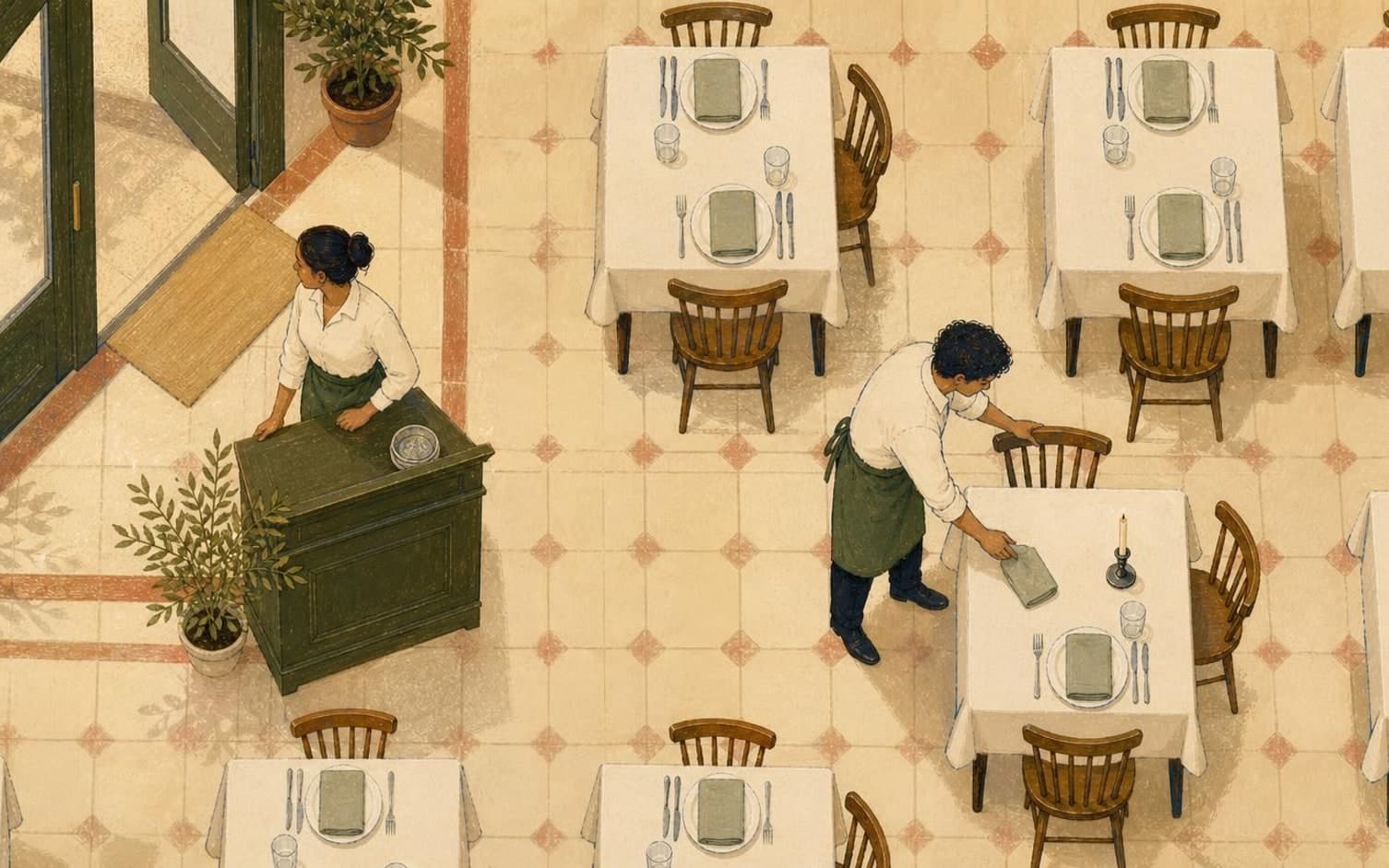
Minute 20 to 15: an overview of the evening's groups
The final twenty minutes before opening should begin with a quick glance at the day's booking list, not a detailed review of every reservation. Look at the total number of guests, how many tables are fully booked, and whether the evening has clear peaks in arrivals. This gives an overview of the pressure ahead before the doors open, without anyone needing to read through the entire list in detail.
How many guests should count as a group requiring extra attention is something each restaurant should decide for itself – six, eight, or more. Check that the floor plan matches the numbers arriving, and note which table the group is assigned to. A brief heads-up to the kitchen about the group's size gives them time to adjust the pace before the first order comes in.
Minute 15 to 10: allergies and special requirements
Allergy information noted at the time of booking should be confirmed verbally before service begins, not simply read from the system. Go through the evening's bookings with allergies or special requirements, and check that the information has actually reached the kitchen. It is far easier to correct a misunderstanding now than to discover it once the guest is already seated and the order has been placed.
Give the servers a brief verbal summary of which tables have allergies, rather than assuming everyone will read the notes themselves. Mention the table number and the specific allergy clearly, so that whoever sets the table and whoever takes the order are working from the same information. This short conversation removes much of the uncertainty that can otherwise arise in the middle of service.
Minute 10 to 5: table preferences and delays
Table preferences the guest noted at booking should be checked against the actual floor plan before the doors open. In TableBooking's dashboard, tables can have a reference photo, making it easier for staff to quickly find the right table when a guest requests a particular spot. Confirm that the requested table is actually available and has not already been assigned to another guest.
How long a table can be held for a guest who has reported a delay is something the team should agree on internally before service starts. Review the day's bookings for any messages about delays, and agree on who will follow up if a guest has not arrived by the agreed time.
Minute 5 to 0: division of responsibility and a brief confirmation
The final minutes should be used to confirm that every task has a named owner, not just a general plan. Clarify who will greet the groups at the entrance, who will follow up on allergy information throughout the evening, and who is responsible for alerting the rest of the team if a delayed guest arrives.
Wrap up with a brief verbal confirmation from the whole team, rather than just a written list that gets skimmed in passing. Ask directly whether anyone has questions about the groups, table preferences, or allergies that have been reviewed, so that any uncertainties surface while there is still time to resolve them before the first guest walks in.
Want to see how it works in practice?
Start with a free restaurant account and build your tables, opening hours and booking link at your own pace.
Start free