Four fixed steps for a better end to service
A short routine for the final minutes after service, where staff mark the visit, log any deviations in the same motion, gather guest information that is actually put to use, and prepare for the next day before the details are forgotten.
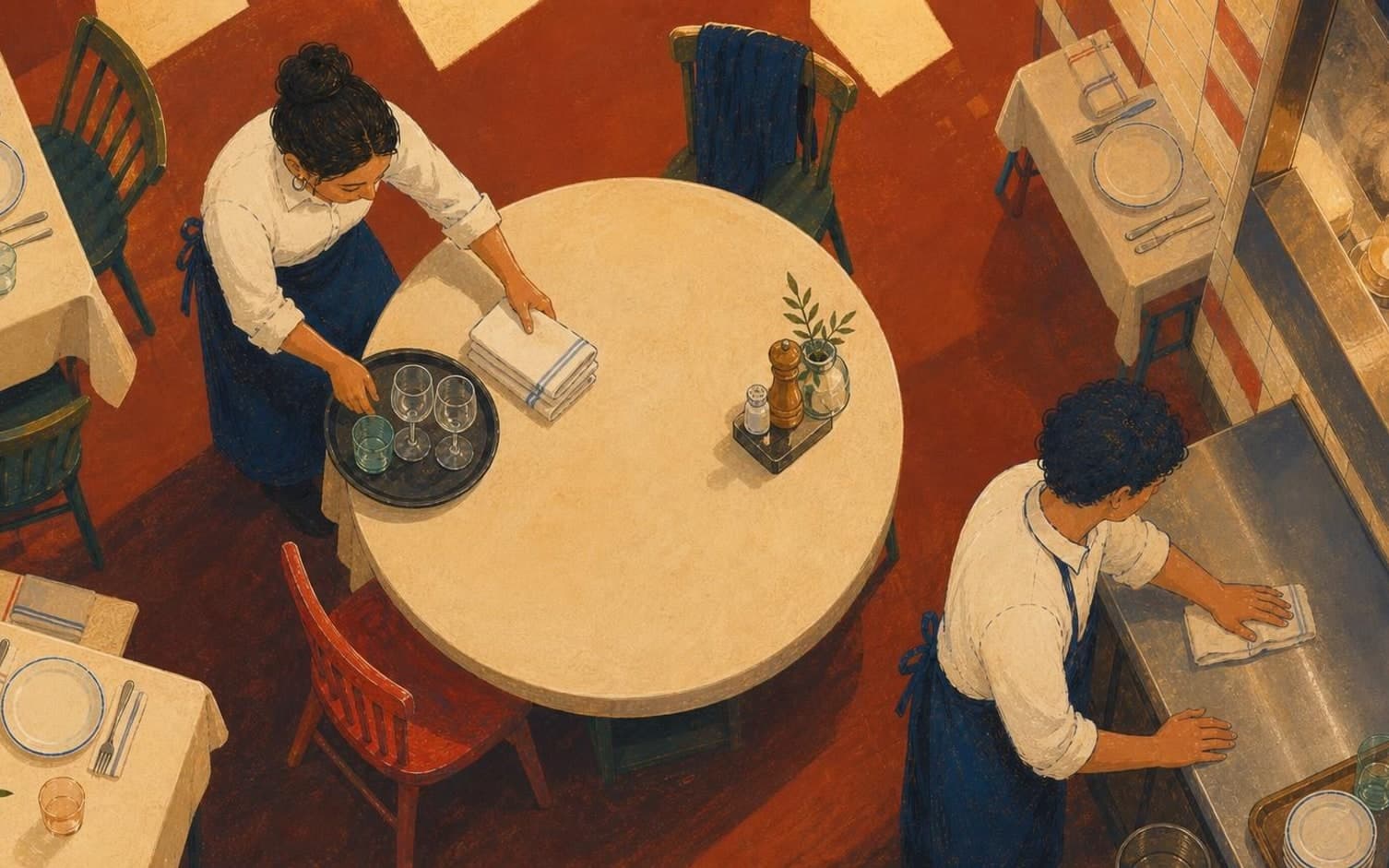
The final minutes tend to slip away
Once the last table has been cleared and the dishes are underway, it's tempting to move straight into closing without pausing. Yet this is exactly when the evening's details are still fresh - who came in, what didn't go as planned, and what should be adjusted before the next service. A short routine lasting just a few minutes captures information that would otherwise be lost.
Does the restaurant already have an informal close-out where staff mention things to each other verbally without writing them down? This kind of loose practice can work on a quiet night, but it easily falls apart when things get busy. A fixed set of steps, carried out in the same order every time, keeps the routine intact even on hectic evenings.
Mark the visit and log the deviation in the same motion
When should a visit be marked as completed? For many, it's easiest to do this while the table is still visible to the person who was seated there. At the same time as the status is updated, that staff member should note whether anything deviated from the plan - a delay, a change in party size, or a message that wasn't picked up earlier. Doing both at once saves time and reduces the chance that the deviation gets forgotten.
A deviation doesn't need to be dramatic to be worth noting. It might be that a table stayed seated longer than planned, that an allergy was discovered late, or that a guest changed seats without the booking being updated. Notes like these provide a basis for adjusting seating times, table choices, or information flow before the same situation arises again.
Guest information that is actually put to use
At the end of the evening, it's worth gathering information that can help the next visit, not just this one. This might be a seating preference, a comment that the guest was celebrating something special, or a note that a request couldn't be met this time. This information should be linked to the booking so it's available the next time the guest books.
How should the note be written to be useful for the next shift? Many opt for a short, concrete note, phrased as a reminder rather than a judgment of the guest. A comment describing what happened and what should be remembered is often more useful than a general description of mood or behaviour. The goal is for the next server to be able to read the note in just a few seconds.
Preparation that makes for an easier start tomorrow
Before locking the doors, it's worth taking a quick look at tomorrow's bookings, capacity, and table overview. In TableBooking, the dashboard shows bookings, guests, and the table map together, making it easy to spot whether anything needs preparing - a larger group, a special request, or a table that needs to be cleared especially early. This check takes only a few minutes but makes the morning start-up much clearer.
The final part of the routine should end by making sure the information actually reaches those opening the next day. A short note about deviations, special guests, and any changes to the table setup gives the person starting the morning a clear starting point. This way, the restaurant avoids letting the evening's insights disappear in the handover between two shifts.
Want to see how it works in practice?
Start with a free restaurant account and build your tables, opening hours and booking link at your own pace.
Start free