A calmer process for last-minute changes: numbers, timing and accommodations
A practical review of how the restaurant can handle changes in guest count, new arrival times, prams, high chairs and table requests that arise close to the visit - without creating stress for staff or confusion for the guest.
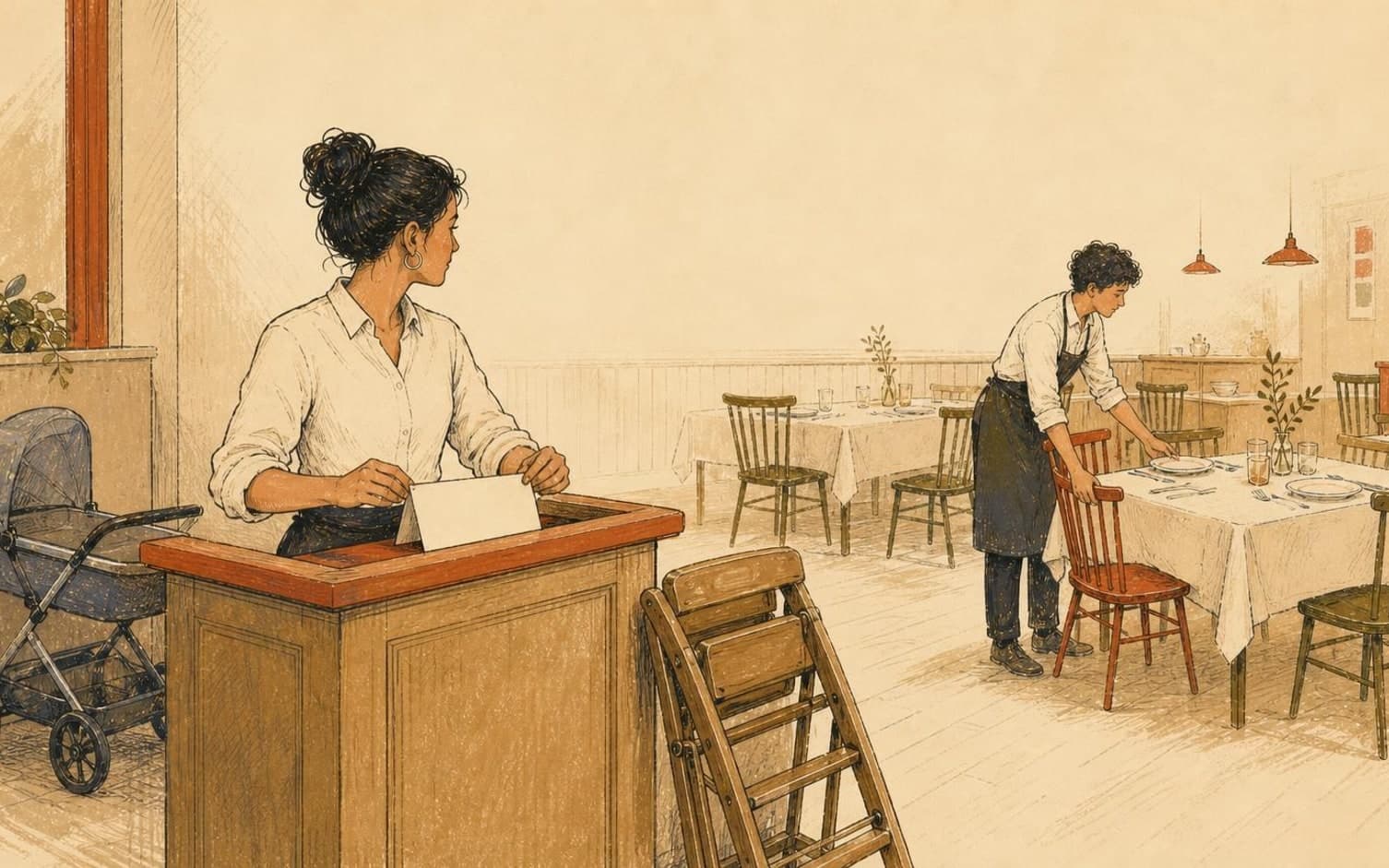
Why the final minutes are different
A change that arrives two days before the visit can be handled calmly. The same change ten minutes before the guest is standing at the door demands a different kind of response - short, concrete and without unnecessary questions back. The restaurant therefore needs two distinct routines: one for planned adjustments and one for what happens close to arrival.
Five types of changes are typical to encounter close to a visit: an altered number of guests, a new arrival time, the need for a pram, the need for a high chair, and a request for a specific table. All five have something in common - they affect where the guest will be seated, and the table map should therefore be checked before staff answer yes or no.
Changed numbers and new arrival times
When a group grows by two or three people right before arrival, the question is never simply “do we have room” but “do we have the right table available right now.” Whoever answers the phone should have the table map in front of them, not just a mental overview, so the answer is based on actual status rather than a guess that must be corrected later.
A new arrival time close to the visit requires the same level of checking, but also a judgment call on what happens to the original reservation. If the guest wants to arrive an hour later, the table must either be held or released in the meantime. The restaurant should itself decide how close to the scheduled time a change can be handled verbally and confirmed with a short reply.
Prams, high chairs and physical space
A pram and a high chair are not just a matter of equipment, but of space. A pram may require a different table than originally planned, since the distance between tables can vary across the venue. When this is reported shortly before the visit, staff must be able to quickly see which tables actually have room for the pram without blocking other guests.
This is where it helps to have set up the tables with accurate information in advance, so no one has to go and measure distances in the middle of a busy period. A reference photo of the table, available to staff, makes it easier to confirm instantly whether a table suits a pram or a chair - rather than relying on memory from previous evenings.
Table requests and swift internal communication
A table request that comes in close to the visit - “can we sit by the window” or “we don’t want to sit near the entrance” - should be treated as a request, not a promise, unless the table map actually shows it is possible at that exact moment. Saying yes too early creates problems if the table has already been assigned to another group.
Regardless of which change is involved, a calm process depends on the information reaching the right person before the guest arrives. In TableBooking, bookings and the table map are gathered in the same dashboard, so changes can be noted and seen by staff without having to be passed on verbally at the last second through several people.
Want to see how it works in practice?
Start with a free restaurant account and build your tables, opening hours and booking link at your own pace.
Start free