How to Structure Shift Handovers
A concrete template for shift handovers, with five fixed points covering upcoming bookings, table status, groups, deviations, and who is responsible for what.
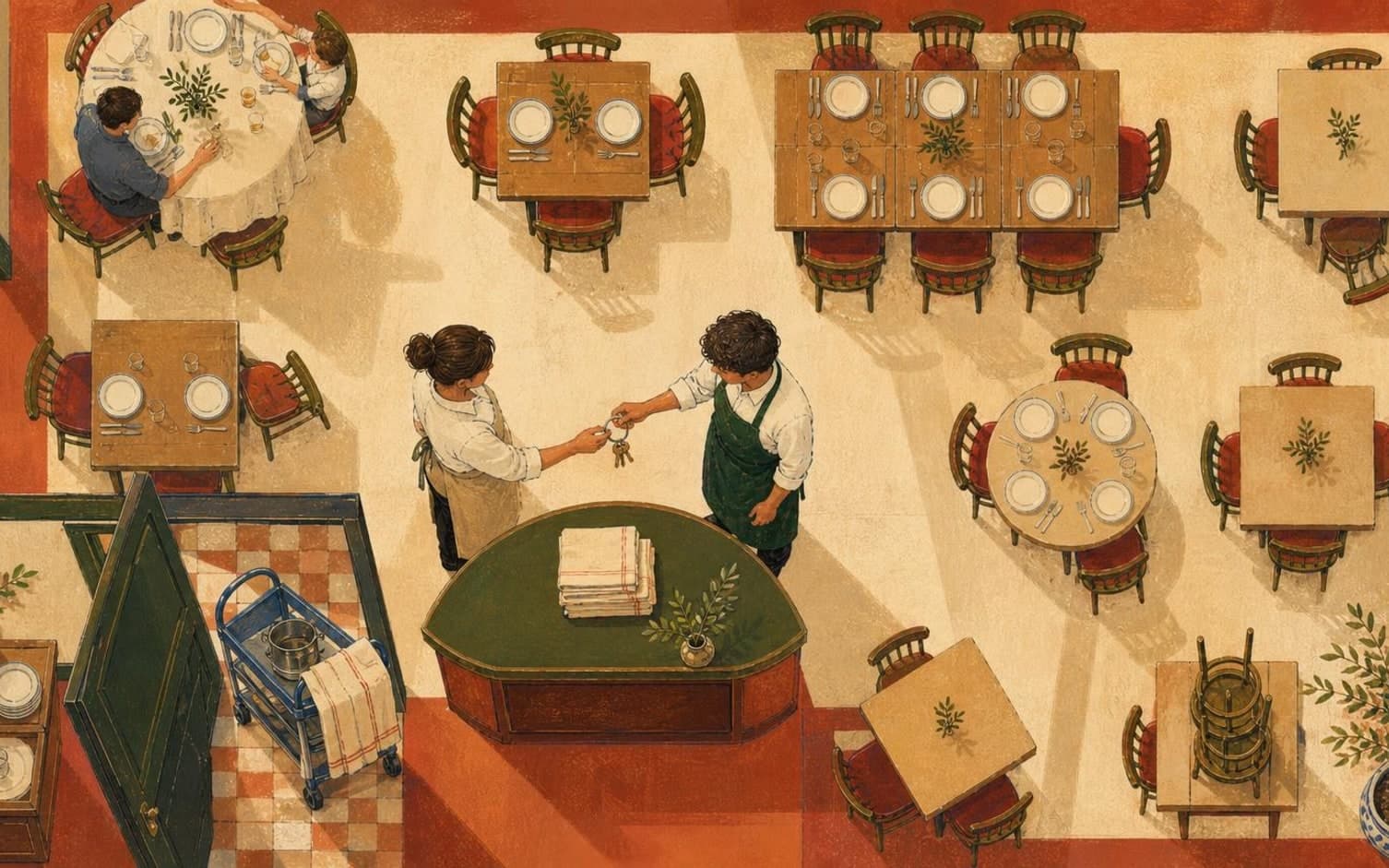
Why Handovers Often Fall Through
When a shift handover happens verbally and in a rush, the next wave of guests may already be on the way. Details about tables, groups and bookings get mentioned in passing, and much depends on the listener remembering correctly. It may work on quiet days, but quickly becomes fragile when there is a lot to keep track of.
The consequence is often that information disappears between shifts. A group that needed extra chairs, a booking with special requirements, or a table that's out of service - all of this can slip through if the handover isn't structured. The next shift then has to spend time figuring out things that were already known, instead of spending that time on guests.
Five Points Every Handover Should Cover
A good handover should always cover the same five points: upcoming bookings for the next few hours, the status of each table, any groups with special requirements, deviations from normal operations, and who is responsible for following up on what. When the structure stays consistent each time, it becomes easier to remember everything, regardless of who is giving or receiving the information.
Bookings should include the time, number of guests, and any relevant notes. Table status covers which tables are free, cleared, or need follow-up. Groups require special attention because they often come with seating or service arrangements that aren't visible on the daily table plan. Deviations cover everything from technical issues to staffing changes.
Make the Structure Concrete, Not Just an Idea
The structure has little value if it only exists in someone's head. Create a fixed template, digital or on paper, that follows the same five points every time. When the form should be filled out - a few minutes before the shift ends, or gradually throughout the evening - is something each restaurant should decide for itself. Whatever you choose, it becomes easier to avoid trying to remember everything at the last minute.
A dashboard that shows bookings, guests, and the table plan together provides a solid foundation for the handover, since both shifts can see the same information without having to interpret verbal messages. In TableBooking, tables can also have a reference image, so the next shift can quickly find the right table even if they don't know the venue as well as the colleague going off duty.
Who Follows Up on What - Assign Responsibility Clearly
Structure without ownership easily becomes a list no one feels responsible for. Decide in advance who follows up on bookings in the next hour, who keeps track of table status, and who takes responsibility for groups with special requirements. When names are tied to tasks, you avoid the situation where everyone assumes someone else is handling it.
Deviations should always have a clear owner, ideally the person who flagged the issue in the first place. The same principle applies to following up on groups and special bookings - one person should hold final responsibility, even if several are involved. This clarity ensures that the handover doesn't just inform, but actually guarantees that things get done as the shift continues.
Want to see how it works in practice?
Start with a free restaurant account and build your tables, opening hours and booking link at your own pace.
Start free