The sequence that turns closing time into preparation, not just tidying
A look at how a restaurant can build a short, fixed sequence at closing time - marking which tables actually had visits, noting deviations while they're still fresh, gathering guest information worth carrying forward, and using the final minutes to look at tomorrow's bookings before staff head home.
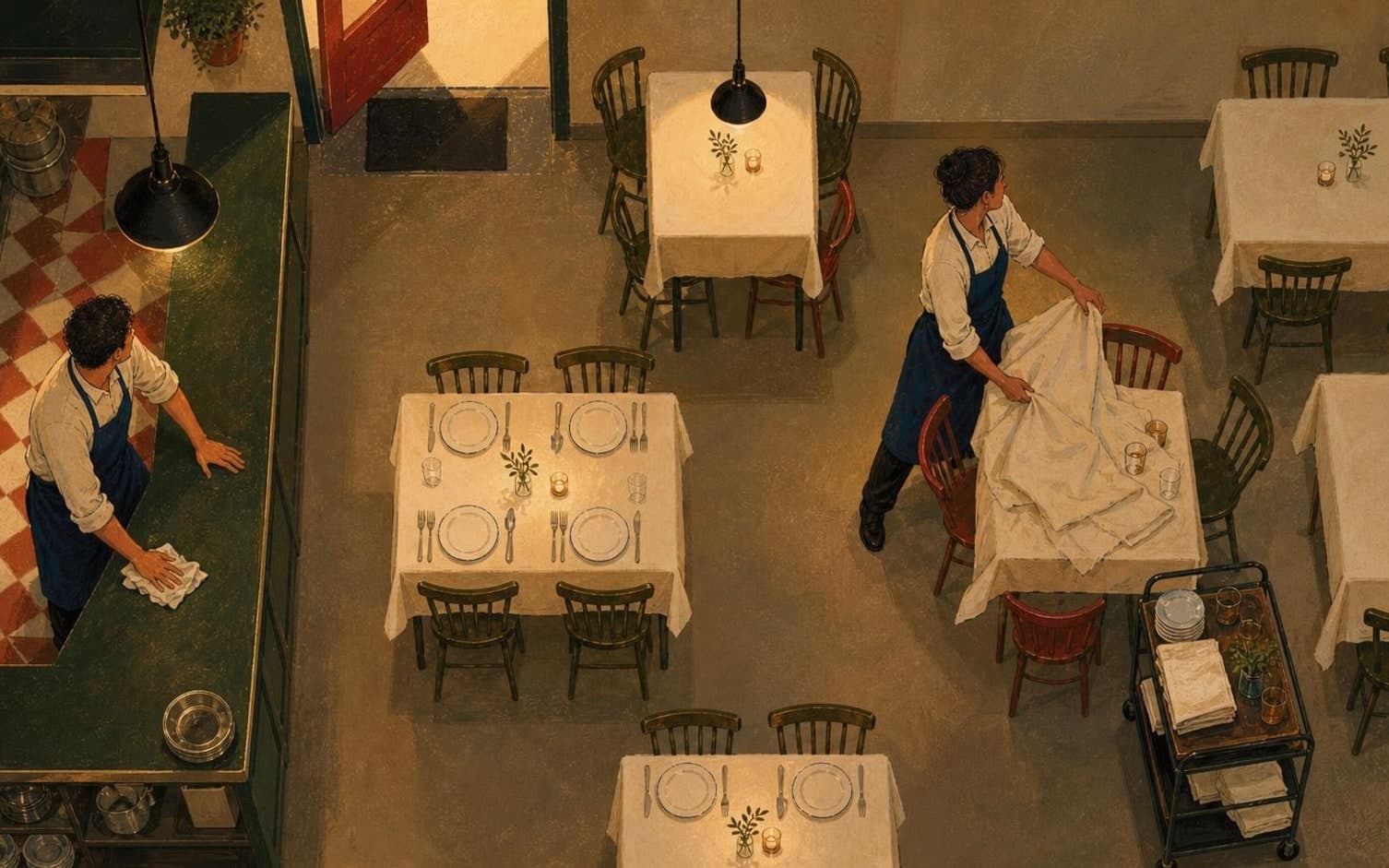
Why closing needs its own sequence
When service wraps up, attention quickly shifts toward tidying, settling accounts, and heading home. That's understandable, but it often means valuable information from the evening disappears before anyone gets around to writing it down. A short, fixed sequence at closing time ensures that what actually happened is carried forward, rather than becoming a vague feeling nobody can quite articulate the next day.
The sequence doesn't need to be long to be effective. What matters is that the same person - perhaps whoever is responsible for the evening - goes through the same steps every time, at the same pace, regardless of how hectic the evening has been. That way, the routine becomes something the team can rely on, even as midnight approaches and everyone really just wants to go home.
Mark visits and note deviations while they're still fresh
The first step is to go through the evening's booking list table by table and mark what actually happened: did the guest show up, did they arrive later than agreed, or did they not show at all. This marking takes only a short time per table, but gives an accurate picture of the evening that would otherwise easily become a vague gut feeling when looking back over the week.
Deviations should be noted at the same time, not the next day. Perhaps a table stayed seated longer than planned, the kitchen faced unexpected pressure during the evening, or a guest reacted to the wait time. Write it down in a few words with a specific time, so the next review is based on facts rather than what someone thinks they remember.
Gathering guest information worth carrying forward
Not everything that happens with a guest belongs in a note. What is worth carrying forward, however, is information that helps the next visit: an allergy that was confirmed verbally, a table preference that worked well, or a group that wanted quieter seating than what they had booked.
Write the note while the conversation with the guest is still clear in memory, and keep it brief and practical: what it concerns, and what staff should do with the information next time. A note that only describes the mood at the table, without any practical consequence, shouldn't be written down at all.
The first steps in preparing for tomorrow
Before staff go home, it's worth spending a few minutes looking forward rather than only backward. A quick glance at tomorrow's bookings - number of guests, known allergies, and any group bookings - means whoever opens the next day doesn't start completely from scratch.
In a tool like TableBooking, tomorrow's bookings, guests, and table map are shown together in the dashboard, rather than requiring someone to flip through several separate lists to find the same information. Combined with reference photos of the tables, the transition between the evening's close and the next day's opening becomes somewhat easier for whoever takes over to follow.
Want to see how it works in practice?
Start with a free restaurant account and build your tables, opening hours and booking link at your own pace.
Start free