The rhythm behind a seating plan that keeps guests relaxed
A practical look at how arrival rhythm, the kitchen's natural pace, realistic duration per table type and built-in flexibility work together, so the seating plan can absorb variation through the evening without guests noticing the pressure behind the scenes.
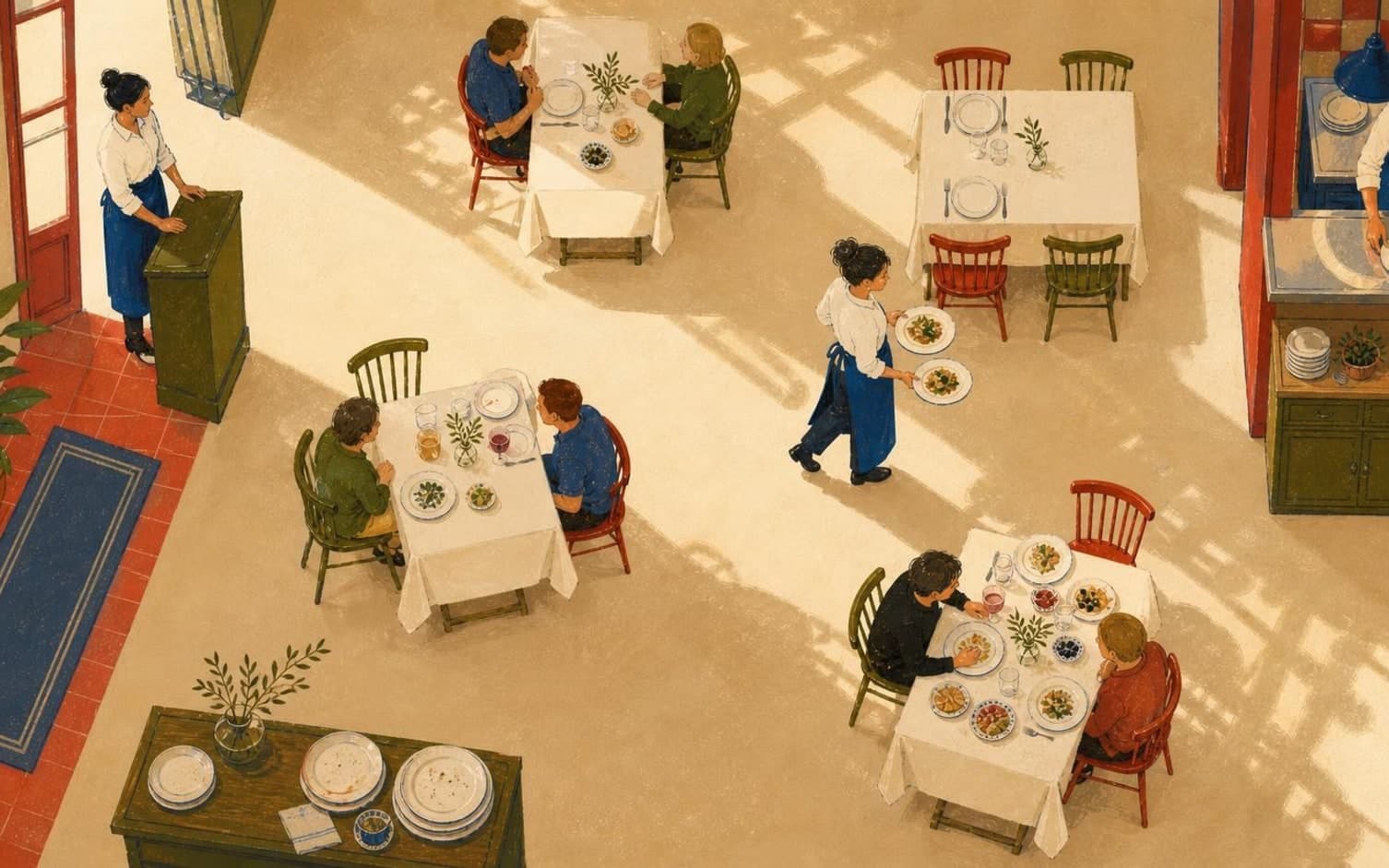
Arrival rhythm is about spacing, not just numbers
When guests book tables for the same evening, it's not just the number of bookings that determines pressure on the kitchen and staff, but also how the arrivals are distributed over time. Ten tables arriving within ten minutes creates a completely different situation than ten tables spread over ninety minutes, even though the total guest count is identical.
A common mistake is filling the most attractive time slots first, without considering how this clusters arrivals together. By deliberately spreading bookings across opening hours, with short intervals between seating times, the kitchen and waitstaff get a steadier flow of orders to manage throughout the evening.
The kitchen's pace should guide seating intervals
The kitchen has its own pace, governed by how long starters, main courses and desserts take to prepare and plate. When several tables order the same dish at the same time, bottlenecks can occur even if staffing levels are adequate. The seating plan should therefore take into account which dishes typically go together, not just how many guests are seated.
A practical approach is to build in short delays between large groups of tables, so that not every table sends orders to the kitchen simultaneously. How much preparation times actually vary between à la carte and a fixed menu is something each restaurant should assess for itself, based on its own menu and the kitchen's capacity through the evening.
Duration differs from table to table
Not all tables take the same amount of time, even when they seat the same number of guests. How long a table lingers can vary with the occasion and menu choice: is this a quick lunch, a longer dinner, or a celebration? Whether a multi-course tasting menu actually takes longer than a simple à la carte order is something each restaurant should judge from its own experience.
When a restaurant builds realistic time windows per table type, it becomes easier to see how much slack the plan actually has. A short standard duration that doesn't account for menu choice or occasion produces a plan that looks fine on paper but constantly needs manual adjustment through the evening because reality departs from the assumptions.
Flexibility as part of the plan, not a last resort
Flexibility should be built in from the start, not improvised in a hurry when something goes wrong. That means holding back some tables that can be combined or split as needed, and avoiding filling every single seat during the busiest time windows. How often deviations occur during an evening will vary, but a plan with no slack cannot absorb any deviation at all.
Simple tools can make this flexibility easier to manage in practice. In TableBooking, the restaurant can set up tables with reference images that help staff find the right table during service, while the dashboard shows bookings, guests and the table map together. This makes it easier to stay on top of things when the plan needs quick adjustment.
Want to see how it works in practice?
Start with a free restaurant account and build your tables, opening hours and booking link at your own pace.
Start free