The rhythm between arrivals, kitchen and duration determines how calm the evening will be
A review of how the restaurant can spread arrivals more evenly across the evening, match the kitchen's actual pace, set duration estimates that follow party size and menu, and build in flexible tables that absorb deviations - without any of this coming at the expense of guests' sense of calm.
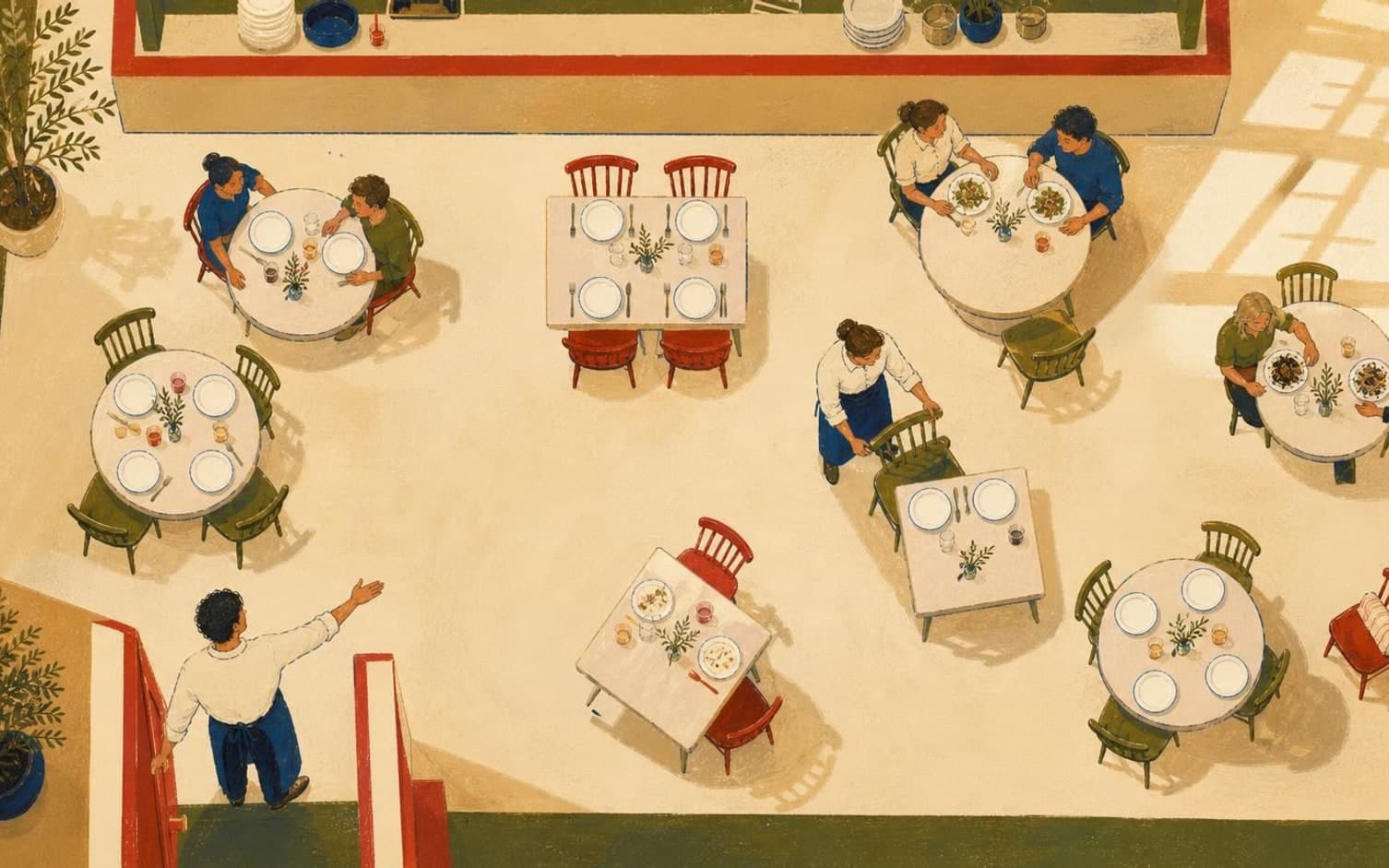
When arrivals cluster together, guests notice it first
Guests rarely notice the restaurant's total booking numbers, but they do notice the moment when the reception fills up with several parties at once. When arrivals cluster together within the same quarter-hour, queues form at the entrance, waits for tables grow longer, and staff must handle several greetings in parallel. A more even distribution of arrivals across the evening can ease these moments, without changing the overall capacity.
How close together can arrivals be before reception experiences it as busy? That is a question the restaurant should answer for itself, based on staffing and number of tables. Many choose to spread bookings across the evening rather than clustering them on the hour and half-hour, so that servers have time to greet, show guests to their table, and present the menu before the next guest arrives.
The kitchen's capacity sets the limit for how close together arrivals can be
Even an evenly spread arrival rhythm helps little if the kitchen cannot keep pace. Every new guest who sits down means additional orders reaching the kitchen within a short window, and if many tables order at the same time, dishes end up queuing at the same station. Guests don't experience this as a kitchen challenge - they simply experience it as a long wait for food after being seated.
How many tables can the kitchen handle within the same time window before preparation times start to stretch out? This varies with the number of stations, staffing levels, and how complex the menu is, and should therefore be mapped out by the restaurant itself. A steady flow of orders is often easier to manage than one large wave followed by a lull, even when guests were seated at the same time.
Duration estimates that follow the guests, not the clock
Many restaurants apply the same duration to every table, regardless of party size or menu choice. A table of two ordering à la carte often takes less time than a table of six sharing starters and waiting for everyone to finish at the same pace. When duration is set too rigidly, some tables sit empty long before the next guest arrives, while others don't get enough time.
How long does a couple ordering two courses take, compared with a party of four who also order dessert and coffee? This is something the restaurant should map out based on its own experience and the structure of the menu, rather than applying a fixed standard. Groups ordering a shared set menu often take longer, since all dishes need to arrive at the table simultaneously, and this should be reflected in the seating time set at booking.
Flexibility as a built-in buffer, not an emergency fix
No matter how well arrivals, kitchen pace and duration are calculated, some evenings will deviate from the plan. A party stays longer than expected, or a booking comes in late. Restaurants that set aside a few tables as flexible - combinable, or without a fixed next booking for a period - can absorb such deviations without it affecting guests at other tables.
When staff need to find the right table quickly during service, it helps to have bookings and floor plans gathered in one place, as shown in the TableBooking dashboard. There, each table can also have a reference photo, so that new or temporary staff recognise the table without having to ask colleagues in the middle of a hectic period.
Want to see how it works in practice?
Start with a free restaurant account and build your tables, opening hours and booking link at your own pace.
Start free