Stress-free seating: the rhythm between arrivals, kitchen and floor plan
A look at how restaurants can plan seating in advance - by reading the booking overview for arrival patterns, matching intervals to the kitchen's pace, setting duration ranges instead of fixed time slots, and preparing flexible table combinations before service begins.
Start with the arrival pattern, not the clock
Many plan seating around the opening time, but guests rarely arrive evenly spread across the evening. Instead, look at the booking overview the day before and note which time slots already have several tables set at once. These clusters likely show where the pressure will build, regardless of what the official opening hours suggest.
Once the clusters are visible, you can consider adjusting the intervals between new bookings during that particular window, rather than tightening the whole evening. This can give a calmer start for guests arriving during the busy period, without making the rest of the evening unnecessarily restrictive where the pressure is lower.
Tie booking intervals to the kitchen's actual pace
The kitchen's pace varies throughout the evening - depending on the number of simultaneous dishes, the complexity of the menu, and staffing at each station. How much the pace varies, and when the load peaks, is something the kitchen itself knows best. Once these variables are mapped out, booking intervals can reflect what the kitchen can actually deliver, rather than being built around an average figure.
One possible method is to divide the evening into periods of light, moderate and heavy load, and consider a separate minimum interval between new arrivals for each period. How long that interval should be during the busiest period is something the kitchen and service staff should agree on together, so the pace can be regained before the next wave of orders.
Set duration ranges instead of fixed time slots
A fixed standard setup, such as the same duration for every table, doesn't necessarily account for the fact that a table of two ordering few dishes may need less time than a larger party with more courses and an aperitif. How big the difference is in practice, and which duration range suits each table size and menu type, is something the restaurant should map out over a few weeks.
The duration range can also be considered based on which part of the evening the party arrives in. A table booking early during a quiet period can likely stay longer without affecting others, while the same type of party in the busiest stretch can be planned toward the shorter end of the range. What the right balance is remains a judgment the restaurant makes itself.
Prepare flexible table combinations before service
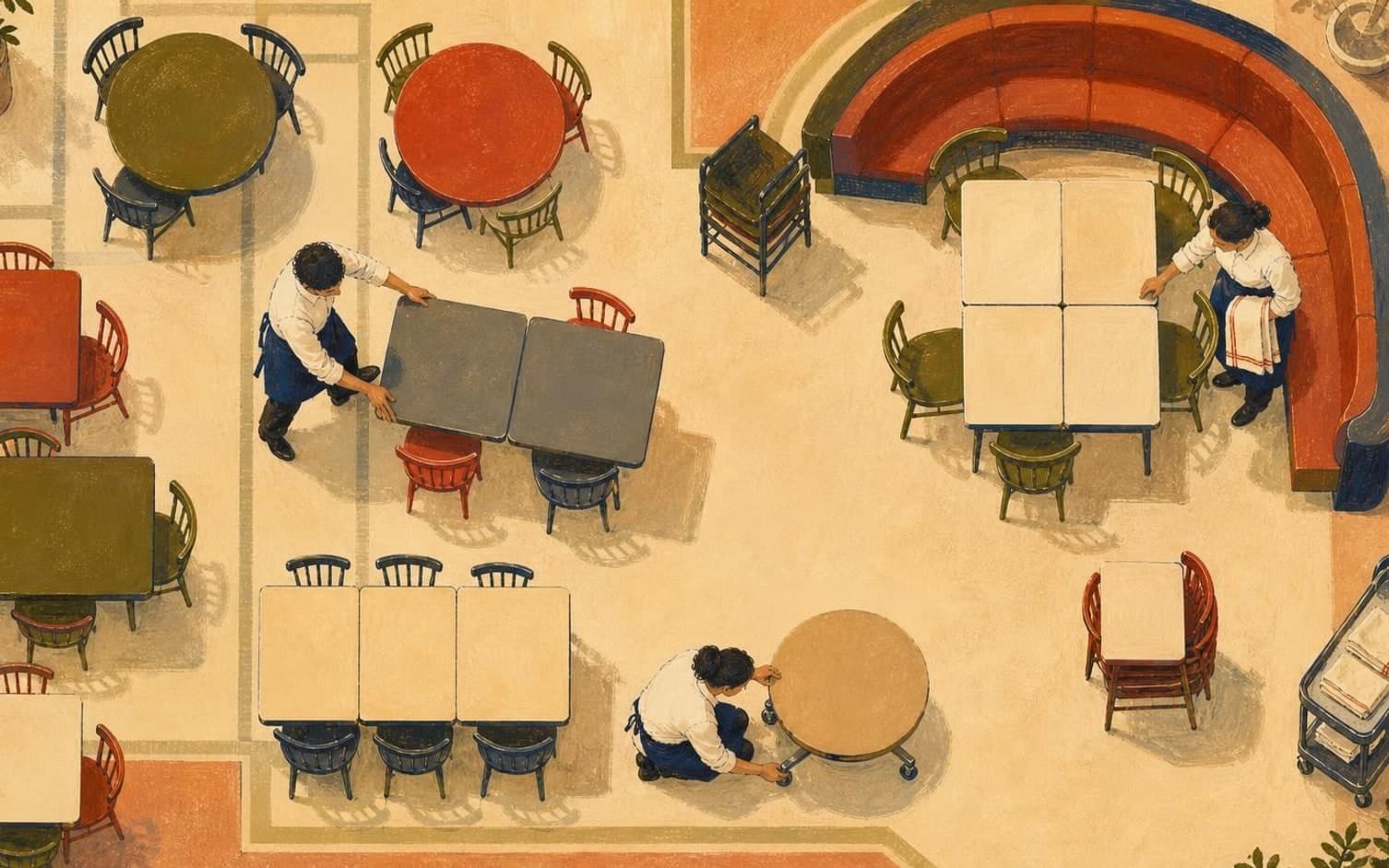
Flexibility is less about improvising during service and more about defining in advance which tables can be joined or split, and under what conditions. Mark these combinations on the floor plan before the doors open, so that changes in party size or delays can be met with a table that's already prepared, rather than a quick judgment call in the middle of the rush.
In TableBooking, each table can be given a reference image, making it easier for staff to find the right table when several combinations are in play on the same evening. Together with configured opening hours, capacity and floor plans in the dashboard, this provides a starting point for a seating plan that's prepared for deviations, even though the solution itself doesn't control how the evening actually unfolds.
Want to see how it works in practice?
Start with a free restaurant account and build your tables, opening hours and booking link at your own pace.
Start free