How to plan seating without stressing your guests
A practical look at how arrival rhythm, kitchen load, duration per table and built-in flexibility affect one another, and how to build a seating plan that can withstand a busy night without guests feeling the pressure.
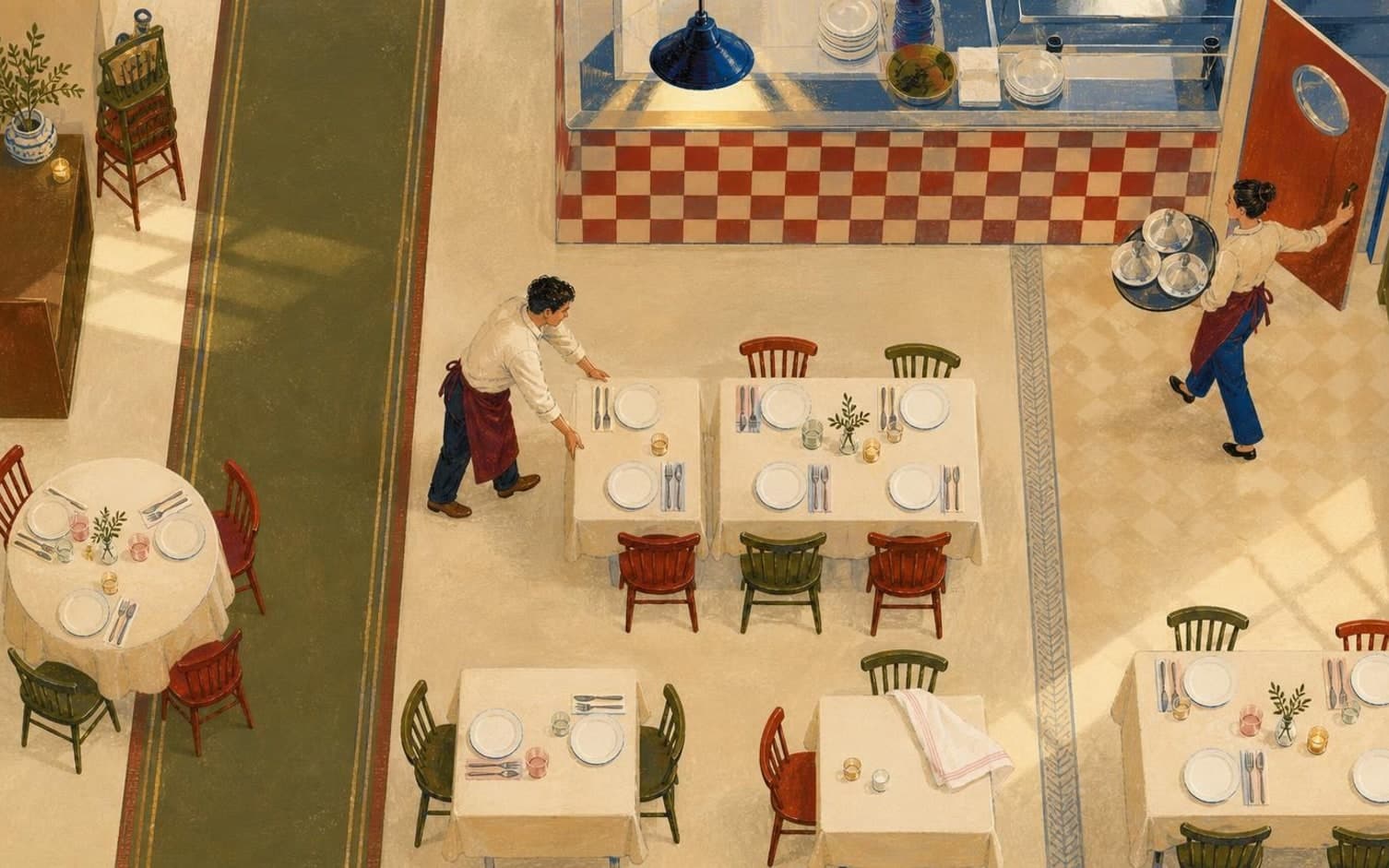
Why an even arrival rhythm matters more than table count
Available tables do not necessarily mean the entrance will run calmly. If several parties arrive together, the host stand, bar and kitchen must handle several starts at once. A queue can then form even when the restaurant has enough overall capacity for the evening. The seating plan should therefore show the arrival rhythm, not only how many tables are available.
A more even arrival rhythm comes from deliberately spreading reservations across the evening, rather than clustering them all at the most popular time slots. How much spacing to build between bookings during peak hours is something each restaurant needs to judge for itself, so staff have time to greet, seat and start service without several parties waiting in the entrance at once.
Kitchen load as the invisible factor in the seating plan
Kitchen workload is driven as much by when orders come in as by the total number of guests being served. If many tables place their main course order within a short window, the kitchen can experience pressure that never shows up on any booking overview. How significant this pressure becomes depends on the kitchen's own capacity and should be assessed restaurant by restaurant. The seating plan should therefore account for arrivals meaning simultaneous orders, not just filled seats.
One practical measure is to avoid having several large parties start dinner within the same time window. How many guests count as a large party, and how much time should separate such bookings, is something each restaurant should decide based on its own experience with kitchen capacity. The aim is a steadier pace throughout the evening, rather than short bursts of very high pressure.
Realistic duration per table type and course style
A fixed duration for every table does not distinguish between a quick lunch and a multi-course dinner. How long a table for two with an à la carte order actually stays, and how much longer a larger party with several courses takes, should be judged from the restaurant's own experience rather than a general rule. The difference can then be built into the seating plan.
When duration is underestimated, the pressure surfaces later in the evening rather than in the relevant time slot. The next booking for that table can be delayed, and the delay then carries forward to every subsequent reservation on it. Calculating duration based on actual menu type and party size, rather than a general rule of thumb, makes the rest of the evening more predictable for both guests and staff.
Flexibility as a buffer, not an exception
Flexibility should be built in from the start, not treated as an emergency fix when something goes wrong. By holding back a few tables or short time slots without fixed bookings, staff gain room to manoeuvre for delayed guests, longer meals or unexpected changes in party size, without having to reorganize the entire evening on the fly.
A clear table map and an overview of upcoming bookings make it easier to see where the buffer actually sits throughout the evening. In TableBooking, the dashboard shows bookings, guests and the table map together, and tables can have a reference image that helps staff quickly find the right table when the plan needs adjusting mid-service.
Want to see how it works in practice?
Start with a free restaurant account and build your tables, opening hours and booking link at your own pace.
Start free