The Seating Plan That Balances Arrivals, Kitchen Load and Duration
A practical look at how a restaurant can build its seating plan around the rhythm between arrivals, the kitchen's actual workload, realistic duration estimates and built-in flexibility - four elements that together determine how calm or hectic an evening feels.
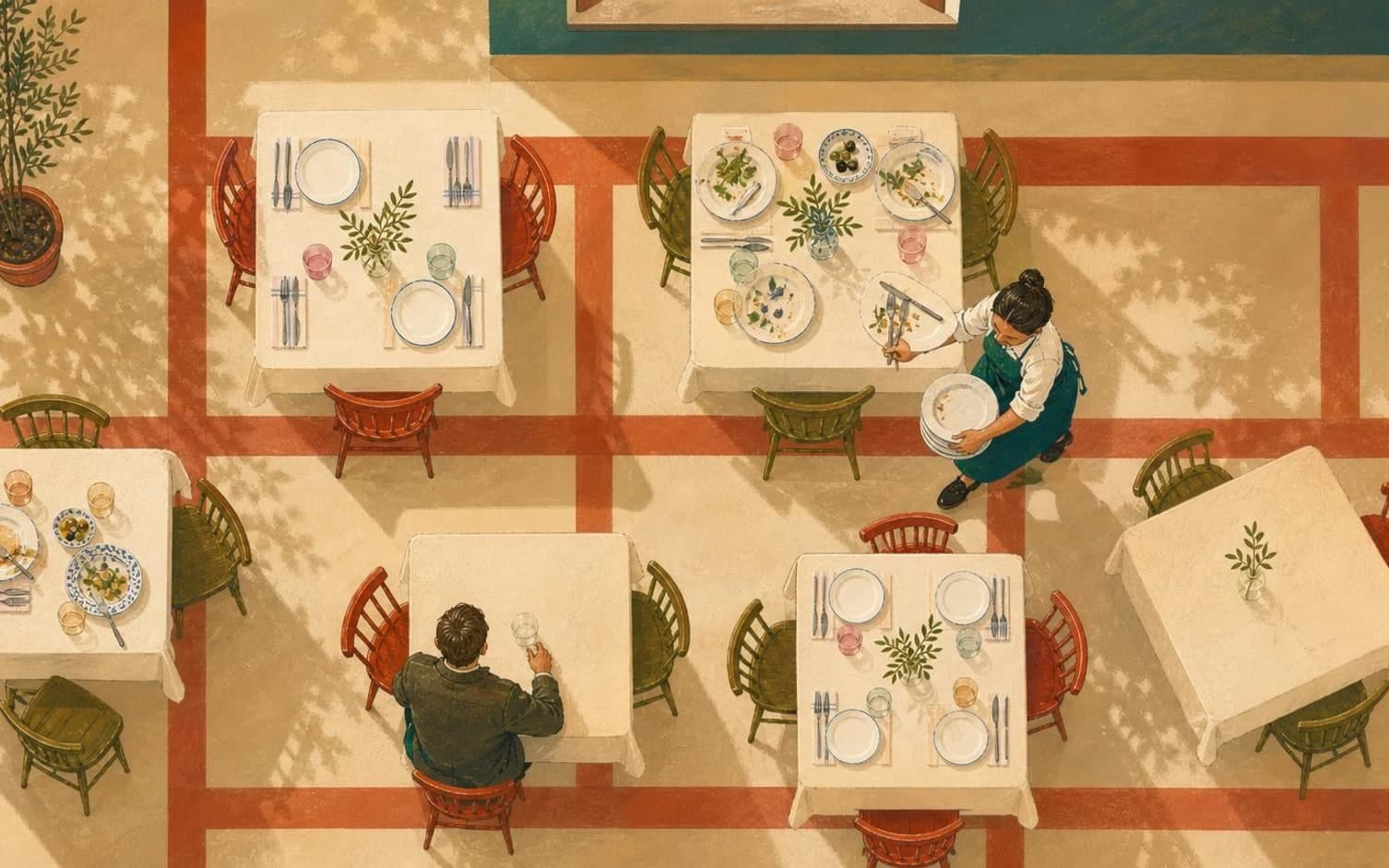
The rhythm between arrivals shapes the experience more than total guest count
When many bookings are set for the same time slot, a short window emerges where reception, bar and kitchen must handle several arrivals at once. Guests do not notice the total number itself, but rather the waiting time and pace they encounter at the door. Spreading arrivals more evenly across opening hours can soften these peaks, without needing to change the total number of bookings.
A practical way to build this in is to set fixed intervals between seatings instead of clustering them into one large block - for example every fifteen minutes rather than every half hour. How tight these intervals should be depends on staffing and local conditions, and is something each restaurant must assess for itself. The principle, however, is that arrivals are spread evenly, giving staff time to greet and seat guests before the next group arrives.
Kitchen load belongs in the seating plan, not just in the queue
The kitchen does not experience load as a number of bookings, but as a number of dishes that must go out at the same time. If several tables order the same dish with a long preparation time around the same moment, a bottleneck arises even if the tables themselves are well spaced out in time. The seating plan should therefore take into account which dishes are demanding to produce.
One possible approach is to start from the times the kitchen typically experiences as busiest, and build in a short offset between large groups during these windows. Exactly when this occurs will vary from kitchen to kitchen and should be assessed based on the restaurant's own experience. The goal is to even out production without guests feeling that their table has been given lower priority.
Duration is an estimate, not a guarantee
A table of four ordering a starter, main course and dessert naturally takes longer than a table ordering only a main course. If the seating plan applies the same duration to every booking regardless of group size and ordering pattern, some seatings end up too tight and others too slack. Duration should therefore be adjusted based on experience, rather than fixed as a single rule for the whole evening.
Day of the week and time of day can also affect how long guests stay, but exactly how much will vary from venue to venue - are lunch guests on an ordinary weekday quicker to leave than dinner guests on a Saturday at this particular restaurant? This is a question the restaurant itself should answer based on its own patterns, and use that answer to adjust duration estimates in planning, rather than applying one average to every situation.
Flexibility as a built-in part of the plan, not an emergency fix
A plan filled to the last minute with no breathing room cannot absorb any deviation. A single table sitting a little longer than expected, or a group arriving a few minutes early, can then throw off the rest of the evening. Building in a few free minutes or one extra table as a buffer allows the plan to absorb such deviations without guests noticing.
In TableBooking, the restaurant can view bookings, guests and the table map together in the dashboard, giving a combined overview of the day's seating plan. Tables can also have a reference photo, so staff can quickly find the right table when the plan is adjusted on the fly, without wasting time searching for the correct table in the dining room.
Want to see how it works in practice?
Start with a free restaurant account and build your tables, opening hours and booking link at your own pace.
Start free