The Seating Plan That Hides Stress from Guests
A look at how arrival rhythm, kitchen pace and realistic turnaround times send signals guests pick up on long before anything actually goes wrong - and how built-in flexibility in the plan can soften these signals.
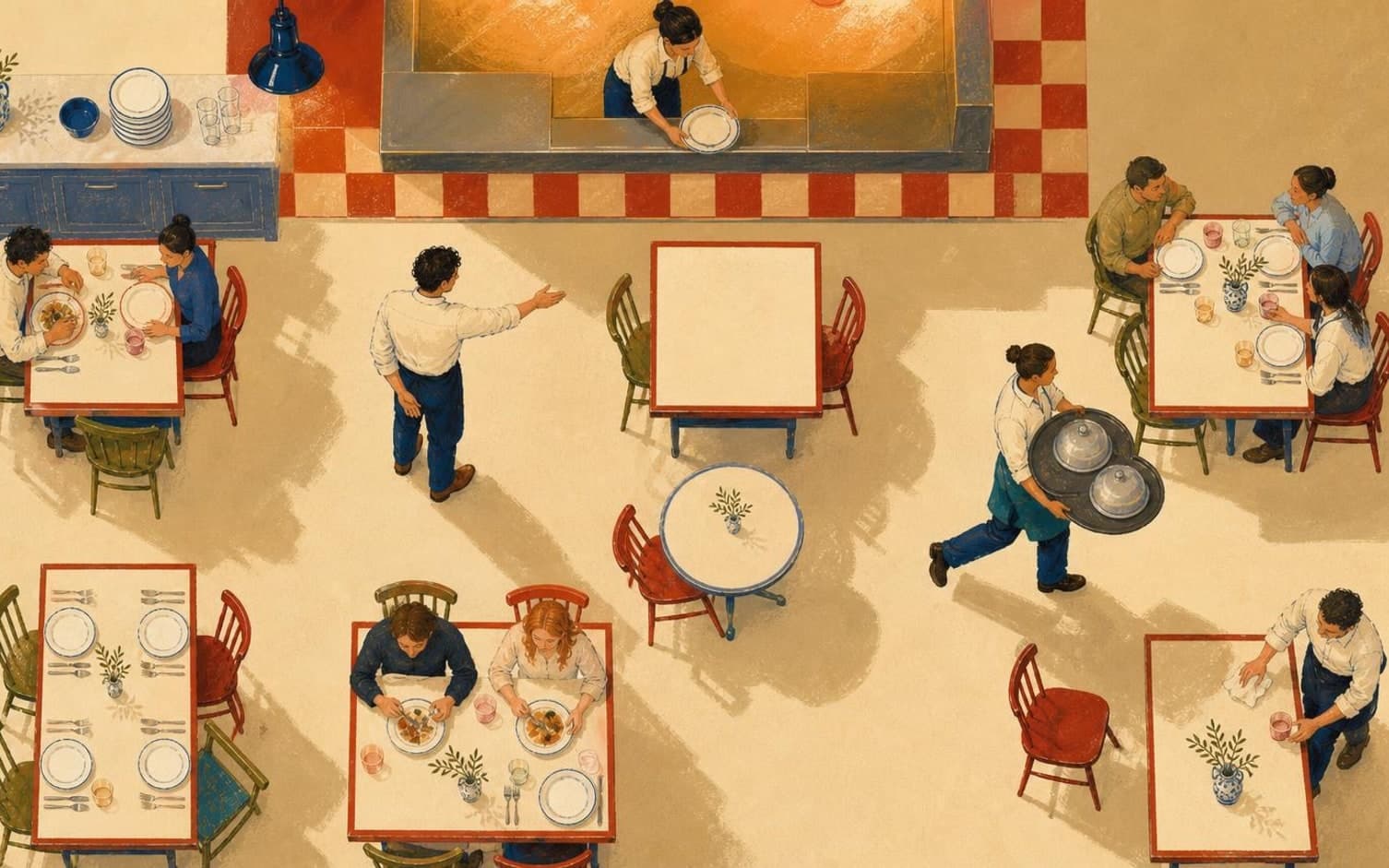
The Rhythm Guests Actually Notice
Guests only see a small part of the operation, but they pick up on the pace around them: how long they stand at the counter, whether staff seem rushed, and whether dishes arrive at even intervals. Stress spreads through these small signals, not through numbers that exist only in staff members' heads.
When arrivals bunch up together, the pressure spreads throughout the entire service, even if each individual table technically has plenty of time. Guests don't notice that the numbers add up on paper - they notice that something feels forced, and this is exactly what seating planning should account for.
The Kitchen's Natural Tempo Sets the Limit for Arrivals
The kitchen has its own tempo per dish and per station. When several tables arrive at once, the kitchen receives multiple orders within the same window, and delays cascade backward through the queue. A guest who waits longer than expected experiences this as stress, even though the cause lies somewhere they never see.
Spacing arrivals at even intervals can make it easier for the kitchen to handle orders in waves that match its own capacity - but exactly how tight that spacing should be is something each restaurant must judge based on its own menu and staffing. The goal isn't to turn tables faster, but to distribute the load so no single period becomes too heavy all at once.
Duration Is a Range, Not a Fixed Number
Different table types follow different time patterns, and how long a table of two lunch guests actually takes compared to a dinner party with multiple courses is something the restaurant should map out over time. If duration is treated as one fixed number for everyone, the next booking gets scheduled too tightly, and the result can be a visible sense of rushing when the previous guest hasn't even left yet.
By planning with a range and a small margin, and knowing which table types typically run long, staff can make calm decisions about when the next guest can be seated. This creates room to maneuver without anyone having to stand and wait unnaturally long for a table that will soon be free.
Flexibility Built Into the Plan, Not Into the Head of Whoever's on Shift
Flexibility works best when it's built into the structure in advance - some tables held as buffer, clear alternatives for combining smaller tables, and a defined backup plan for the busiest times. This way staff don't have to improvise under pressure, which results in fewer visible signs of stress at the table.
In TableBooking's dashboard, staff get a combined view of bookings and the floor plan, and a reference image for each table can make it easier to find the right spot quickly even when the plan has been adjusted on the fly. This provides a calmer foundation for decision-making in the middle of a busy evening.
Want to see how it works in practice?
Start with a free restaurant account and build your tables, opening hours and booking link at your own pace.
Start free