The Last 20 Minutes Before Service: A Checklist That Divides Responsibility
A concrete checklist for the final minutes before the doors open: how groups, allergies, table preferences and any delays can be assigned to clear roles, so that everything is confirmed before the first guest walks in.
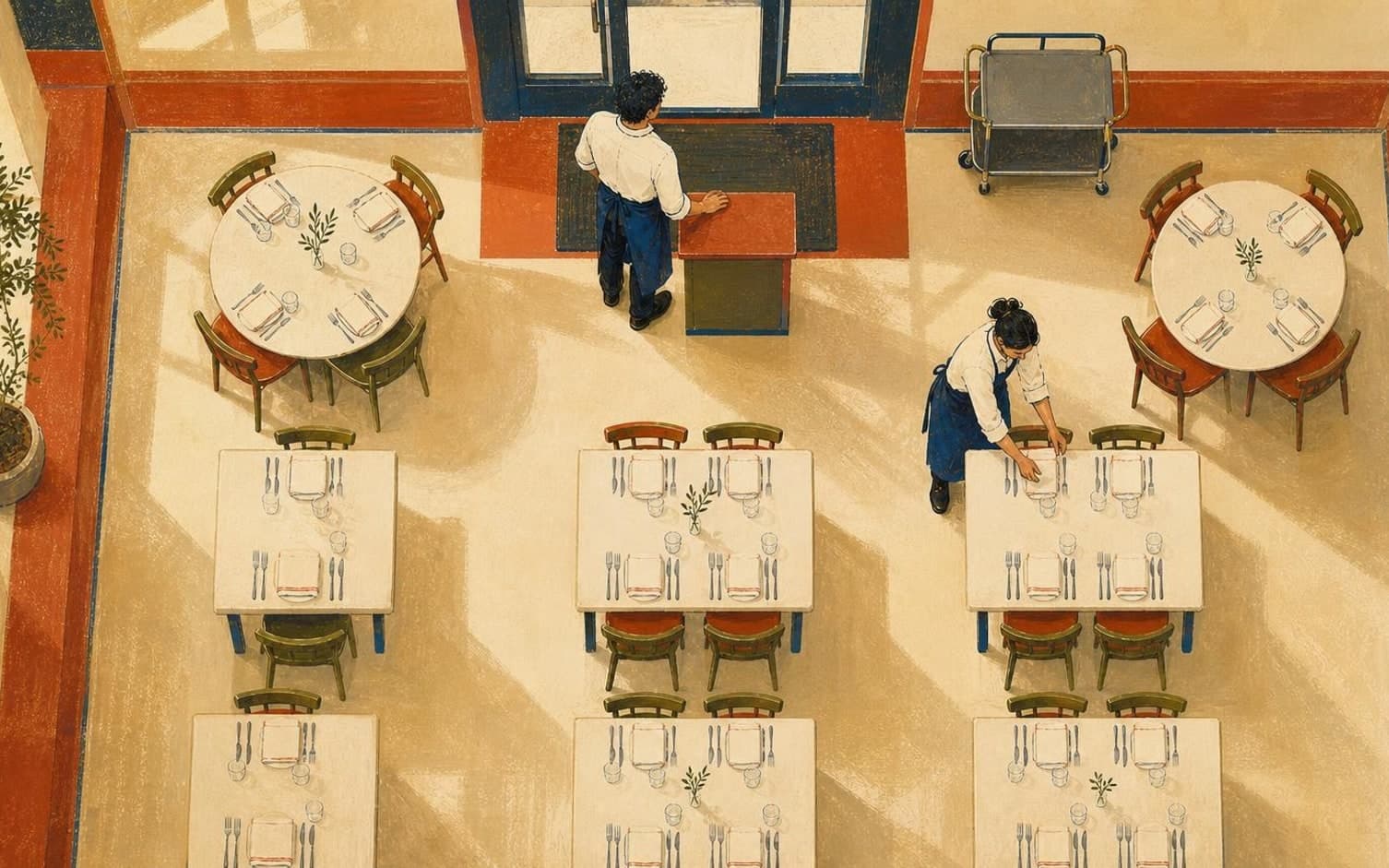
The Last 20 Minutes Before Service Need Their Own Attention
The final minutes before the doors open are often the most hectic part of the entire shift, yet they are rarely treated as a category of their own. Many restaurants rely on a general checklist covering the whole day, without singling out what must be done right now. Whether the window should be 20 minutes, 15, or 30 is something each restaurant must judge for itself, based on how long its own routines actually take.
A practical approach is to break the final minutes down into five concrete points: groups, allergies, table preferences, delays, and who is responsible for what. When these points are written down as separate tasks, rather than one long shared list, it becomes easier to see what has actually been checked and what is still open when the first guest walks in.
Groups, Allergies and Table Preferences: What Should Be Physically Confirmed
Groups should be checked against actual table capacity, not just the number of chairs that could theoretically fit around a table. How large a group needs to be before it requires a separate check is something the restaurant should decide for itself, based on how the room and tables are actually arranged. Table preferences such as a window seat, a high chair, or a specific corner should be physically verified at the table, not just read from the notes field in the booking.
Allergies should be communicated to the kitchen in a way staff can act on directly, for example "no nuts in the starter" rather than a general note that the guest "has an allergy." A short walk-through where the kitchen confirms each point verbally makes it clear the information has actually been received and understood, not merely logged somewhere in the system without follow-up.
Delays and the Division of Responsibility Between Roles
Delays earlier in the day can affect table turnover well into the evening, even though this isn't always visible before service begins. How long a status check on this should take, and who should run it, is something the restaurant should determine based on its own experience of how often lunch service actually creates knock-on delays later in the day.
A division that often works well in practice is for the host to go through the day's bookings and flag groups and table preferences, the kitchen to confirm allergies and special requirements, and a server or runner to physically check the table setup against the floor plan. When each role has a few concrete tasks instead of one long shared list, it becomes clear who is accountable for what if something slips right before opening.
The Floor Plan as a Final Visual Check Before the Doors Open
Once groups, allergies, table preferences and any delays have already been confirmed by the responsible roles, the floor plan can serve as a final visual check right before service. Staff can see which table is which without having to ask a colleague, which is useful when multiple shifts or temporary staff need to find the right table in a dining room they don't know as well.
In TableBooking, the restaurant can add a reference photo for each table, so that whoever sets the table or shows guests to it recognizes it without prior knowledge of the room. The dashboard displays bookings, guests and the floor plan together, so the final check draws on the same overview used throughout the rest of the day, rather than a loose paper list put together at the last minute.
Want to see how it works in practice?
Start with a free restaurant account and build your tables, opening hours and booking link at your own pace.
Start free