Handover between shifts: a fixed structure for bookings, table status and responsibility
A practical look at how restaurants can organize the handover between shifts around a time window for upcoming bookings, clear table status, group information, clearly worded incidents and a responsibility matrix showing who follows up on what.
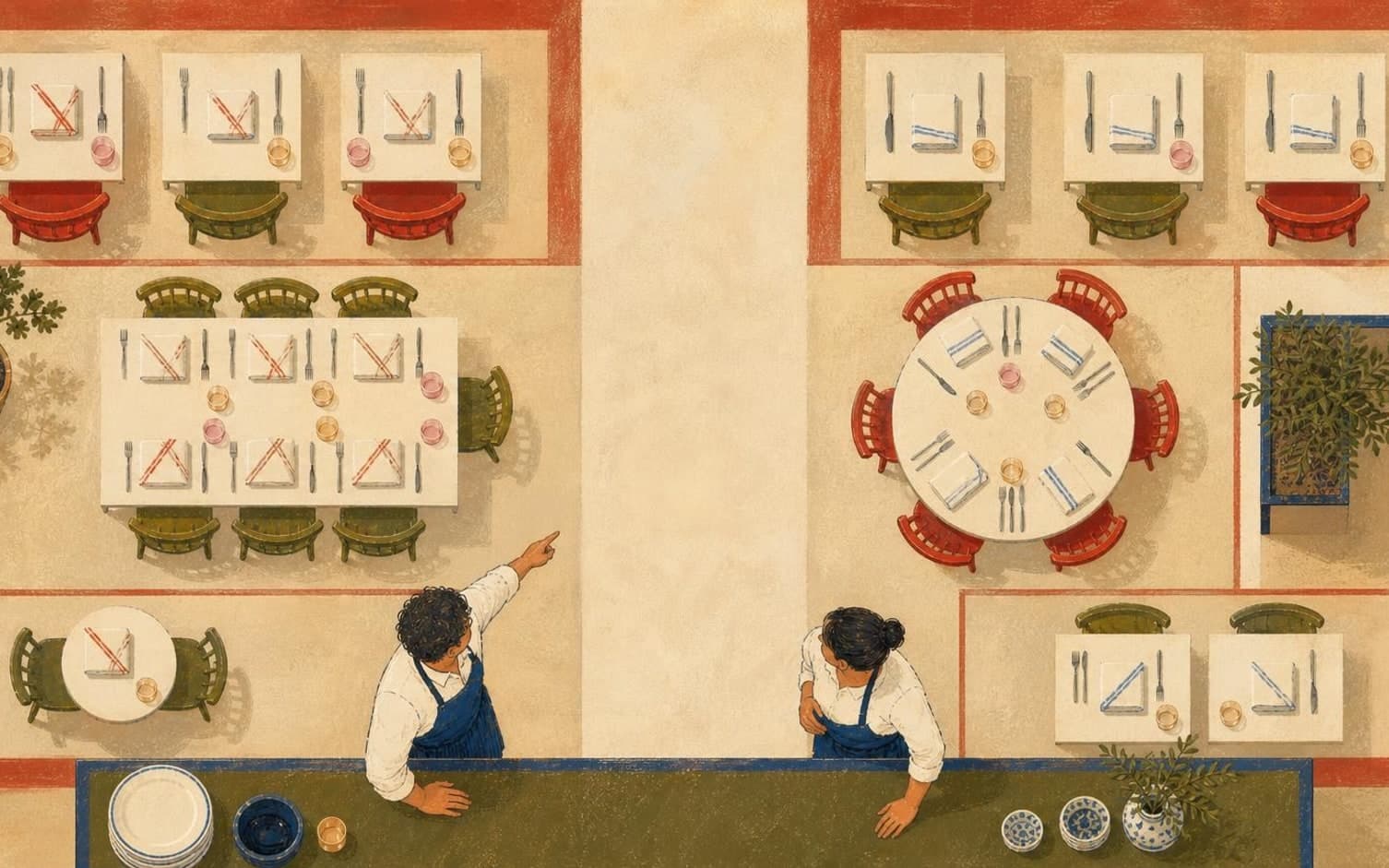
Verbal handovers fade away - written structure remains
When the handover happens only verbally in the doorway, details disappear as quickly as the shift changes. Whoever takes over the evening usually remembers the main points, but loses nuances like "table 12 asked to switch seats" or "the party of eight is arriving ten minutes later than booked." These details are often exactly what creates unnecessary stress in the middle of service.
A fixed written structure doesn't solve everything, but it ensures information actually ends up somewhere the next shift can find it. The structure should be short enough to fill out every day, and specific enough to answer questions without follow-up. The goal isn't a perfect document, but one that actually gets used every single time the shift changes.
Four points that give the next shift what they need to know
Upcoming bookings should be shown as a time window rather than a full list - how many hours ahead is relevant is up to each restaurant to decide - including number of guests, time, and any table preferences for each booking. Table status is noted per table: free, cleared, or occupied with an expected release time. This gives the incoming shift a quick picture of where the pressure is building, without having to read through the entire day's history.
Groups need their own point because they rarely follow a standard pattern - confirmed headcount, any menu choices, and whether anything has been agreed verbally that isn't in the booking system. This information should be gathered in one place, so the next shift can check the details quickly without flipping through several lists or asking colleagues who have already gone home.
Incidents should be written so the next shift understands them without context
An incident note like "table 5, check" helps no one. Instead, write what happened, what was done, and what, if anything, remains - for example, "table 5 complained about a long wait for the main course, received a complimentary dessert, no further follow-up needed." Whoever reads this should understand the situation without having to ask a colleague who is no longer on shift.
It helps to divide incidents into simple categories: food and service, technical issues such as broken equipment, and guest matters such as special needs or complaints. Each incident should be linked to a table number or a clear marker, so incoming staff can quickly find the right table without having to ask around the floor.
A responsibility matrix turns follow-up into something concrete, not assumed
Without named responsibility, follow-up is often assumed away - everyone thinks someone else is handling it. A simple matrix with three columns solves this: what remains to be done, who is responsible, and by what time. Responsibility should be assigned to a role, such as shift leader or floor server, not to a named individual who might be off the next day.
This structure works regardless of which system the restaurant uses for bookings and table maps. Restaurants using TableBooking can pull the overview from the dashboard, which shows bookings, guests and table maps, and tables can have a reference image that makes it easier to find the right table during service. The actual distribution of responsibility and the wording of incidents, however, remain an internal habit that must be built independently of the tool.
Want to see how it works in practice?
Start with a free restaurant account and build your tables, opening hours and booking link at your own pace.
Start free