Useful guest notes are about tasks, not people
A look at how restaurants can distinguish between practical preferences that help during service and personal details that give staff no concrete task, with a focus on relevance, respect and internal use.
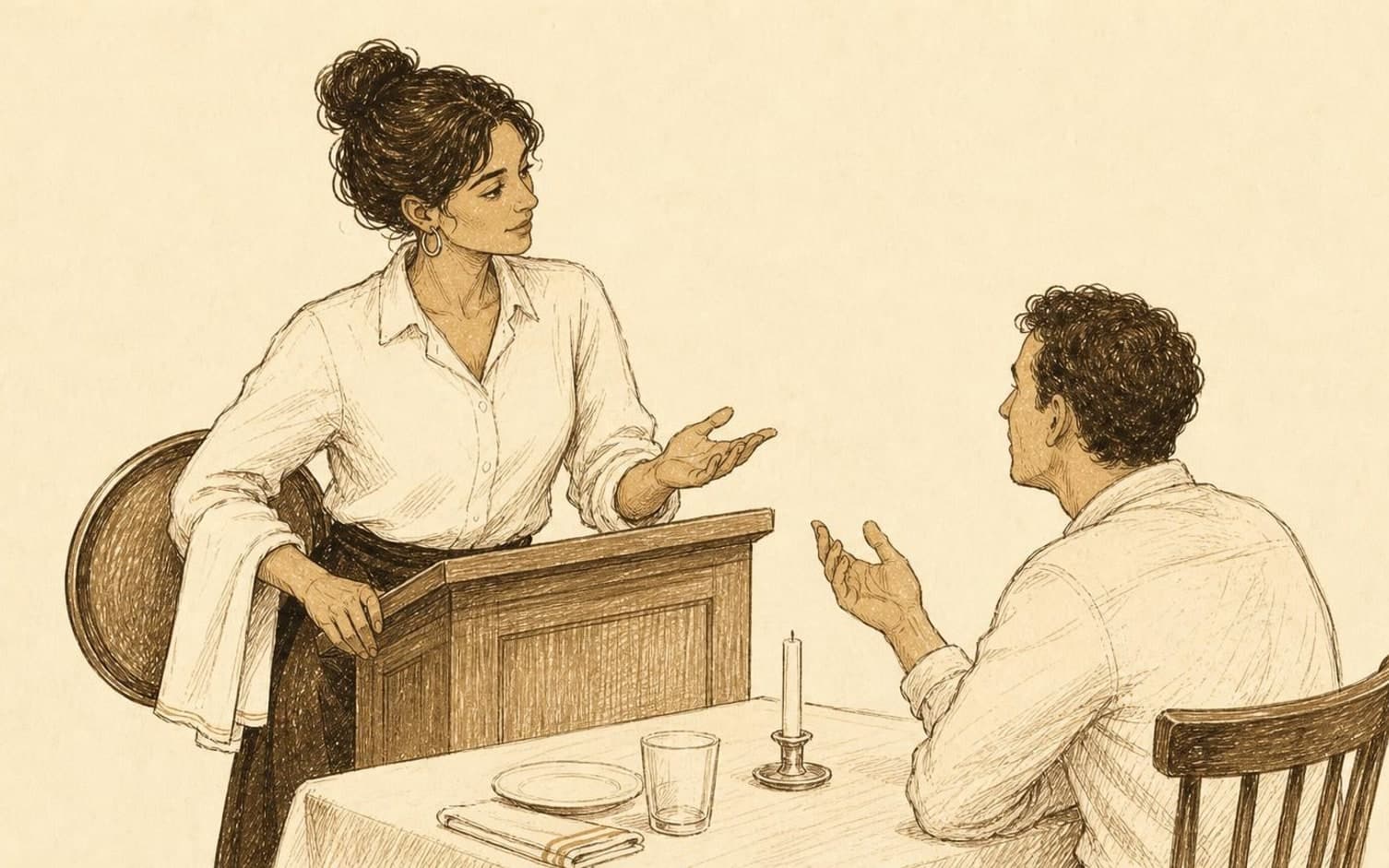
Why the notes field gradually fills with unnecessary information
Most guest notes start out fine: an allergy, a table preference, a note about a pram. Over time, several staff members add small things they noticed during service, without it being clear what the note is actually meant to be used for. The result is a field that keeps growing but becomes harder to read quickly when it's actually needed.
A guest note should have one job: give the next person who reads it a concrete thing to do. If a note only describes an observation with no practical consequence, it rarely belongs in the system. The question the restaurant should ask itself isn't whether the information is interesting, but whether it helps someone make a decision during service.
Practical preferences that actually make a difference
Notes that work are tied to something staff can act on immediately. Examples include allergies or intolerances, a need for wheelchair access, a request for a window table, a high chair for a specific number of children, or a guest celebrating something who would like a quiet corner. All of these give a clear task before the guest sits down.
What makes these notes useful is that they're time-bound and tied to the specific visit. They describe what applies to this particular visit, not who the guest is as a person. A server reading the note before the guest reaches the table should be able to prepare the right solution without having to interpret or guess what's really meant.
Personal details that don't belong in an operational system
Comments about a guest's appearance, presumed occupation, relationship status, political views or private life give staff no task whatsoever, and should never be noted. The same goes for assumptions about finances based on an order, or subjective judgements about mood and behaviour from a previous visit. Such information shifts the focus from service to judging the person, which is not the restaurant's role.
This type of note also creates an internal risk. If several staff members have access to the field, a casual comment can be read by someone unfamiliar with the context and form an unnecessary and skewed impression of the guest. Even when the intention is innocent, the simplest and most respectful choice is to leave out anything not directly tied to how the table should be set or the visit carried out.
A simple test before writing anything down
Before adding a note, staff can ask three short questions: Does this give someone a concrete task for the next visit? Is it about the visit rather than the person? Would the guest be comfortable knowing this exact thing was written down? If the answer to any one of these is no, the note should be deleted or never written in the first place.
In TableBookings' dashboard, where bookings, guests and floor plans are shown together, it's worth setting aside time at regular intervals to go through existing notes and remove anything no longer relevant. A short internal routine for this keeps the field useful for those who actually need it during service, instead of letting it gradually fill up with information that serves no purpose.
Want to see how it works in practice?
Start with a free restaurant account and build your tables, opening hours and booking link at your own pace.
Start free