The Handover Form That Makes Shift Changes Predictable
A practical look at how a restaurant can build a simple written handover form with five fixed fields - upcoming bookings, table status, groups, deviations and responsible role - and how the form is used together with a brief verbal run-through at every shift change.
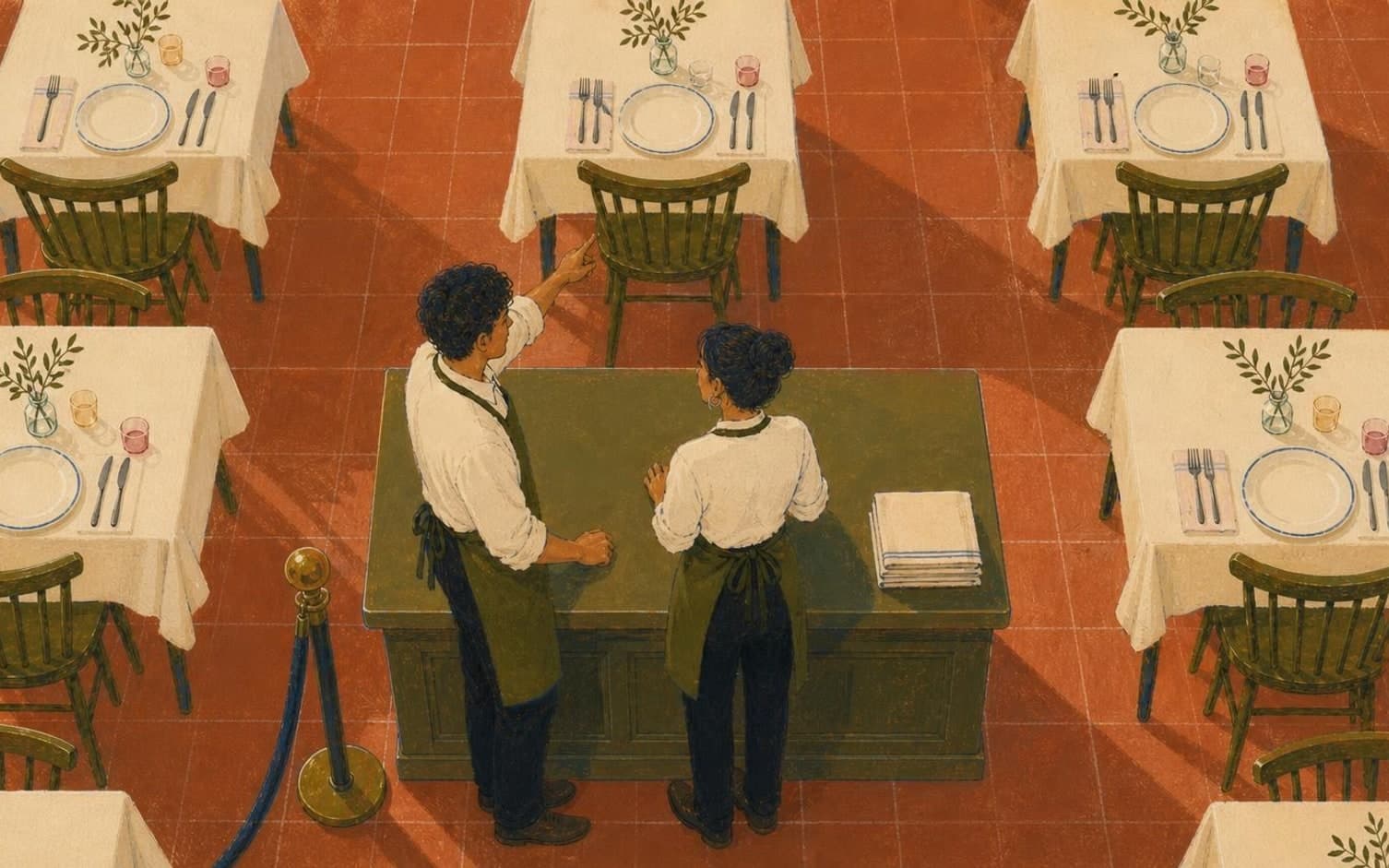
Why a verbal handover isn't enough
A quick summary at shift change rarely works when the restaurant has several bookings, groups and deviations happening at once. Details that seem self-explanatory to the person giving the information can get lost when the person taking over is fully focused on getting started. Without a fixed written format, the handover depends on who happens to be present, and how much time they have right then.
A written format doesn't solve everything, but it gives a place to record information that would otherwise only be mentioned verbally and forgotten in the noise. When the structure is the same every day, both parties know where to look for answers, and new staff members can follow the same template without having to learn unwritten routines from experienced colleagues.
Five fixed fields in the handover form
A simple form can be built around five fields: upcoming bookings within a defined time window, the status of each table in use, groups with special needs, deviations that have occurred during the shift, and who is responsible for follow-up. The fields should be filled in continuously throughout the shift, not just in the final minutes before the change.
Upcoming bookings should be shown within a defined time window, and the restaurant should decide for itself whether the next few hours or the rest of the evening is most useful for the person taking over. Table status should distinguish between tables that have been cleared, tables waiting for payment, and tables reserved for a specific group, so no one has to guess how far along service is.
How to phrase deviations and responsibility
A deviation should be written as a concrete incident with a clear outcome, not as a general comment that the evening was hectic. 'The guest at the window table received the wrong dish; a new dish was served shortly after' gives the person taking over something to follow up on, while 'the kitchen was very busy' gives no direction for what should happen next.
Each deviation should be linked to a role, not a named person, since shift schedules change. Write 'the kitchen manager will follow up with the guest on their next visit' rather than placing the follow-up on a specific colleague who might not be back on shift for several days. That way responsibility flows naturally onward even as staffing changes.
Make the handover a fixed routine, not an exception
A brief verbal run-through, using the form as its basis, works better than a long unstructured conversation. The restaurant should decide for itself how many minutes such a run-through should take. The person going off shift reads through the points in a fixed order, and the person taking over asks clarifying questions where something is unclear, rather than searching for information later amid the evening's chaos.
A dashboard with bookings, a table map and reference photos of the tables, such as in TableBooking, can be used as a shared visual reference during the handover itself, so both parties see the same overview at the same time as the form is reviewed. This makes it easier to point to specific tables and bookings instead of describing them in words alone.
Want to see how it works in practice?
Start with a free restaurant account and build your tables, opening hours and booking link at your own pace.
Start free