Four fixed fields that make shift handovers clear
A look at how restaurants can structure the handover between shifts around four fixed fields - upcoming bookings, table status, groups and deviations - and ensure that every open item has a named person and a deadline to follow up on, whether the transition happens in the middle of the day or at closing.
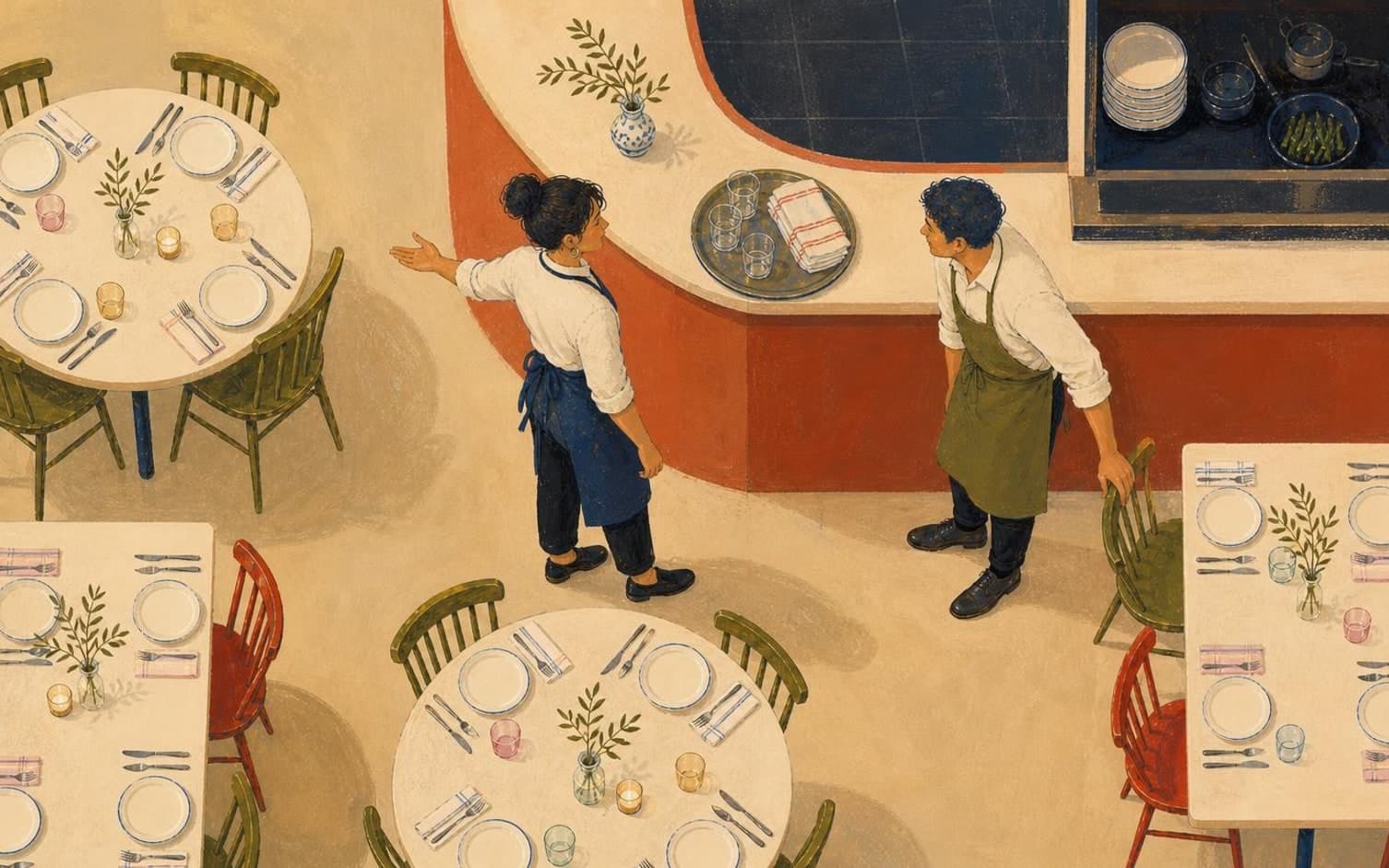
Handover is about more than closing time
Some restaurants may only have one fixed handover during the day, at closing. The question is whether shifts also change mid-day, for example from lunch to dinner, or when one department takes over from another the same evening. These transitions can need just as much structure as the evening close, regardless of the time of day.
Without a fixed structure, the handover easily becomes a verbal summary that varies from shift to shift. Whoever takes over may miss a table request, a delayed group, or a guest waiting for an answer. The more information that is carried in someone's head alone, the greater the chance that something gets lost between shifts.
Four fixed fields that should always be filled in
Upcoming bookings show what will happen over the next few hours: how many guests, what times, and whether anyone has requested a particular table. Table status shows which tables are occupied, which are waiting to be cleared, and which are ready for the next guest. Both fields give the incoming shift a snapshot without needing to ask around.
Groups deserve their own place in the handover, since they often come with arrangements that aren't captured in the standard booking text - a contact person, a chosen table, or a confirmed menu agreement. Deviations gather what didn't go as planned: a delay, a complaint, a table change, or a guest who received incorrect information. Exactly when these should be written down is something each restaurant should decide for itself - either as soon as they occur, or at the nearest break.
Named responsibility, not a general note
An open item without an owner easily gets left behind, even if everyone has read it. That's why a name, not a department, should be written next to each item that requires follow-up. 'The kitchen will follow up' is vague, while 'Kari confirms the table change for table 12 with the guest before 6pm' gives clear responsibility that's easy to check later.
How much time should pass before an item is followed up is something each restaurant should define for itself - but a deadline makes it easier for the incoming shift to know when something should be done, not just that it needs to happen sometime during the shift. A short line like 'table 12, new tablecloth, by 5:30pm, responsibility: Per' is quicker to read and act on than a long explanation.
Make the handover quick and consistent every time
How long the handover should take is for each restaurant to decide, but it should follow the same format regardless of who is on shift. A dashboard that shows bookings, guests and the table map together makes it faster to check the four fields without flipping through several systems. TableBooking has such a dashboard, where guests, bookings and the table map are displayed together.
When the structure is the same every time, the incoming shift doesn't need to guess what's most important to read first. Fixed fields for bookings, table status, groups and deviations, with named responsibility and a deadline on each item, provide an overview that can be read quickly at shift change, regardless of how much has happened during the shift.
Want to see how it works in practice?
Start with a free restaurant account and build your tables, opening hours and booking link at your own pace.
Start free