A clear time window and clear internal messaging make handling late guests more predictable
A look at how a defined time window, clear internal communication and friendly, precise language can make the handling of late guests more predictable - without promising a specific outcome for every evening.
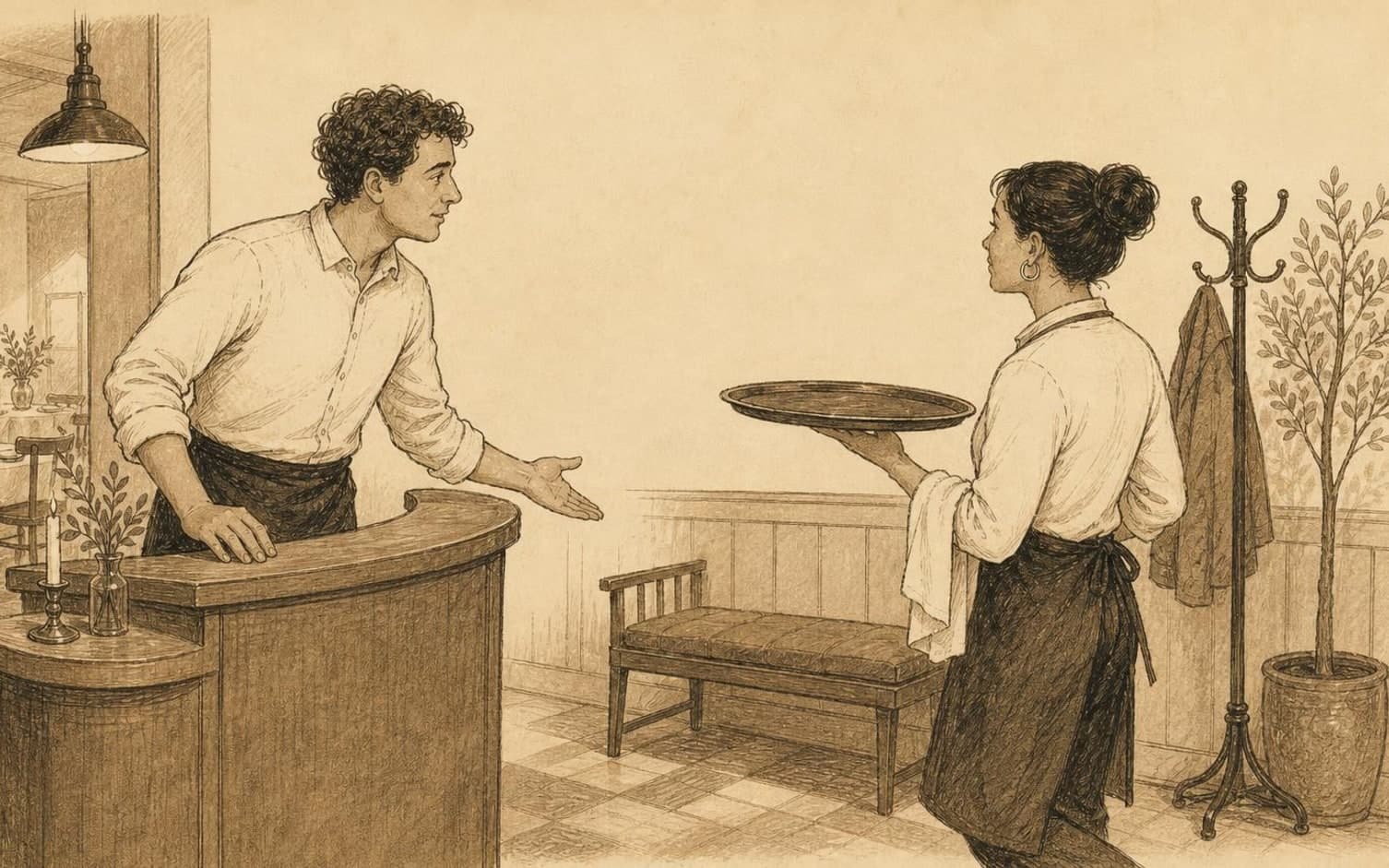
Why delays become harder to manage without a shared time window
When a restaurant lacks a defined policy for delays, each staff member has to improvise in the moment. One server holds the table for a long time before saying anything, another flags it almost immediately, and a third asks a colleague for advice. This inconsistency makes it hard for guests to know what to expect, and hard for staff to plan the rest of the evening with any certainty.
The result is often that the guest gets a vague answer at the door, while the kitchen and the rest of the tables wait for word. The uncertainty doesn't just affect the late guest - it also affects those waiting for a table that isn't being released, and the staff who have to manage frustration from several directions at once.
A time window provides a framework, not a guarantee
How long a table should be held without further word is something each restaurant must decide for itself, based on the next booking, kitchen capacity, and how many tables are in the same situation on a given night. An internal time window, whatever length the restaurant settles on, gives staff a shared framework to work from instead of improvising table by table.
Such a window is a practical framework for decision-making, not a promise that the table will always be held ready for exactly that long. Some nights allow for more flexibility, others call for stricter limits. The point is that staff have something to rely on, rather than inventing a new rule every time.
Internal communication: who says what, and when
A time window only works if everyone knows who is responsible for following up on it. It should be clear whether it's the host stand, a department manager, or the server at the table who decides when the window is about to run out, and who passes that information on to the kitchen and the rest of the staff.
An up-to-date dashboard with bookings, guests and a floor plan gives staff a combined overview of which tables are waiting. A reference photo of the table can make it easier to find the right spot quickly when the guest arrives. In TableBooking, this overview is gathered in one place, serving as a tool for internal communication about delayed tables.
Friendly and precise language without promises
When a guest reports a delay, it helps to use language that is specific without promising a particular outcome. A phrasing that refers to the time window the restaurant itself has settled on, and that states the restaurant will follow up if the situation changes, gives the guest a realistic expectation without committing the restaurant to something it cannot guarantee.
Internally, it's useful to apply the same neutral language, so that no staff member promises more than the restaurant can deliver. Phrases like we're doing what we can within the window, or we'll reassess in a little while, keep the tone friendly while staying honest that the outcome depends on how the rest of the evening unfolds.
Want to see how it works in practice?
Start with a free restaurant account and build your tables, opening hours and booking link at your own pace.
Start free