When guests arrive late: a time window, one shared message, and friendly language
A look at how restaurants can handle delayed guests with a clear time window, one unified message to the floor and kitchen, and wording that stays honest and friendly - without promising a specific table or time.
A window instead of an exact time
Many restaurants handle delays based on gut feeling in the moment, and the practice can vary from night to night and from server to server. How long the team should wait before a table is considered uncertain is something each restaurant should clarify internally - some choose a short window, while others give the guest a bit more leeway before releasing the table.
A clear time window isn't a promise of exactly when the guest loses the table, but a threshold for when the team starts considering alternatives. This makes handling predictable internally, while staff can still use experience and judgment when the situation actually arises on a given night, so the rule doesn't feel rigid to the guest.
The same message to reception, floor and kitchen
When a guest is running late, reception, servers and kitchen all need the same information at the same time - not three different versions that emerge because the message is passed verbally from person to person. Without one shared source, the kitchen can end up starting preparations for a table that still isn't ready for use.
A simple solution is to note the delay right where the booking already appears, so everyone who needs to know sees the same status without having to ask around. This cuts down on interruptions in the middle of service and ensures decisions about the table are based on what's actually recorded, not on what someone thinks they heard.
Friendly language that doesn't promise a specific table
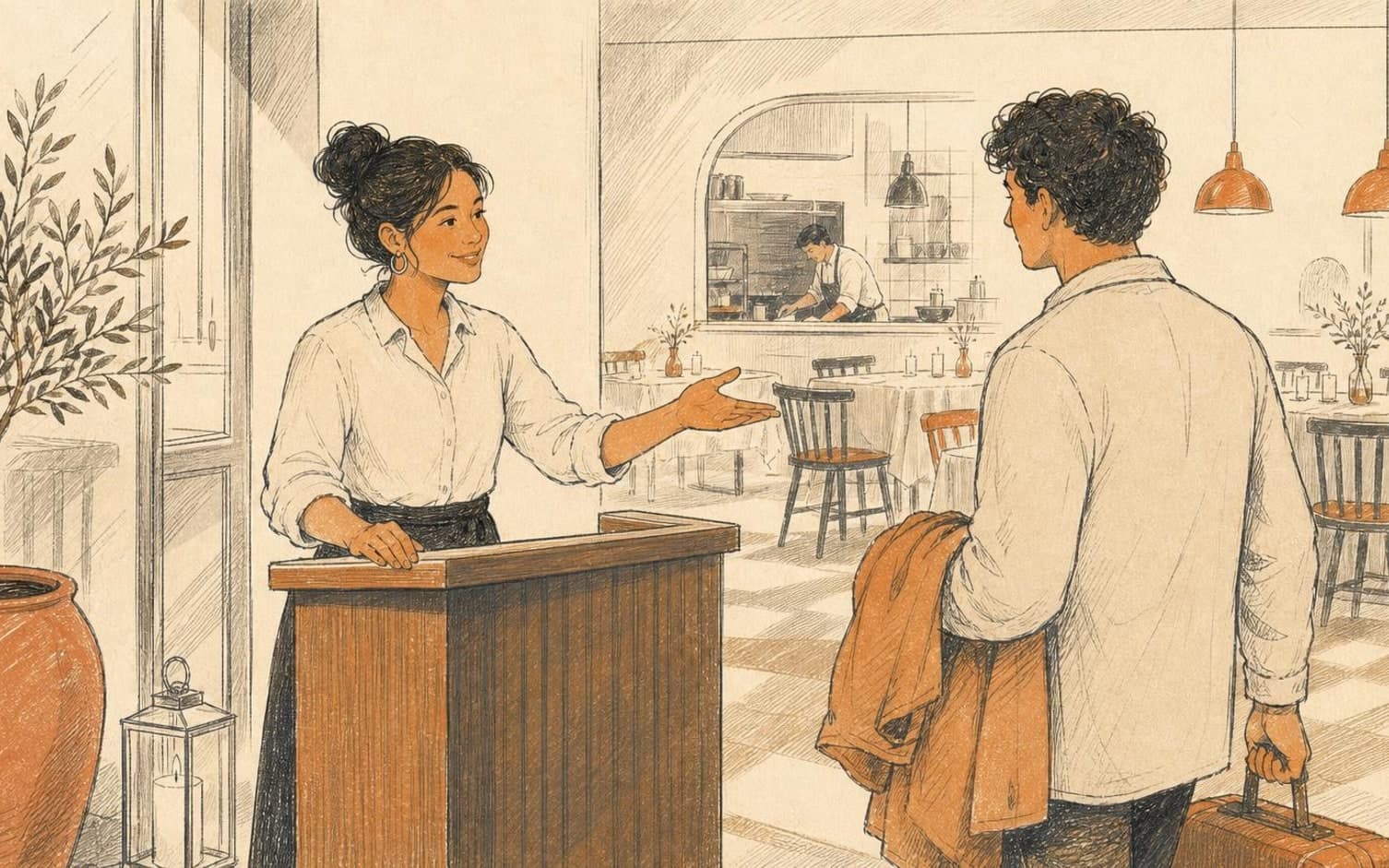
When the guest finally arrives, it's tempting to say something reassuring that in practice is a promise the restaurant can't keep, like "your table is ready exactly as planned." A safer alternative is to describe the situation honestly: "We've made room for you, though it might be a different table than originally arranged."
The difference isn't about being less welcoming, but about avoiding setting an expectation that later has to be corrected on the floor. The guest can still feel well taken care of, without the server having to explain afterward why something didn't match what was said at the door.
A table map and reference photo reduce confusion during the transition
When a late guest needs to be moved to a different table than planned, it helps if staff can quickly see which tables are actually available right then. In TableBooking, the dashboard shows bookings and the table map together, and tables can have a reference photo that makes it easier for the server to find the right spot without searching or asking colleagues in the middle of a hectic transition.
How long a restaurant waits before reassigning a table, and how the message is worded to the guest, are decisions each restaurant should make based on its own experience and routines. The goal is handling that feels organized for the team and honest for the guest, without anyone promising a specific outcome in advance.
Want to see how it works in practice?
Start with a free restaurant account and build your tables, opening hours and booking link at your own pace.
Start free