Three clarifications that make late arrivals easier to handle
A restaurant can make delays less stressful by clarifying time windows per booking type, giving staff a shared internal language, and choosing words for guests that are friendly and precise - without any of this guaranteeing a particular outcome.
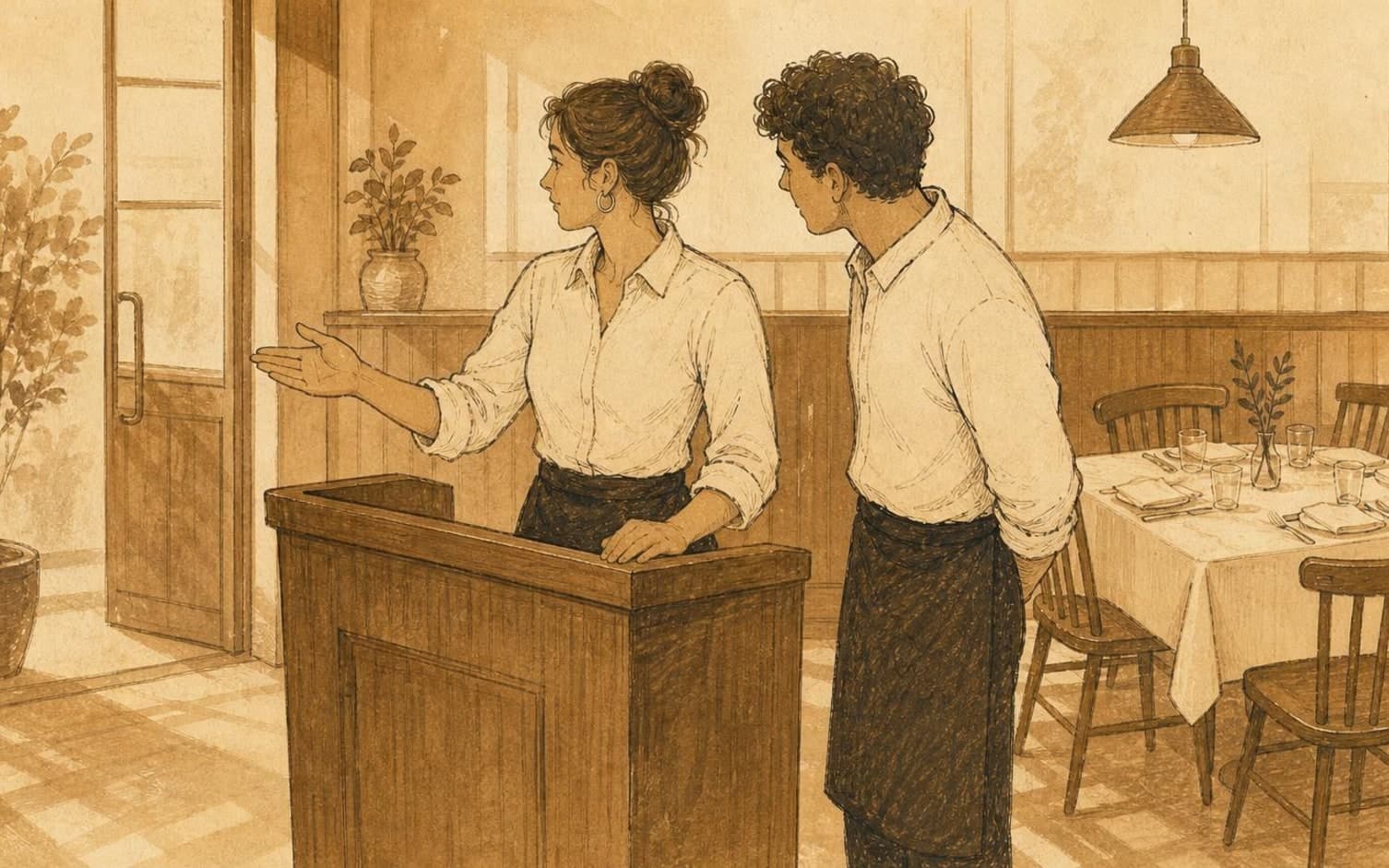
The time window varies by booking type - not by a fixed rule
How long a restaurant waits for a delayed guest before reassessing the table is rarely the same across all bookings. A table with a short seating time and a simple order can tolerate a different window than one tied to a set menu or a longer dinner. The restaurant should therefore clarify which distinctions matter for its own operation, rather than applying the same rule of thumb to every table.
The question isn't just how long to wait, but how that limit is decided from night to night. Should the window be shorter when other guests are already waiting for the same table, or when the kitchen has already started preparation? By writing down such considerations internally, the answer becomes more consistent regardless of who is at the front that evening.
A shared internal language makes the assessment less dependent on individuals
When a guest is running late, whoever answers the phone or stands at the entrance needs to know what has already been decided, without having to check with the kitchen in the middle of a busy period. This calls for a few fixed terms, such as "within window", "near the limit" and "window passed", which mean the same thing to everyone on shift.
In TableBooking's dashboard, staff can see bookings, guests and the floor plan together, and a table can have a reference photo that makes it easier to find the right table during service. This doesn't guarantee a particular outcome for a delayed guest, but it means the decision about the table is based on the same information no matter who makes it.
Friendly and precise language toward the guest that doesn't promise more than necessary
The words used when a guest calls to say they're running late affect how calm the conversation becomes. A phrase like "we're doing our best to have the table ready for you" is more honest than promising an exact time, while still showing willingness to stretch within what's possible that evening.
It's useful to distinguish between information and promise. Saying that the table's window holds until a certain time gives the guest something to work with, while saying the table is guaranteed regardless can become hard to keep if several guests are late the same evening. The first phrasing builds trust without creating expectations the restaurant can't meet.
Use experience from previous evenings to adjust the assessments
A time window that seems right in theory may prove too tight or too loose in practice. By briefly noting how specific situations were resolved - not who the guest was, but what happened with the table and the timing - the restaurant builds a basis for adjusting routines without having to guess anew each time.
This kind of adjustment isn't about finding a single answer that fits every evening, but about making the assessments a little more confident each round. When staff can point to previous, similar situations, the conversation with the guest becomes clearer, and the decision about the table feels more like part of a well-considered routine than a random judgment.
Want to see how it works in practice?
Start with a free restaurant account and build your tables, opening hours and booking link at your own pace.
Start free