Weather, Table Changes and Guest Communication: Booking Routines for Outdoor Seating
A review of how restaurants can account for weather already in the booking confirmation, plan alternative tables in advance, keep guests informed throughout the booking process, and ensure staff know what applies before service begins.
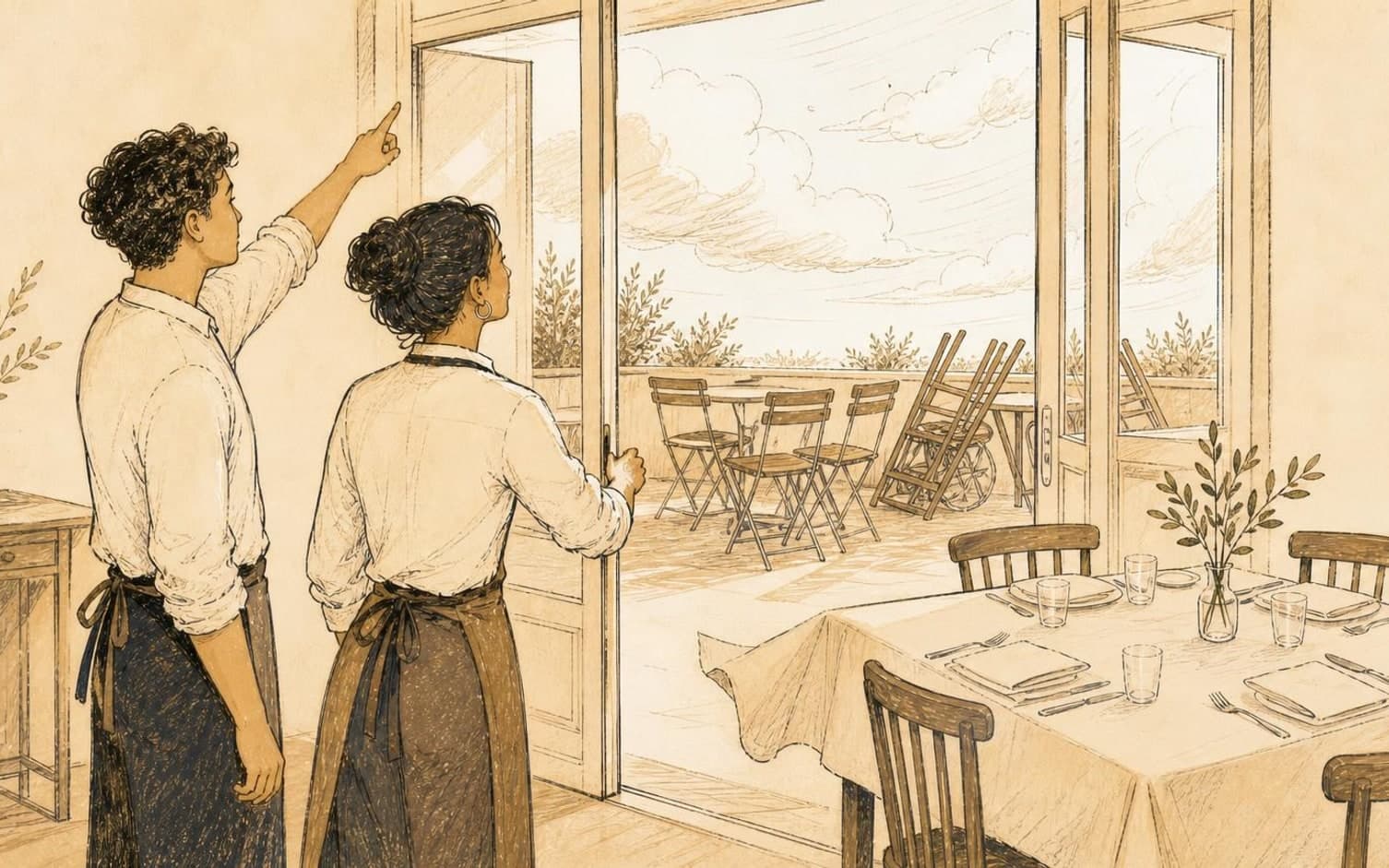
The weather disclaimer should be part of the booking itself
If the weather disclaimer only appears on the day the guest arrives, it can come across as an excuse rather than information. A disclaimer included in the booking confirmation for outdoor seating creates a different expectation from the start: the guest already knows at the time of booking that the table may change, and often reacts with more understanding if it actually happens.
The wording should be short and concrete, not vague. 'Your outdoor table is confirmed, but may be moved indoors in case of bad weather' says more than 'weather conditions may apply.' Guests need to know there is a concrete plan, not just that something might happen. The restaurant should decide in advance when any reminder should be sent, so the disclaimer doesn't feel like new information on the day of the visit.
Alternative tables that are planned, not found at the last moment
Alternative indoor tables work best when they're planned well before the rain arrives, not found on the fly as the guest stands in the doorway. A fixed link between each outdoor table and a specific indoor table - matching seat count, similar distance to neighbouring tables - makes the switch feel like a natural solution rather than a last-minute fix thrown together.
In TableBooking, the restaurant can configure opening hours, capacity and tables, and attach a reference photo to each table in the dashboard. When an outdoor table needs to be changed, staff can quickly see which indoor table has been set up as the replacement, without searching or asking around while guests wait at the entrance.
Communication with the guest throughout the booking
Weather communication works best at fixed, recognisable points that the restaurant itself decides on - for example at the time of booking, in a reminder before the visit, and possibly a brief update if the forecast changes noticeably. Each message should add something new and relevant, not simply repeat the same disclaimer disconnected from the actual conditions that day.
The tone should be measured and friendly, without promising a particular outcome. 'We're following the forecast and will let you know well ahead of your arrival if we move your table indoors' is more useful than 'we hope for good weather.' The guest gets something concrete to rely on, and the restaurant avoids making promises it can't keep if conditions change at the last hour.
What staff should know before service starts
Before service, staff should have a short, concrete overview: which tables are confirmed outdoors, which have already been moved indoors, and who makes the final weather call and at what time. Without this overview, several employees often end up giving the same guest different information, creating more confusion than the weather change itself caused.
It's also useful to know practical details in advance - where blankets and any heat lamps are kept, which table a guest is moved to if the outdoor table can't be used, and how the news is delivered calmly on arrival without lengthy explanations. When this is settled before the doors open, the shift from outdoors to indoors becomes a small adjustment rather than an unforeseen problem in the middle of service.
Want to see how it works in practice?
Start with a free restaurant account and build your tables, opening hours and booking link at your own pace.
Start free