Clear routines make outdoor seating predictable in changeable weather
A look at how the restaurant can tie the weather decision to fixed times, choose alternative indoor tables that mirror the outdoor seating, inform guests at the right moment, and make sure staff know who is moving where before service starts.
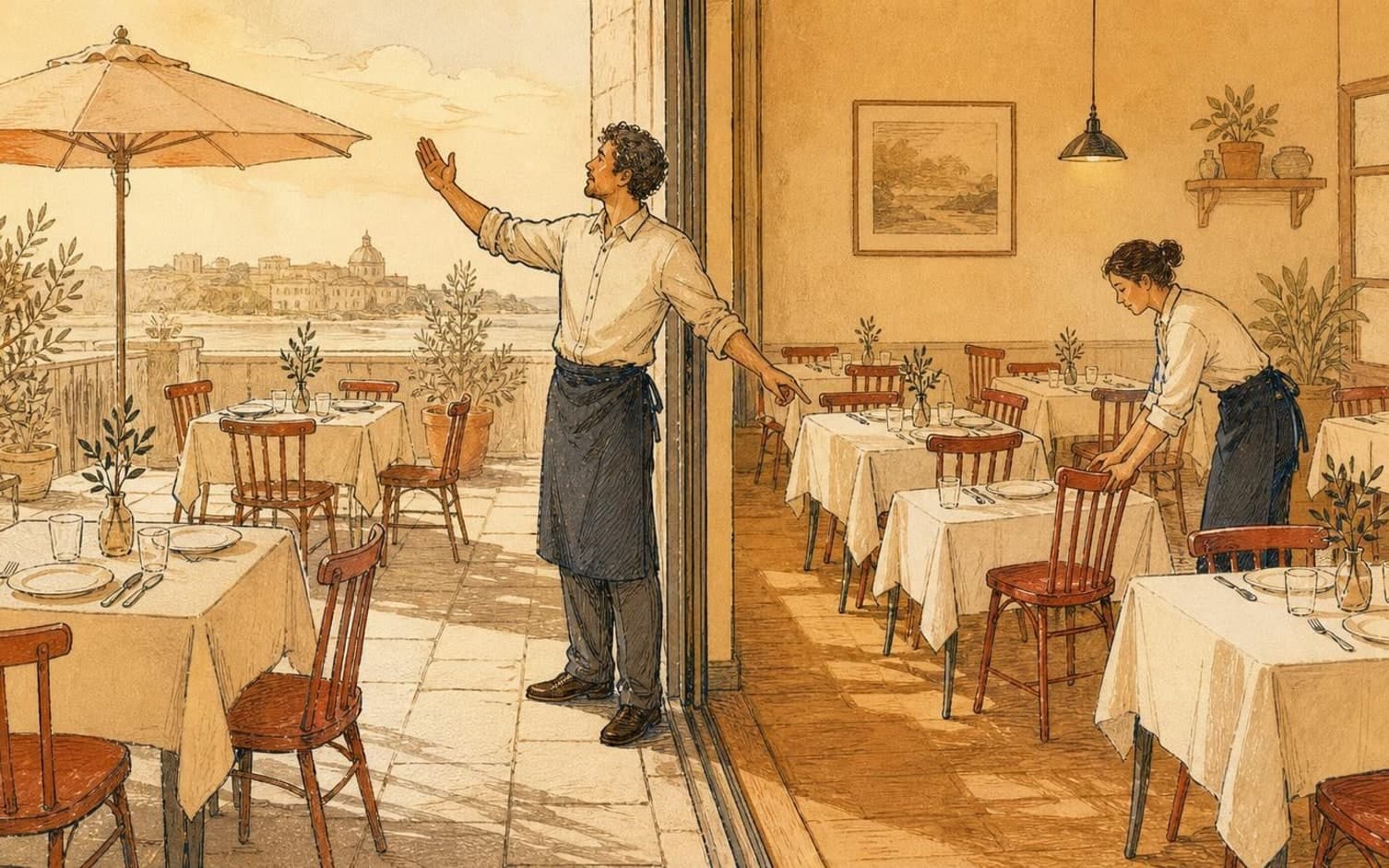
Fixed times for the weather assessment
The decision on outdoor seating shouldn't be made at the last second as the sky darkens. How many checkpoints fit through the day, and when they should be set, is something each restaurant should judge based on its own operation - some check the forecast at opening, others wait until closer to the first booking. What matters is that the times are agreed in advance, not improvised under pressure.
One person should be responsible for making the final call, even if several people contribute information along the way. When the kitchen, servers and owner each form their own view of the forecast, the restaurant often ends up sending guests conflicting signals. A named decision-maker makes the call traceable and gives the rest of the staff one place to turn for answers.
Alternative tables that mirror the outdoor seating
Alternative indoor tables work best when chosen based on capacity and table size, not just on whatever happens to be free at the moment. A table for four outside should have a matching table inside, rather than two smaller tables pushed together at the last minute. This planning is best done during quiet periods, before a rain shower forces quick decisions mid-service.
Table reference photos in the dashboard make it easier for staff to find the right table quickly when a guest is moved from outside to inside. In TableBooking, the restaurant can add a reference photo for each table, so new staff or a temp can see which indoor table corresponds to the outdoor spot the guest originally booked, without having to ask a colleague in the middle of service.
Communicating with the guest - timing sets the tone
How early the guest should be informed of a possible change depends on how far in advance the booking was made - this is something the restaurant should judge for itself based on its own message routines. A booking made well ahead allows more time to wait and see how the forecast develops, while a same-day booking requires the message to go out as soon as the assessment is made, ideally before the guest leaves home.
The message should be short and fact-based, without promising a specific outcome for the evening. Wording such as 'We're monitoring the forecast and have a good indoor alternative ready' gives the guest enough information without creating unnecessary worry. Avoid phrasing that suggests the outdoor seating is guaranteed to be available, since the weather can change after the message has been sent.
What staff should know before the doors open
Before service starts, staff should know which tables are affected by today's weather decision, which alternative table each guest is being moved to, and who will greet the guest on arrival. Without this information, the move often ends with the guest having to explain the situation themselves to a server who wasn't part of the morning's assessment.
A brief verbal run-through right before opening, where the person responsible confirms the decision for both kitchen and floor staff, closes the remaining gaps. A combined overview of the day's bookings and table placement makes it easier to see how many guests are affected, so staff can prepare both practically and mentally before the first guest walks through the door.
Want to see how it works in practice?
Start with a free restaurant account and build your tables, opening hours and booking link at your own pace.
Start free