How restaurants can handle no-shows in an orderly way
A practical look at how restaurants can log no-shows as plain facts on the same day, use regular reviews to distinguish patterns from isolated cases, adjust specific routines where a pattern is confirmed, and phrase a follow-up message to the guest that is short, neutral and open to explanation.
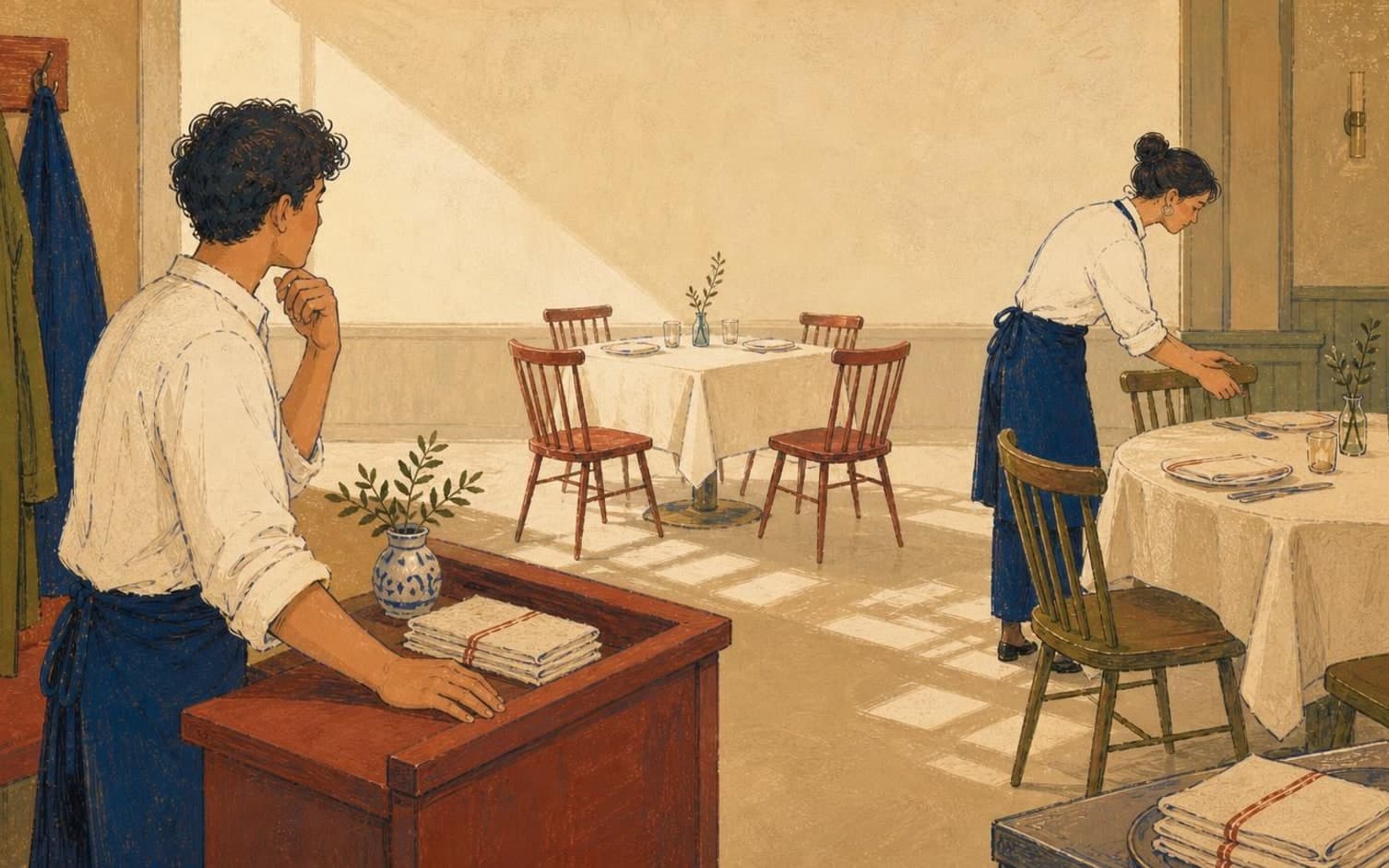
Log the no-show the same day – as fact, not impression
Right after service, the no-show should be logged while the details are still fresh: the booking time, the number of guests, whether the restaurant attempted contact, and what the outcome was. TableBookings' dashboard shows bookings, guests and the table plan in one place, and can serve as a starting point when the restaurant needs to trace back to the booking in question.
What gets written down should be observable facts, not guesses about the cause. 'No contact, did not arrive' is useful information, while 'probably just forgot' is an assumption that can easily colour later assessments. When the record is kept factual, it can serve as a basis for a later review without the mood of that particular evening skewing the conclusion.
Look for patterns, not isolated cases
How often should the restaurant review no-shows – weekly, monthly, or on a fixed rhythm that suits operations? The review should look for patterns rather than isolated cases: are there particular weekdays, times, or party sizes that keep recurring? The focus should be on timing and booking type, not on naming or judging individual guests.
Some patterns only become visible after several weeks of observation, for instance whether no-shows happen more often at certain times or for certain types of bookings. Should a single unusual week lead to quick conclusions, or is it more sound to wait until the pattern is confirmed over time? That is a judgment the restaurant must make itself before any adjustments are discussed.
Adjust the routine where the pattern holds
Once a pattern is confirmed, it can provide grounds for a targeted adjustment rather than a general rule change for all bookings. If the review shows that large parties on Friday evenings tend to no-show more often, the restaurant might consider a brief confirmation the day before – only for that type of booking – instead of changing the routine for the entire guest base.
How long should an adjustment be tested before being evaluated – a few weeks, a full month? The restaurant should set a defined period itself and then look back at whether the pattern weakened or remained unchanged. This simple comparison gives staff a concrete starting point for judging whether the adjustment actually changed anything, without assuming the effect in advance.
The follow-up message: neutral, short and open to explanation
A message to a guest who did not show up should stick to the facts: date, time, and a brief question about whether something got in the way. The message should not list consequences or imply that the restaurant has already drawn a conclusion. Wording that leaves room for explanation gives the guest space to respond without feeling they must defend themselves.
Which channel works best – the one the guest used when booking, or another the restaurant usually relies on? How quickly should the message be sent, the same day or within a few days? A short, friendly message sent without unnecessary delay can come across as more genuinely interested than a lengthy explanation sent long afterward.
Want to see how it works in practice?
Start with a free restaurant account and build your tables, opening hours and booking link at your own pace.
Start free