Checklist for the last 20 minutes before service
A concrete checklist for restaurants to use in the final minutes before the doors open, covering fixed points for groups, table requests, allergies, delays and named responsibility.
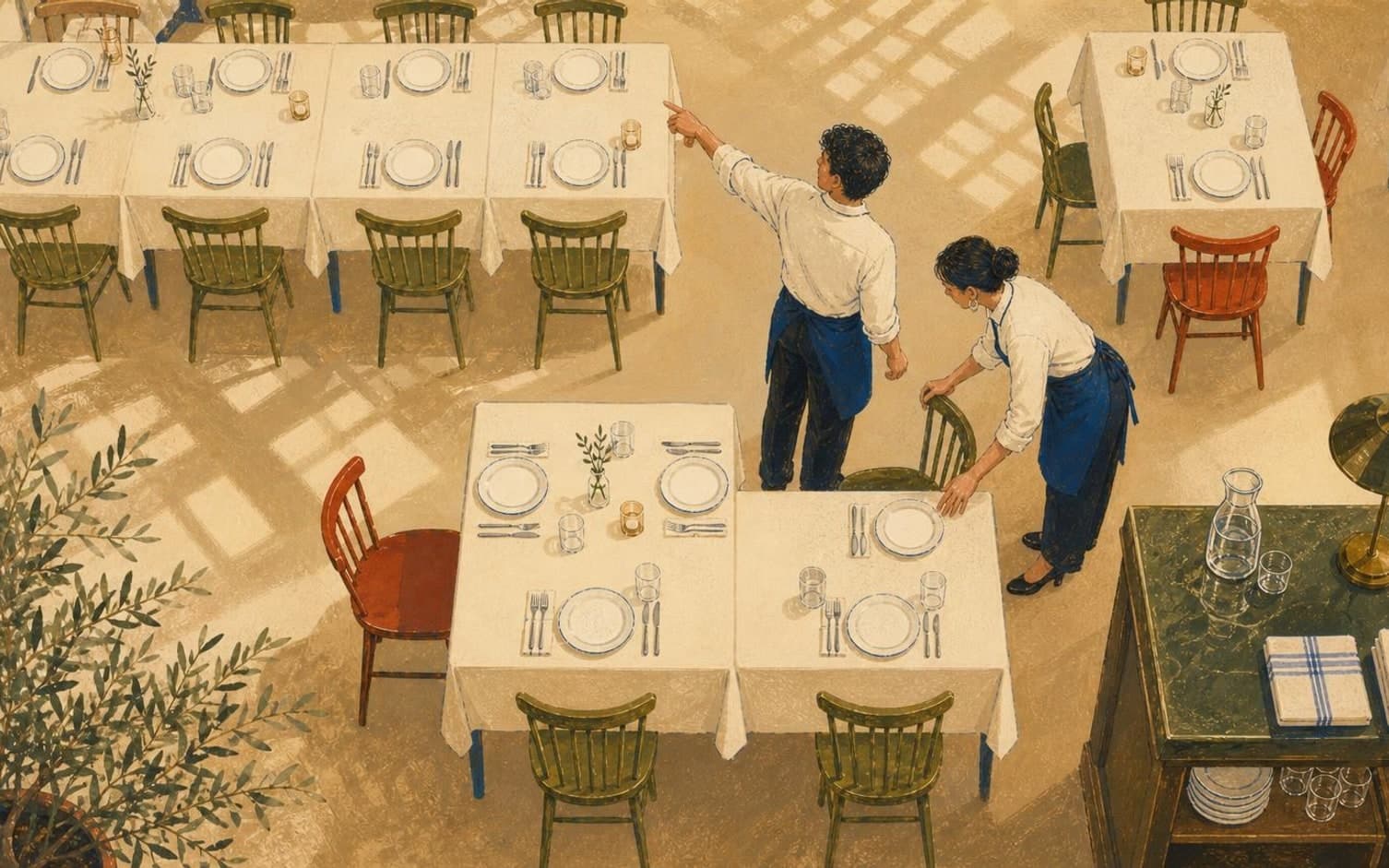
A simple structure for the most hectic minutes
The last 20 minutes before service are often the most hectic of the entire evening, and it's easy to lose track if everything has to be done at once. A short checklist that runs through groups, table requests, allergies, delays and responsibility in a fixed order makes it easier for staff to know what needs clarifying first, and what can wait.
Exactly when each point should be reviewed will vary from restaurant to restaurant, depending on staffing and how many bookings the evening has. Some choose to start the review early in the window, others wait until the last minutes. What matters is that the restaurant itself decides a timing for each point, and that the whole staff knows the order before the doors open.
Groups and table requests before the doors open
Before service, whoever is responsible for guest reception should go through the evening's bookings with an eye for group size and any table requests that have been noted. Should two smaller tables be pushed together for a group, or can a couple who asked for a window table have it without affecting other reservations? This clarification should happen early enough that changes to the table setup don't add stress to the rest of the preparations.
In TableBooking's dashboard, staff can check the floor plan and see the reference photo attached to the table, making it clear which physical table a booking refers to. This is useful when a restaurant has several tables with similar names or locations, and helps ensure the whole staff agrees on where guests are actually meant to sit.
Allergies and status on delays
Allergy information noted in the booking should be communicated verbally to the kitchen, not just read by whoever is on duty. A brief exchange between the maître d' and the head chef about which tables have allergies, and what that actually means for the menu that evening, reduces the risk of misunderstandings once things get busy.
The same review is a natural moment to check whether any guests have reported a delay. How long a table should be held for a delayed group, and who decides that, is something the restaurant should have a clear practice for, so the table isn't given to other guests before the agreed time has passed.
Division of responsibility before the first guest arrives
The last minutes before opening should be used to name responsibilities, not just repeat information that's already known. Who greets guests at the door, who follows up with groups arriving together, and who alerts the kitchen if a booking hasn't shown up within the agreed time? Without named roles, such tasks often fall between the cracks.
A short, verbal round where everyone confirms their part of the responsibility means no one is left unsure when the first guest walks in. How long this round should be, and whether it happens in the same place every evening, is something the restaurant should decide for itself, based on what works best for its own staff and premises.
Want to see how it works in practice?
Start with a free restaurant account and build your tables, opening hours and booking link at your own pace.
Start free