Practical Booking Routines for Outdoor Seating: Weather, Plan B, and Clear Communication
A practical look at how restaurants can set clear weather conditions in bookings, prepare alternative seating indoors, communicate early with guests, and make sure staff know what to do before service begins.
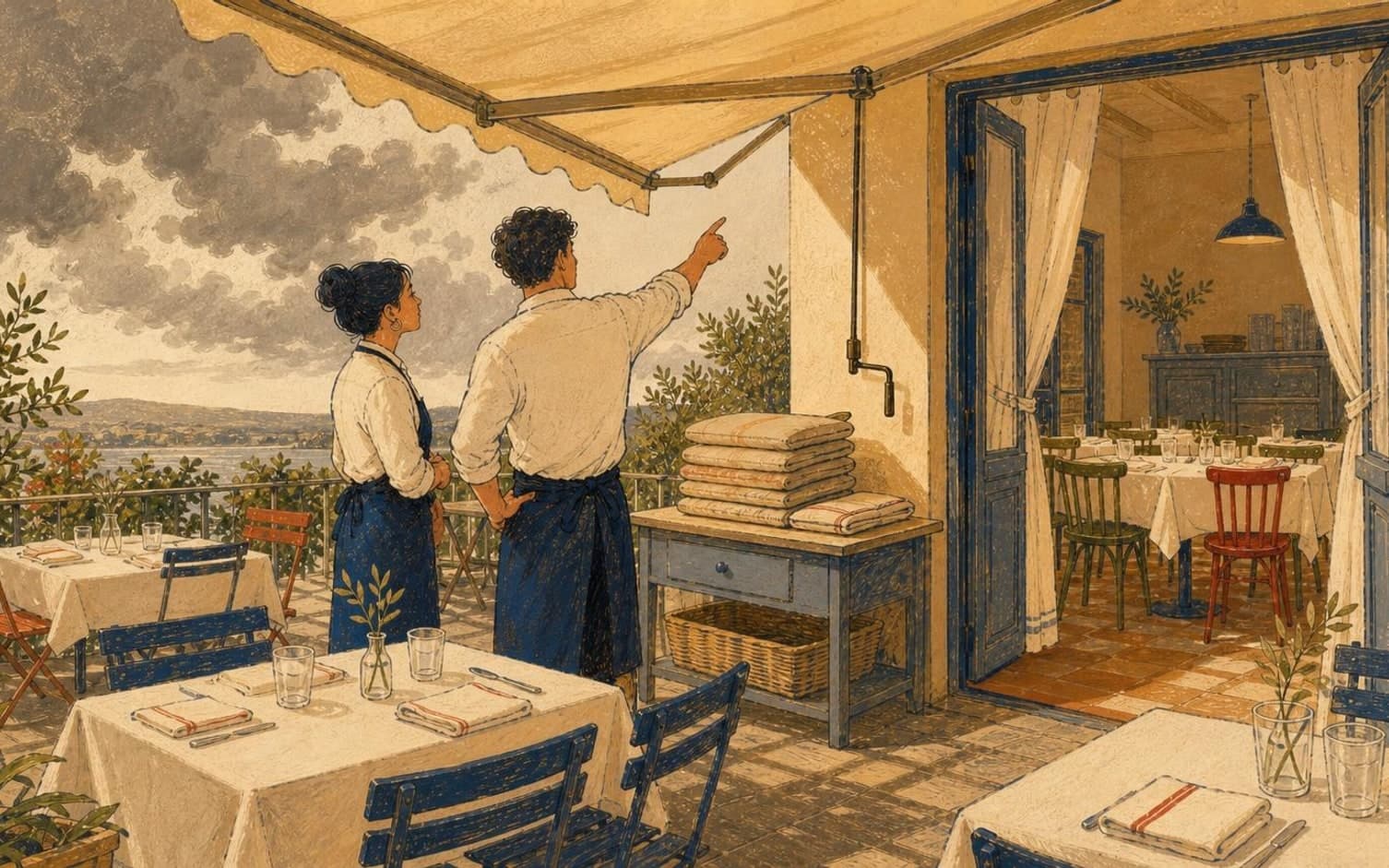
Weather conditions: setting expectations before the guest books
Outdoor seating depends on the weather, and guests should know this as soon as their booking is confirmed. A simple weather clause in the confirmation, noting that the table may be moved indoors in case of bad weather, gives guests realistic expectations from the start. It's far better to mention this early than to explain it at the door once the guest has already planned an evening outside.
The restaurant should clarify internally when the weather decision is made relative to the first seating, and who is responsible for making it. Is it practical to set a fixed time, or should conditions be assessed continuously throughout the day? A clear division of responsibility ensures the decision is based on the actual forecast, not on whoever happens to be available as guests start arriving.
Alternative seating: having a plan B ready before it's needed
When outdoor seating has to close, the restaurant should have specific tables ready to move guests to, not just an assumption that 'there's room inside somewhere.' Set up alternative tables in the floor plan in advance, and assess whether indoor capacity can actually accommodate the guests booked outside. Without this preparation, the situation quickly becomes difficult to manage once the rain arrives.
The restaurant can choose to hold a few indoor tables in reserve for outdoor seating during periods of uncertain forecasts, releasing them for regular bookings once the outlook becomes more stable. In TableBooking, the restaurant can configure capacity and tables for these seats, and the dashboard shows bookings, guests, and the floor plan together, making it easy to keep track of the reserve tables throughout the day.
Communicating with the guest: say it early, say it simply
Once the weather decision has been made, the guest should be informed as early as possible, not when they're standing at the door. A short message clearly stating that the table has been moved indoors, or that outdoor seating still applies, gives the guest time to adjust. The message should be brief and specific, without apologies or lengthy explanations about the forecast.
Some guests will still want to sit outside even if the decision has been made to move indoors, while others prefer to be inside even in good weather. Give staff a simple response they can use at the host stand, for example that the table can be adjusted upon arrival if capacity allows. This avoids discussions that take time away from the rest of the guests.
What staff should know before service starts
Before service, staff should receive a brief overview of which bookings have been moved from outdoor to indoor seating, and which tables are still in play if the wind picks up mid-evening. A reference image of each table in the floor plan makes it quicker for new or temporary staff to find the right spot, especially when outdoor seating is divided into several sections.
Staff should also know who is responsible for monitoring the weather throughout the evening, and who makes the call if rain arrives without warning in the middle of service. A short checklist outlining the order in which tables are evacuated first, and where guests are relocated, makes it easier to stay on top of things when several events happen at once.
Want to see how it works in practice?
Start with a free restaurant account and build your tables, opening hours and booking link at your own pace.
Start free