A simple routine for wrapping up the evening's service
A short routine for logging visits, noting deviations, gathering guest information and preparing for the next day - put together while the evening is still fresh, rather than pieced together from one person's memory at closing time.
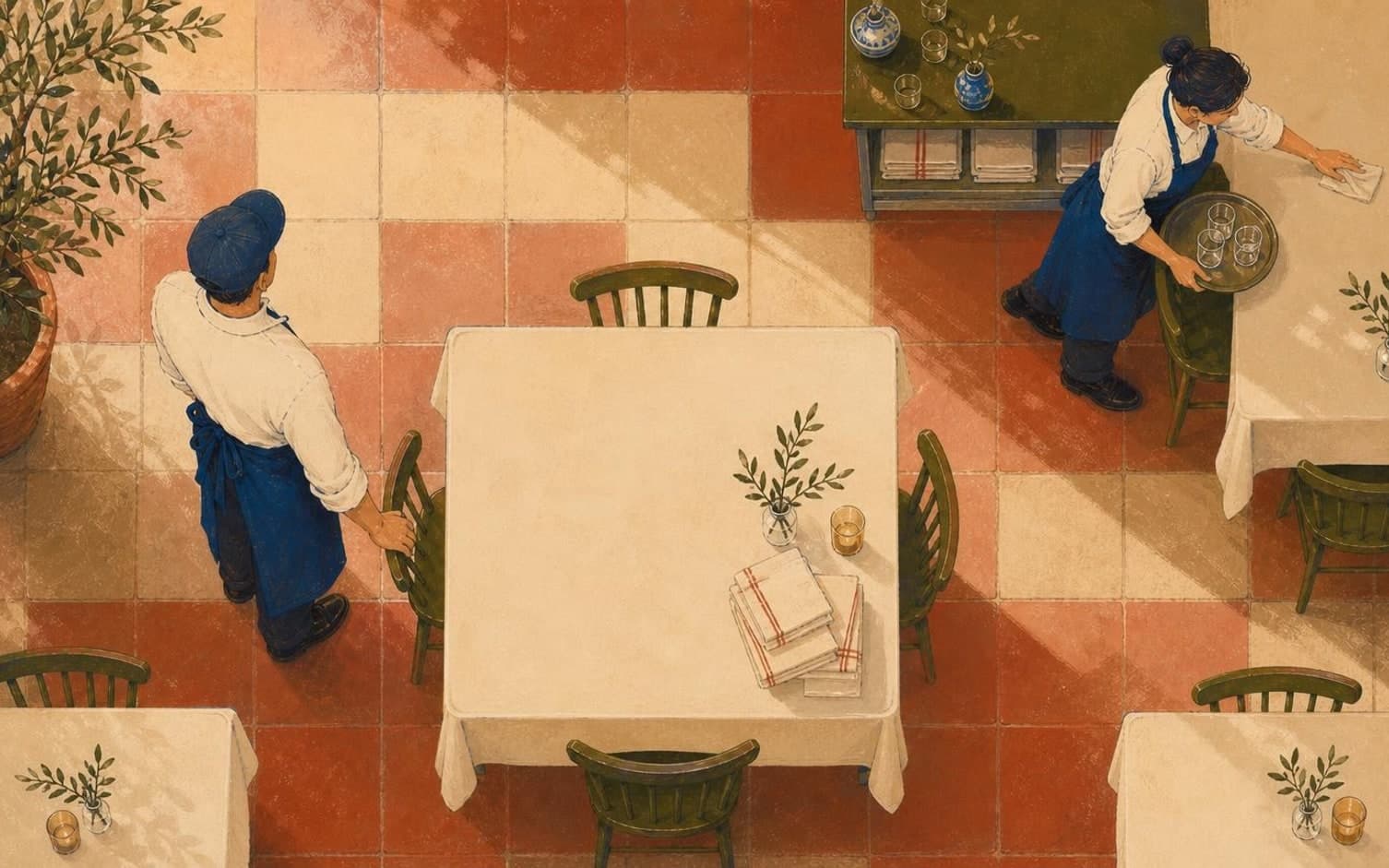
Log visits right at the table
A fixed routine for logging visits makes wrapping up the evening easier. When a party arrives, switches tables or leaves earlier than planned, the host should note it immediately - not reconstruct the event from memory at closing time. Should this be done in the booking system, on a paper sheet at the host stand, or both? The restaurant should decide that for itself.
A concrete example: if a table asks to switch seats because of a draft from the window, it's the host who knows this - not the server who resets the table an hour later. If it's noted the moment it happens, the next shift can see whether the same table is frequently complained about, and consider whether the table layout should be adjusted permanently.
Note deviations before they're forgotten
Deviations such as delayed service, an incorrect order, or a guest who waited a long time to be seated should be written down by whoever experienced it, the moment it happens. Should this be done on a slip at the kitchen pass, in a shared log, or verbally to the shift leader? The restaurant should decide which solution best fits its own operations and staffing.
The kitchen has its own deviations to note: which dishes were slow to come out, which ingredients were nearly sold out, and which tables had their food delayed. These observations should be captured at the pass while they're still clear, not lumped together with the evening's general impressions when everything is summed up afterwards.
Gather guest information while it's fresh
Information that comes up in conversation at the table - an anniversary, an allergy, a preference for a particular table - should be noted by whoever hears it, not retold verbally in a handover later. A short note written down while it's still accurate is more valuable than a general impression pulled from memory.
Where should this information be stored so the next shift can find it again - in a guest profile, on the table card, or in a shared comment field? Without a fixed place, the details quickly disappear, and the guest has to repeat the same information next time, which weakens the impression that the restaurant knows them.
Prepare for the next day the same evening
Once visits, deviations and guest information have been noted close to where they occurred, one step remains: pulling it together into something the next day's team can actually use. Should this happen right after closing, or is it better to wait until morning when things are clearer? The restaurant should try both and see what works.
In TableBooking, bookings, guests and table maps are gathered in one dashboard, and tables can have a reference photo that makes it easier to find the right table when following up on a note. The solution has a free starting tier described on the pricing page, and an interface in Norwegian, Swedish, Danish and English for restaurants operating across multiple markets.
Want to see how it works in practice?
Start with a free restaurant account and build your tables, opening hours and booking link at your own pace.
Start free