Lunch, break, and dinner as three distinct blocks – not one long opening period
A look at why restaurants with a break between lunch and dinner can benefit from treating the two services as separate operational blocks, how last seating can be set differently for each period, and how the break can serve as a fixed checkpoint before the evening opens.
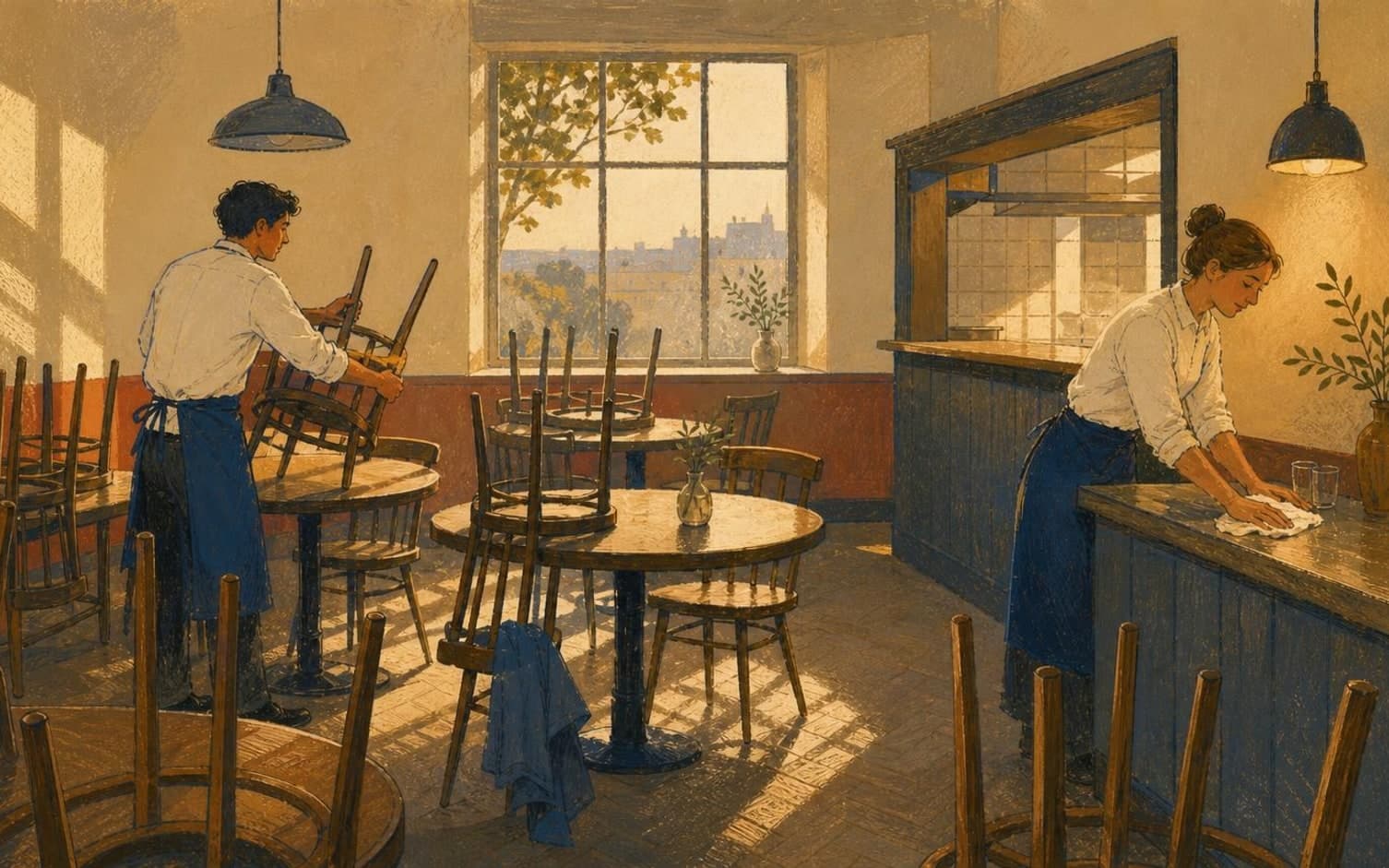
Two separate service periods in the same space
Restaurants with a break between lunch and dinner are, in practice, running two separate service periods in the same space, not one long opening period with a gap in the middle. Lunch and dinner often differ in pace, table use, and preparation time, but how large that difference is depends on the concept and the guest base the restaurant usually serves.
When both periods are managed under the same rules for capacity and seating time, confusion can arise during the transition. A table set for a relaxed dinner service often suits a lunch guest who needs to be seated and finished quickly poorly. How significant this difference should be is something each restaurant must judge for itself, based on its own experience with both periods.
Last seating should be assessed separately for each period
How early last seating for lunch should be set depends on how much time the kitchen needs for cleanup and preparation before the break begins. Some restaurants choose an earlier cutoff for larger groups than for smaller tables, since seating time and table work often vary with party size. This is a judgment each restaurant must make based on its own experience.
For dinner, last seating is often set based on closing time minus expected seating duration, with some margin for ordering and clearing. How long that margin should be, and whether large parties need an earlier cutoff than regular tables, are questions the restaurant should answer based on its own routines and experience with how long different table sizes actually take.
The break as a genuine checkpoint
The break between lunch and dinner should have a fixed structure, not simply be the time the doors are locked. Many restaurants choose to divide the break into set blocks: cleanup and dishwashing first, then a review of the evening's bookings and table preferences, and finally table setting. How this division looks will vary with the size of the venue and staffing levels.
This structure turns the break into a point where mistakes can be caught before they become the guest's problem. If a lunch booking wasn't marked as completed, or a table still has the wrong setup, the break is when this gets corrected – not something left for whoever opens the door in the evening.
Setting opening hours so the break is actually closed
In TableBooking, the restaurant can configure separate opening hours for lunch and dinner, so that the booking link guests use without creating an account doesn't display times within the break. This removes the need to manually decline bookings, since the system is already set up so that the window between the end of lunch and the start of dinner isn't available for reservation.
Tables can also have a reference photo showing how they should look, which is useful when the same table is used for a different setup in the evening than at lunch. Staff setting tables during the break can check the photo in the dashboard, which also shows bookings, guests, and the floor plan, instead of asking a colleague who has already gone home.
Want to see how it works in practice?
Start with a free restaurant account and build your tables, opening hours and booking link at your own pace.
Start free