Outdoor Seating in Uncertain Weather: Backup Tables and Clear Guest Communication
A review of how the restaurant can clarify weather-related reservations, set aside alternative indoor tables, inform guests at the right times, and ensure staff have full oversight before service begins.
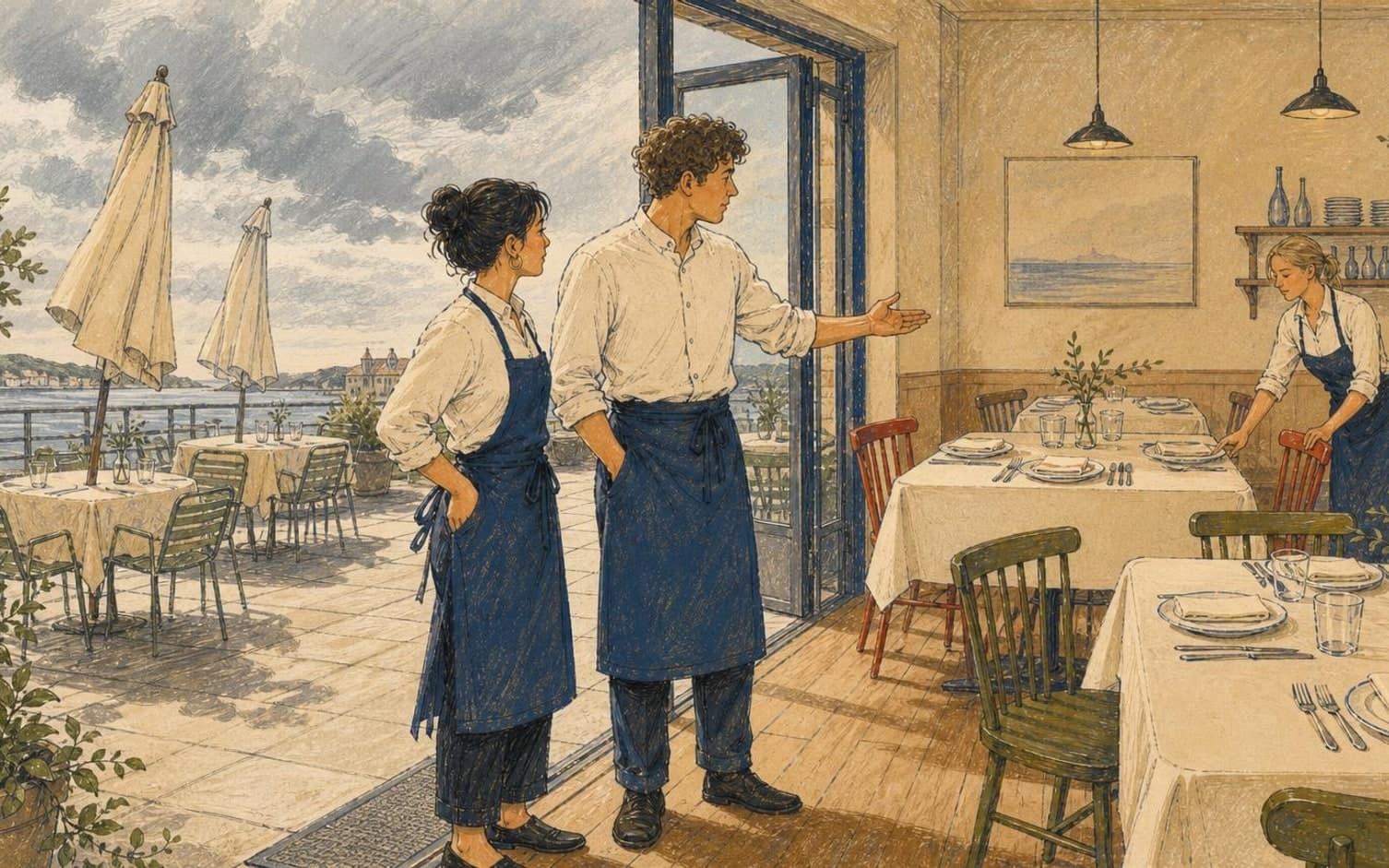
Clarify what triggers a move from outdoor to indoor seating
The restaurant should agree internally on what actually triggers a move from outdoor seating to an indoor table. Is it a certain amount of rainfall, a wind speed, or a combination of factors that decides it? Without a shared understanding, the decision ends up depending on who's on shift, and guests may receive different information from one day to the next.
Once the threshold has been established, it should be clearly stated in the booking confirmation, so the guest understands what the reservation condition actually means rather than just that weather may affect the table. Should the wording be the same for all outdoor bookings, or vary by season and location? This is something the restaurant must assess based on its own circumstances.
Set aside alternative tables before service begins
Indoor capacity for outdoor-seating guests should be planned before the doors open, not improvised once the rain starts. How many tables should be held back, and for which part of the opening hours, is something the restaurant must judge based on its own capacity and demand. Without this kind of clarity, a mid-service move can become demanding for both staff and guests.
It can be useful to keep a simple list of which indoor tables are intended as backups, and which outdoor bookings they correspond to, if any. Should the list be updated every shift, or apply for the whole season with periodic adjustments? The restaurant should find a routine that's easy to follow during a busy service.
Inform the guest in several short steps
Communication about weather often works better as several short messages rather than one long text at the time of booking. Should the restaurant send an update the same morning if the weather outlook is uncertain, or is it more natural to wait until closer to arrival? This depends on how predictable local weather tends to be, and should be assessed restaurant by restaurant.
The message to the guest should always state something concrete about what will happen with the table, not just refer to weather conditions in general terms. A message saying the table has been moved indoors at the same time gives the guest a clear answer to work with, while a generic weather notice without a solution usually just leads to more questions back to the restaurant.
Give staff full oversight before the doors open
Before service, staff should know which threshold applies for the day, which bookings, if any, have been notified of a possible move, and which indoor tables have been set aside. Should this review happen during a fixed morning briefing, or is another time better suited to the restaurant's routines? Without clarity on this, the move risks becoming a discussion at the table itself.
In TableBooking, the dashboard shows an overview of the day's bookings, guests, and floor plan, which can serve as a starting point when the person responsible for outdoor seating goes through the day with the rest of the staff. Once everyone has seen the same overview before opening, servers can show guests to the right table without having to check with a colleague mid-service.
Want to see how it works in practice?
Start with a free restaurant account and build your tables, opening hours and booking link at your own pace.
Start free