Split Opening Hours: Two Service Blocks and a Break with a Clear Purpose
A look at how restaurants with a break between lunch and dinner can divide their opening hours into two service blocks, set a separate last seating for each, give the break a clear internal task list, and ensure the booking setup follows the two blocks.
The Challenge of a Break Between Lunch and Dinner
When a restaurant closes for a break between lunch and dinner, there can be a window where it's unclear whether booking a table is actually possible. A guest might see an open slot in the calendar and book close to closing time, unaware that the kitchen is already busy with clean-up and preparations for the next service.
The result can be that staff are forced to improvise, for instance when a server stays behind for a single late lunch guest while the rest of the team prepares for dinner. Restaurants should therefore decide for themselves where the line between lunch and dinner falls, and how that line should be clearly reflected in the booking calendar.
Two Service Blocks with Their Own Last Seating
Lunch and dinner can be treated as two independent service blocks, each with its own last seating. How long a meal actually takes, and how much time staff need for clean-up before the next service, is something every restaurant must assess based on its own menu, staffing, and premises.
By clearly setting a last seating for each block, for example 2:30 pm for lunch and 10:00 pm for dinner, both guests and staff know when service ends. This makes staffing easier to plan, since no one needs to stand ready for a guest who could theoretically arrive right in the middle of the break.
The Break as Its Own Service Block with Defined Tasks
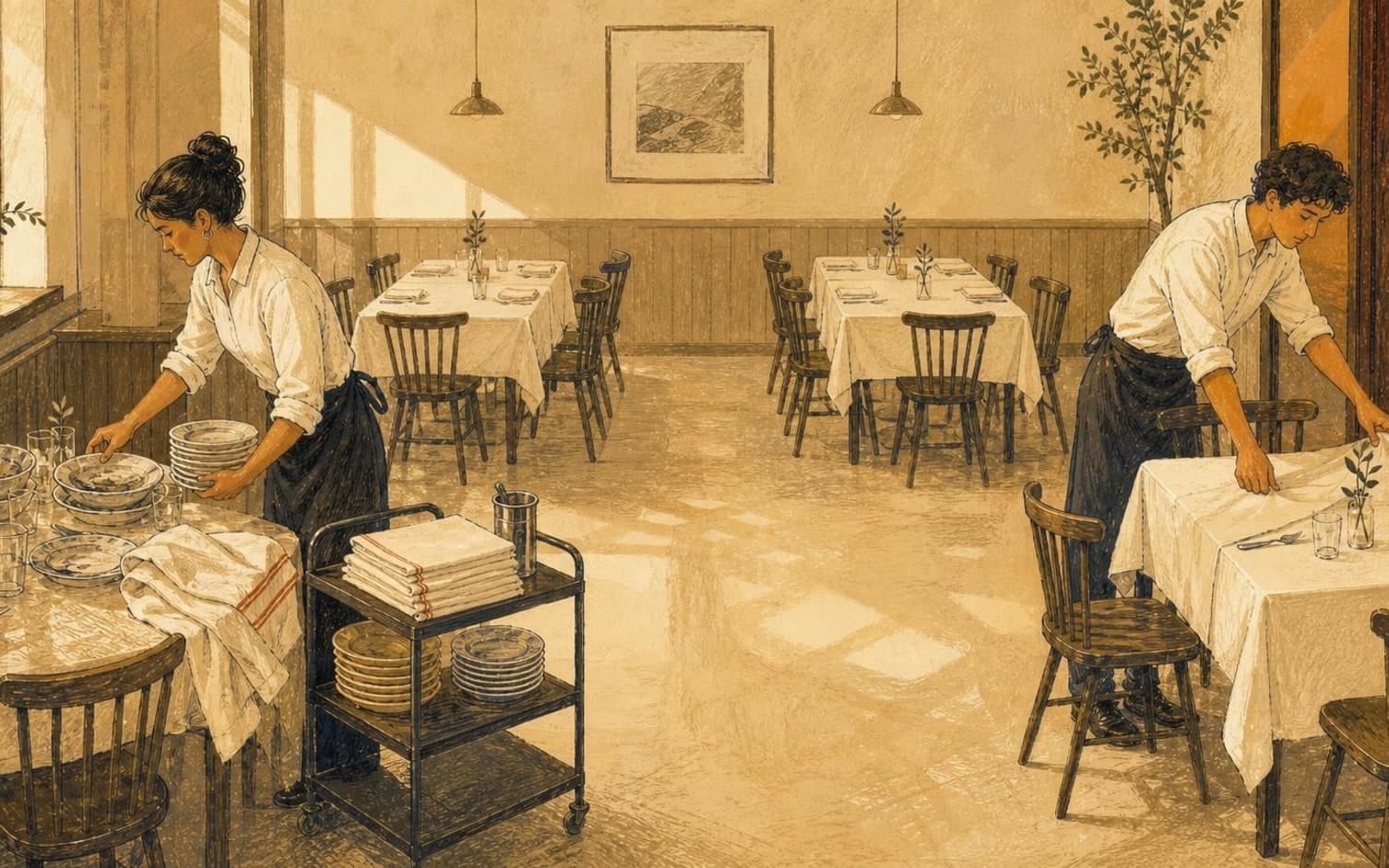
The break between lunch and dinner can be marked as closed in the calendar, but it should also serve a concrete internal purpose. A short task list for the break might include clearing lunch tables, resetting table settings, preparing mise en place, and a quick review of the evening's bookings before dinner service begins.
When the break has a clear task list, it becomes easier to assess whether the time actually suffices, or whether the last seating for lunch should be adjusted. Whether the break should be shortened on hectic days or extended when needed is a question each restaurant should decide deliberately, not leave to chance.
Setup and Overview That Support the Two Blocks
Internal control starts with opening hours, capacity, and tables being set up correctly for each block, so guests can't select a time that falls within the break. In TableBooking, the restaurant owner can configure opening hours, capacity, and tables separately for lunch and dinner, and create a booking link guests can use without registering.
The dashboard displays bookings, guests, and table maps, giving staff an overview of both blocks in a single view. Tables can have a reference photo that helps staff find the right table during service, which is useful when the dining room is reset between lunch and dinner and the table layout changes.
Want to see how it works in practice?
Start with a free restaurant account and build your tables, opening hours and booking link at your own pace.
Start free