How to write a message to waitlist guests that leaves no room for doubt
A review of four writing principles for messages to waitlist guests: how time and party size are phrased precisely, how the deadline is tied to a concrete action, and how the reply method is made so simple that the guest can respond with a single word or a single click.
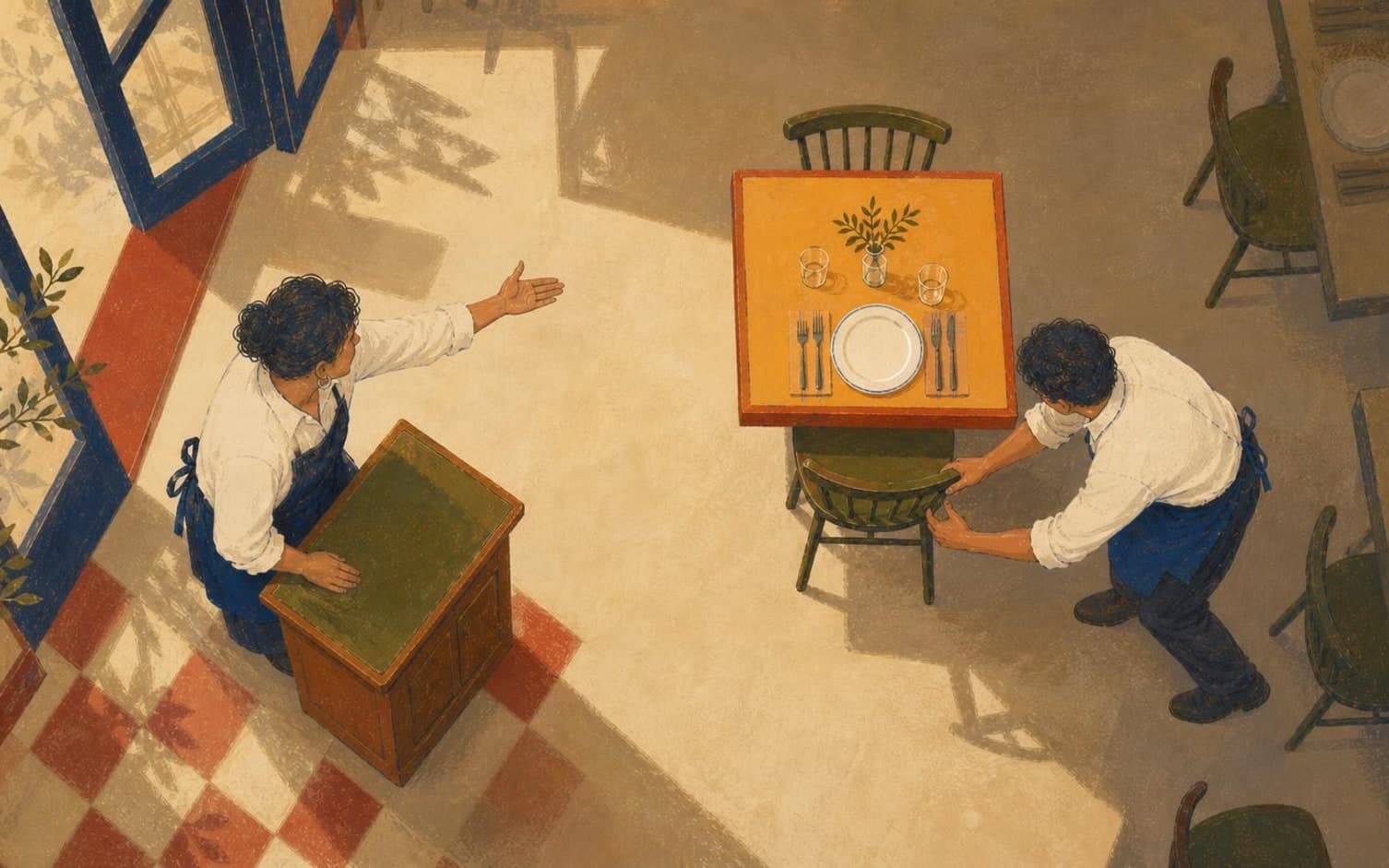
The message must stand on its own
A waitlist guest often reads the message without having the original conversation fresh in mind. They may remember being placed on a waiting list, but not exactly which evening, which party size, or which words were used. The message should therefore present the full picture again, without referring back to earlier contact or assuming the guest holds the same information as staff.
This means phrases like "as agreed" or "the table you asked about" create unnecessary uncertainty, since they presuppose a level of detail the guest may no longer have. A message that works on its own, without follow-up explanation, saves both guest and staff an extra round of questions. Write every message as though it is the first one the guest receives about the matter.
Time and party size: write the number, not the hint
The time should always be written as a specific number, not as a relative description. "Tonight" or "in a while" is interpreted differently from person to person, whereas "8:00 PM" cannot be misunderstood. The same principle applies to dates if the message is sent several days in advance - write "Friday, March 14 at 8:00 PM" instead of just "Friday," which requires the guest to work out the date themselves.
Party size should be stated as an exact number, not a phrase like "we have a little room" or "a few tables available." A sentence such as "we have a table for 2 at 8:00 PM" gives the guest everything needed to respond quickly. If the number is limited to exactly what the guest originally requested, it is worth stating this clearly, so the guest doesn't assume they can expand the party simply by replying yes.
A deadline as an action, not just a time
A deadline works best when tied directly to what the guest needs to do, not merely to when it falls. "Reply by 7:15 PM" is clearer than "the deadline is 7:15 PM," because the first phrasing tells the guest exactly what action is expected by that time, while the second only states a time without instruction.
It is also useful to briefly mention the consequence, so the guest understands why the deadline exists. A phrase such as "reply by 7:15 PM, or the table will go to the next person on the list" gives the guest a concrete picture of what happens if the response doesn't arrive in time. This removes the need for guesswork and reduces the chance that the guest replies too late because the deadline's significance was unclear.
Reply method: one channel, as little typing as possible
The guest should be able to respond with as little effort as possible, ideally with a single word like "yes" or "no" in the same channel the message arrived through. Asking the guest to call, send an email, or use an app in addition to the message creates unnecessary obstacles in the middle of a time-sensitive situation. One clear instruction on how to reply is enough - multiple options only make the choice harder.
Some restaurants let the guest confirm via a booking link instead of a written reply, since the guest can use the link without creating an account. In that case, the message can be phrased as "confirm the table via the link by 7:15 PM," giving the guest a single action to perform without having to compose their own reply. TableBooking offers a free starter plan, described on the pricing page.
Want to see how it works in practice?
Start with a free restaurant account and build your tables, opening hours and booking link at your own pace.
Start free