Three time windows that determine what you can promise when a guest changes plans
A practical model for assessing changed party size, new arrival times, prams, high chairs and table requests based on how close the change comes to the visit - and why the time window, not the request itself, should guide the staff's response.
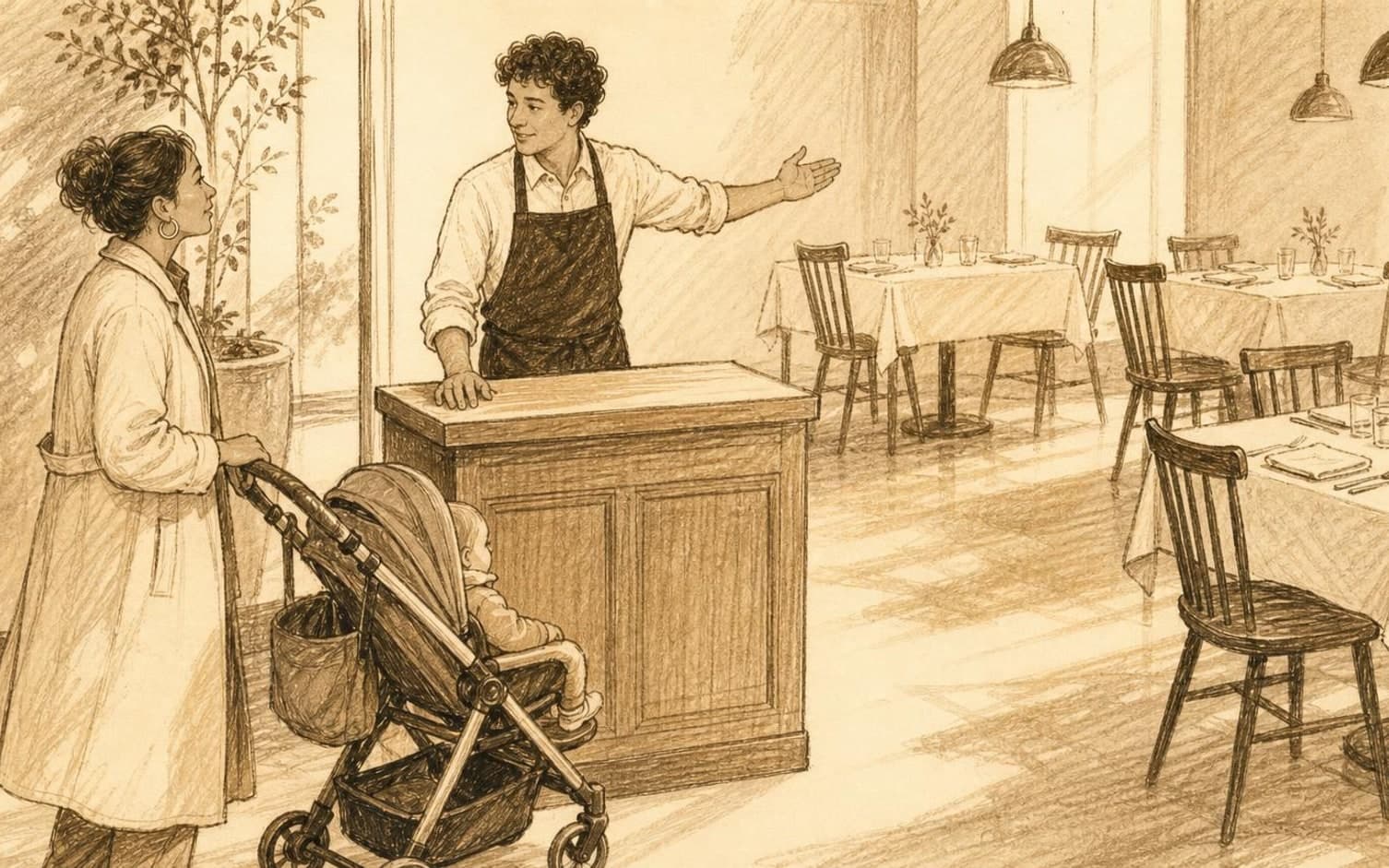
The same request doesn't mean the same answer
A guest who asks for a high chair the day before their visit, and a guest who asks for the same thing from the car park five minutes before arrival, are actually making very different demands on the restaurant. The content of the request is identical, but the room for manoeuvre is completely different. It is therefore more useful to sort changes by time window than by what the guest is actually asking for.
Three windows cover most situations: several hours before service, less than an hour before service, and upon arrival. In the first window, staff can plan ahead and adjust the table chart. In the second, the change must be resolved using what is already set up. In the third, it comes down to making a quick, clear decision on the spot without disrupting the rest of service.
Changed party size and new arrival times in practice
When the party size increases a few hours before the visit, the question is whether the restaurant can move the guest to a larger table without creating a gap elsewhere in the plan. When the party size increases just before arrival, the question is simpler: is there space available right now, or does the guest need to wait a few minutes while a table is moved or cleared.
A new arrival time close to the visit should be checked against two things: what happens to the table the guest has already been given, and what happens to any booking that follows shortly after. Can both be adjusted without creating a bottleneck? If so, the restaurant can decide for itself whether to confirm the change verbally right away, or whether it's better to wait until everything is fully settled.
Prams and high chairs are about space, not just equipment
A pram requires physical space along a walkway, not just somewhere to park it. If this is reported close to the visit, it's more effective to think in terms of passage than table placement: can the pram sit there without blocking servers or other guests during service, and is there room to wheel it in before the table is ready.
A high chair is a simpler matter to sort out, but the time window still affects the answer. How long it takes to prepare a chair, and whether one can be kept washed and ready in advance, is something each restaurant should assess for itself. If requested upon arrival, the chair must in any case be fetched and prepared on the spot - something staff should factor in rather than promising something that isn't there.
Table requests that arrive at the last moment
A table request that comes in close to the visit - a window seat, a particular corner, distance from the entrance - is easiest to handle when staff can quickly see which table actually fits the bill. In TableBooking's dashboard, bookings, guests and the table chart are all visible, and each table can have a reference photo that helps staff find the right table instead of promising something that isn't available.
When a request can't be fully met, it's better to say so clearly right away rather than delaying the answer until the guest is standing in the restaurant. A brief explanation - for example, that the requested table is already reserved for another time - is easier for the guest to accept than a vague message delivered under time pressure upon arrival.
Want to see how it works in practice?
Start with a free restaurant account and build your tables, opening hours and booking link at your own pace.
Start free