Last Seating and Internal Checks When a Restaurant Has Split Opening Hours
A look at how restaurants with a break between lunch and dinner can set last seating for each service block, use the booking setup to avoid overlap between the two blocks, and use the break for a quick internal check before the evening opens.
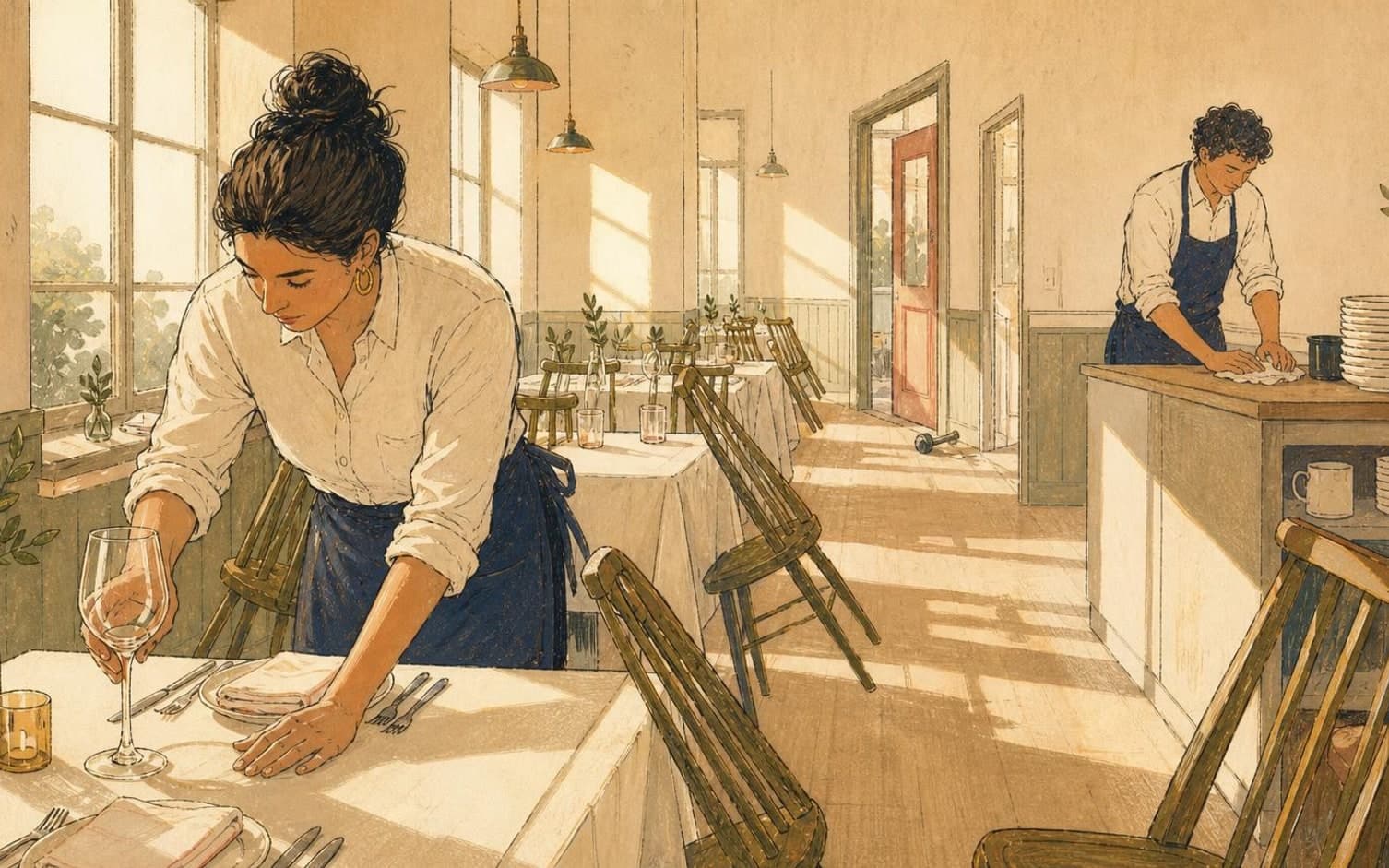
The transition between lunch and dinner is where mistakes happen
Split opening hours work well for many restaurants, but the risk rarely lies within lunch or dinner itself - it lies in the transition between them. A booking that really belongs to lunch service can end up with a time slot that drifts into the break, forcing staff to suddenly make a decision no one prepared them for.
When the booking system doesn't accurately reflect when the restaurant is closed between lunch and dinner, guests can, in principle, book a table during a window when no one is working. How long is the break at this particular restaurant, and is it entered correctly in the setup? It's easier to clarify this in advance than to untangle a confirmed booking that should never have been possible.
Base last seating on the kitchen's actual cut-off, not the time on the door
Last seating shouldn't be set to match the closing time posted outside. If the kitchen wraps up the lunch line before the official closing time, how much buffer is needed for a table to finish in time? The same question applies to the dinner block as it approaches closing, and the answer can vary from restaurant to restaurant.
The two service blocks may also call for different seating logic. Do lunch guests typically sit for a shorter, more time-bound period than dinner guests, or is the pattern reversed at this particular restaurant? Using the same buffer for both blocks without having considered this is a common pitfall - it's better to look at each block individually and adjust based on how guests actually behave in practice.
Let the booking setup follow the service blocks, not just the opening hours
When opening hours are split into two, the booking setup should reflect this clearly. In TableBooking, restaurant owners can configure opening hours, capacity and tables so that the booking link guests use without creating an account doesn't offer time slots that fall within the break between lunch and dinner. This reduces the risk of misunderstandings before they reach the floor.
It's also worth checking whether capacity is set correctly for each block separately. Is staffing and capacity for lunch the same as for dinner, or should the two blocks have different numbers? If capacity is identical for both without this being a deliberate choice, it's worth reviewing the setup and adjusting accordingly.
The break is a working window, not just a closed door
The time between lunch and dinner is rarely entirely free of work, even though the doors are locked. It's a natural point to go through the evening's bookings, check whether any groups require extra preparation, and confirm that the tables are set up correctly before the first dinner guests arrive.
A brief internal check before opening for dinner should cover a few fixed points: have the last lunch guests of the day left, are the tables designated for dinner ready, and do any reference photos of the table settings match how they're actually laid now? This takes only a few minutes but reduces uncertainty in the first minutes of the evening.
Want to see how it works in practice?
Start with a free restaurant account and build your tables, opening hours and booking link at your own pace.
Start free